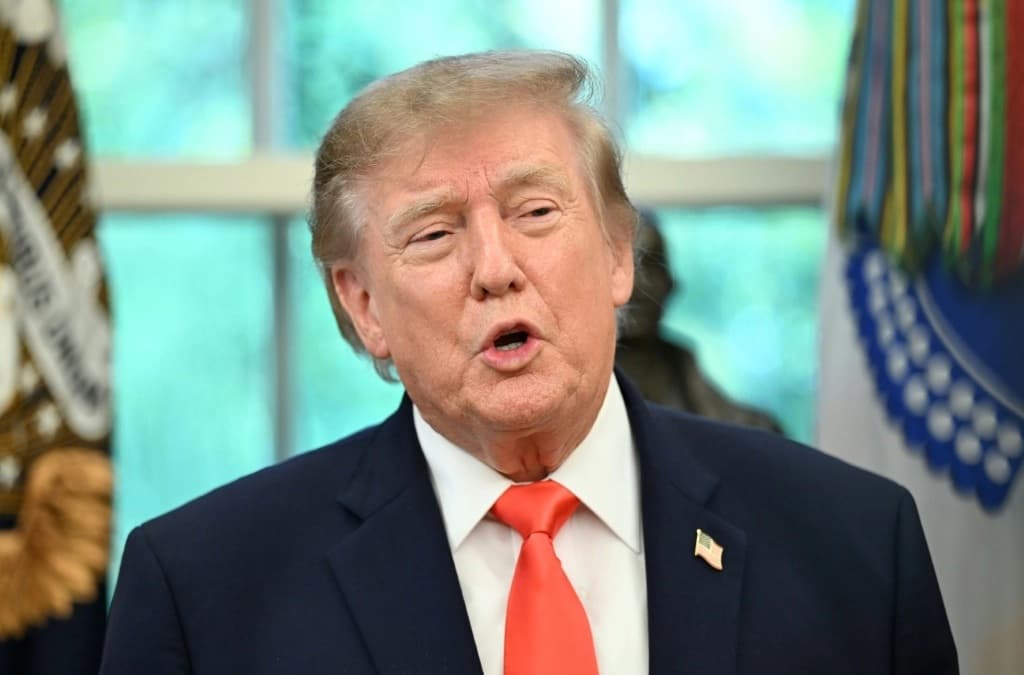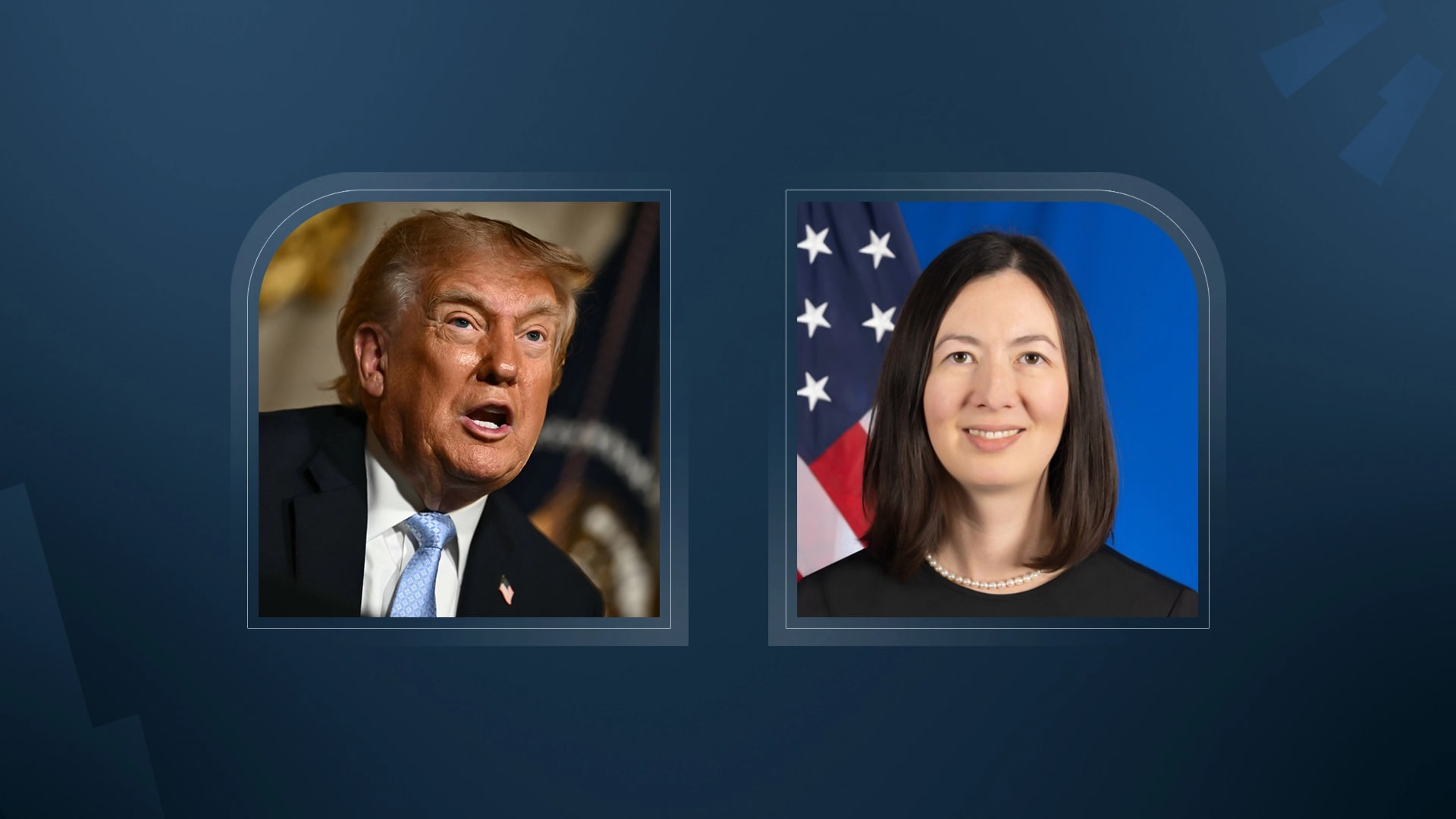

ERBIL, Kurdistan Region - Former senior US State Department official Victoria Taylor on Friday sharply criticized US President Donald Trump’s statement backing Iraqi Prime Minister Ali al-Zaidi, warning that Washington risks undermining negotiations between Erbil and Baghdad and departing from its longstanding bipartisan support for a strong and resilient Kurdistan Region within Iraq.
Trump earlier on Friday expressed support for Zaidi’s efforts to assert state authority throughout Iraq, combat oil smuggling and corruption, and bring all weapons under the exclusive control of the state. His remarks came amid escalating tensions over Baghdad’s moves to assume control of border crossings and oilfields under Kurdish authority, which Kurdish leaders maintain violate the Region’s constitutional rights.
The US president’s intervention came just days ahead of a scheduled December 1 meeting between senior Iraqi and Kurdish leaders aimed at resolving longstanding disputes between the federal government and the Kurdistan Regional Government (KRG).
“Today's POTUS statement is like dropping a grenade into the Baghdad-Erbil dispute,” Taylor said on X, arguing that Trump had sided with Zaidi and Supreme Judicial Council President Faiq Zidan instead of advocating non-violence, negotiations, and adherence to the Iraqi constitution.
“Weighing in so heavily in favor of the PM undermines any real effort to reach an agreement on these longstanding and complicated issues and it also undermines the USG position as a trusted broker,” she added.
In a subsequent statement, Taylor argued that the dispute was primarily driven by Baghdad’s desire to consolidate its authority over the Kurdistan Region rather than efforts to combat oil smuggling or counter Iranian influence.
“The impetus for the statement at this exact moment is the Baghdad-Erbil issue. Baghdad's desire to crack down on Kurds is only partially about oil sales and almost wholly about asserting greater federal control over Kurdistan,” she said.
Washington “is not the driver of the crackdown on Kurds, but this statement appears to be endorsing it. In the Iraq context, this is not about Iran, this is internal Iraqi politics.”
Bipartisan support for Kurdistan
Taylor, who previously served as US deputy assistant secretary of state for Iraq and Iran, stressed that Washington should reaffirm its longstanding commitment to the Kurdistan Region, a position that has enjoyed support from successive Republican and Democratic administrations.
“The US should be urging adherence to the Iraqi constitution, negotiations over the areas of disagreement (rather than the use of security forces), and reminding all involved of USG support for a strong and resilient Kurdistan within Iraq,” Taylor said.
“There is longstanding bipartisan support for this position within Washington, DC and I see no reason for the USG to deviate from this.”
Nadine Maenza, former chair of the US Commission on International Religious Freedom (USCIRF), echoed Taylor’s concerns on Friday, warning that weakening Kurdish autonomy would benefit Iran-backed factions and undermine US interests in Iraq.
“I fear @POTUS is getting an incomplete picture of what Baghdad’s power grab means for U.S. interests,” Maenza said in a post on X, pointing to US-sanctioned Rayan al-Kildani’s support for Baghdad’s measures.
“Weakening Kurdish autonomy benefits his faction and other Iran-backed groups, extending Tehran’s reach into a region that has been a reliable U.S. partner,” she added.
Maenza urged Washington to press Zaidi to fulfill his promise to rein in Iran-backed factions, defend the Kurdistan Region’s constitutional rights, and encourage Baghdad to resolve its disputes with Erbil peacefully through dialogue.
“A stronger Iran in Iraq is the last thing the United States should help bring about,” she stressed.
Kurdistan Region President Nechirvan Barzani on Tuesday expressed concern over Baghdad’s directives, emphasizing that the Region supports efforts to protect national resources and enforce the law but insists that disputes must be resolved through constitutional mechanisms.
“We firmly reject any attempt to deal with the Kurdistan Region through the language of military force,” President Barzani said, urging Iraqi political leaders to exercise wisdom and national responsibility.
“The strength and stability of the Kurdistan Region is the strength and stability of Iraq,” he added, stressing the importance of respecting federalism.
Zaidi, meanwhile, defended his government's measures during a meeting with European Union ambassadors on Thursday, citing Wednesday’s Federal Supreme Court ruling affirming federal authority over international borders and oil management.
In a separate meeting with Kurdish opposition parties, Zaidi said the Iraqi army “will be deployed at the borders and not inside the cities,” adding that “the government understands the special status of the Region.”
Kurdistan oil sales and militia smuggling
Taylor warned against conflating the Kurdistan Region’s oil sales with smuggling operations involving the Iran-backed Kata’ib Hezbollah militia in Jurf al-Sakhr, south of Baghdad, where Zaidi’s government recently deployed federal security forces.
“One is a constitutionally protected semi-autonomous region with its own government and the other is a designated terrorist group,” she said.
While acknowledging Baghdad’s legitimate questions about Kurdish oil sales and revenues, Taylor stressed that these disagreements must be resolved through negotiations with the KRG.
She argued that oil smuggling operations in southern Iraq should be a greater priority for Washington because of their connection to militia disarmament, a key objective of the Trump administration’s policy towards Iraq.
Taylor’s criticism comes a day after thousands of Kurds demonstrated against Baghdad’s measures and amid ongoing efforts to prevent the dispute from escalating into a military confrontation.
US Special Envoy Tom Barrack on Wednesday offered to mediate between Erbil and Baghdad and urged Zaidi to rule out military options, sources familiar with the discussions told Rudaw.