
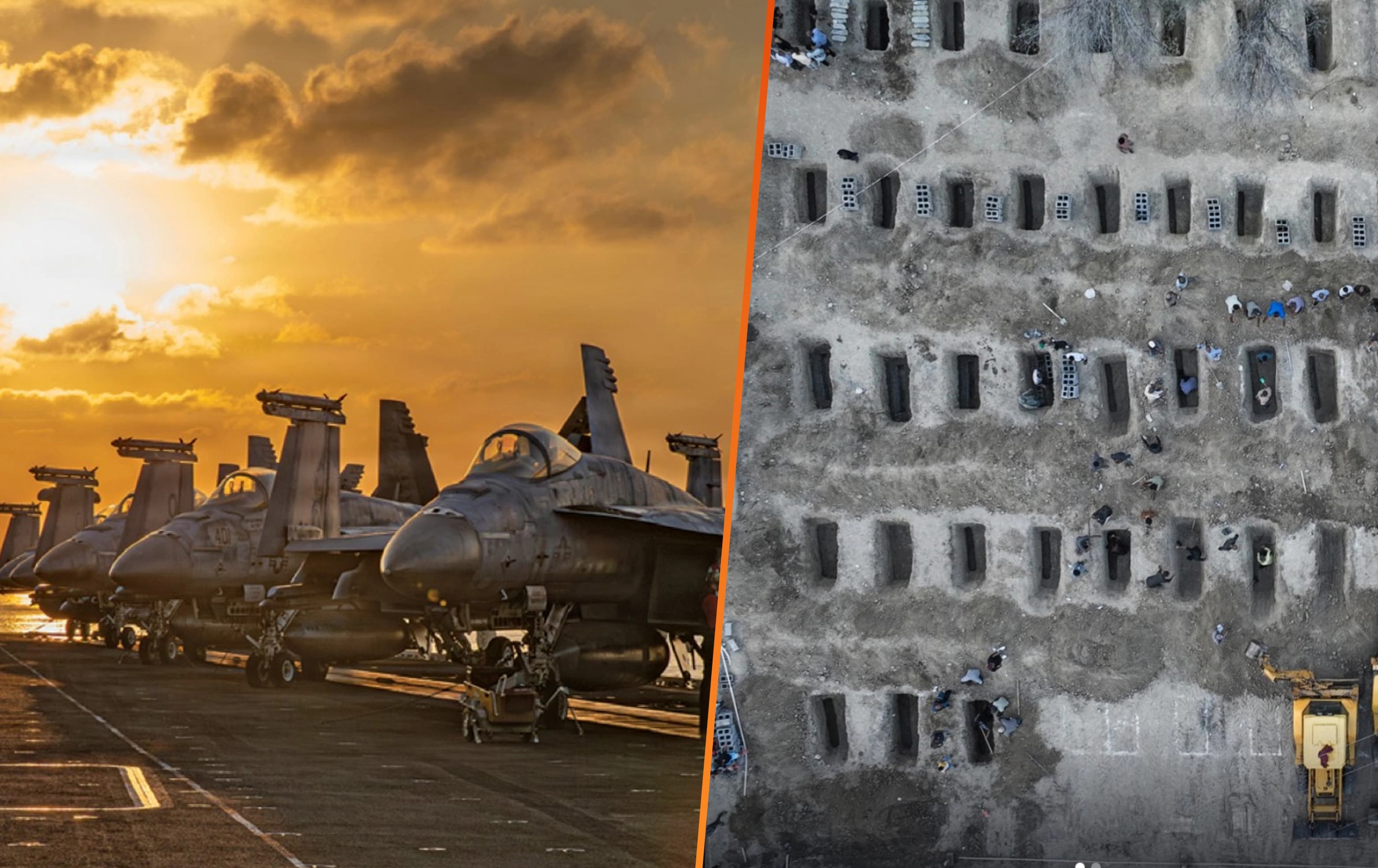

ERBIL, Kurdistan Region - The Pentagon’s watchdog estimates that Operation Epic Fury had cost at least $33.4 billion by late June, but cautions that the true cost remains difficult to determine because Congress has yet to appropriate funds specifically for the campaign in fiscal year 2026.
In its first report on the operation detailing the scale of US losses, the Department of Defense Office of Inspector General said Iranian strikes damaged or destroyed hundreds of buildings at American bases across the region, as well as dozens of aircraft, including three F-35A fighter jets over Iran.
Between February 28 and April 7, US forces conducted approximately 36,000 combat sorties and more than 1,800 fire missions, striking around 13,500 targets in Iran, according to testimony by CENTCOM Commander Admiral Brad Cooper in May, cited in the report.
The targets included “Iranian ballistic missile garrisons … air defense sites, storage sites for Iranian cruise missiles and unmanned aircraft systems (UAS), command-and-control centers, naval and naval mining assets, and defense industrial bases,” the report said.
The report, prepared by three inspectors led by Platte B. Moring III, did not mention the strikes on a school in the southern Iranian city of Minab on the first day of the war, which killed more than 100 schoolchildren.
The Pentagon’s watchdog estimated the cost of the operation at $33.4 billion as of June 29, comprising $22.3 billion in expended munitions, $7.4 billion in cumulative obligations, and $3.7 billion in equipment losses.
However, it warned that the operation’s true cost is difficult to ascertain because Congress did not appropriate funds specifically for Operation Epic Fury in fiscal year 2026.
“The absence of a dedicated appropriation for OEF means that it can be difficult to calculate the total ‘cost’ of OEF,” the report said.
Instead, military components drew on base-budget funds that would normally have been allocated to training, maintenance and other routine operational activities. The estimate also excluded the costs of repairing damaged infrastructure.
The report said Iranian strikes damaged or destroyed hundreds of buildings and structures at US bases across Kuwait, Bahrain, Qatar, the UAE, Saudi Arabia, Iraq, Oman and Jordan.
The Kurdistan Region was also extensively targeted during the war by Iran’s Islamic Revolutionary Guard Corps (IRGC) and affiliated militias in Iraq.
“Mission Iraq experienced more than 600 attacks during the reporting period. The U.S. Consulate General in Erbil’s new consulate compound suffered damage to multiple buildings, while the U.S. Embassy in Baghdad suffered damage to a lesser extent,” the report said.
“The Baghdad Diplomatic Support Compound, located near Baghdad International Airport, suffered extensive damage,” it added, noting that one American service member was killed in Erbil during the war.
Dozens of US aircraft were also damaged or destroyed during the conflict, including three F-35A fighter jets that were hit over Iran.
US and allied air-defense systems intercepted more than 6,000 one-way attack drones and 1,500 ballistic missiles targeting American and partner forces.
The report also underscored the broader scale of the campaign, with US European Command serving as a major launch and sustainment hub, while Cyber Command and Space Command conducted non-kinetic operations aimed at disrupting Iranian communications and sensor networks.
US Strategic Command also provided global strike capabilities, including dozens of 2,000-pound penetrating bombs dropped on deeply buried missile launchers across southern Iran during the first 11 days of the combat.
“Iran has the largest armed forces in the region and spent decades of intense focus developing and expanding its own domestic defense industry,” the report said, adding that Tehran has also “focused heavily on passive defense measures to protect its military capabilities, including extensive underground facilities, dispersal of munitions inventories, concealment and deception to mask equipment, and mobile launch platforms.”
The inspectors said 18 US service members had been killed during the war, including seven in non-hostile incidents. At least 750 American service members had been wounded as of September.

.webp&w=3840&q=75)
