
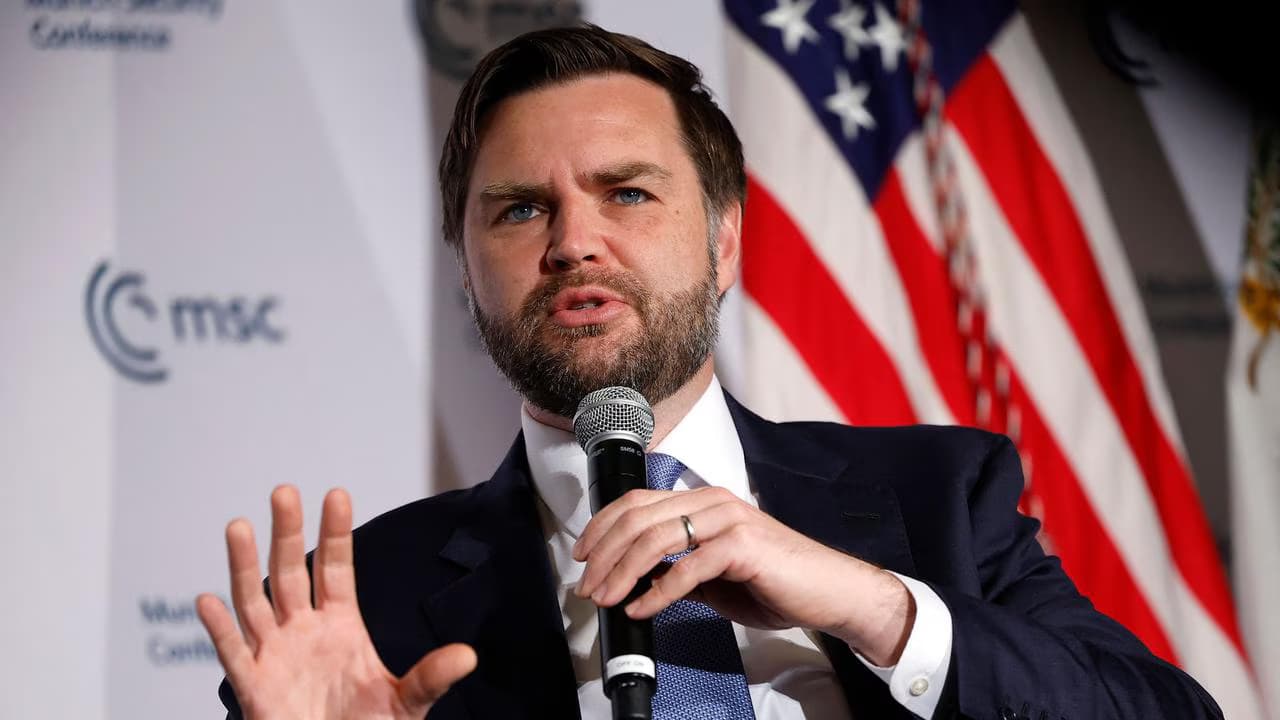

ERBIL, Kurdistan Region - US Vice President JD Vance said Monday that Iranians will not receive any American money, adding that Tehran will not get funds from anyone if it fails to meet its obligations. His remarks follow the finalization of a deal between the two countries, which is expected to be signed in person in the coming days.
"The agreement says they are not getting a single dime of American money," Vance told Fox News. "What the agreement does say... is if the Iranians behave and if there are sanctions relief and if the Iranians are integrated into the world economy, we would invite other countries, not us, but other countries to invest in their country."
The US vice president's statement comes against the backdrop of Tehran and Washington on Monday signing a memorandum of understanding ending months of conflict that started in late February, when the US and Israel carried out airstrikes in Iran that led to a six-week war which ultimately ended once a Pakistan-brokered fragile ceasefire took place in early April.
The memorandum , whose text has yet to be published, was signed electronically earlier this week. Top American and Iranian officials are expected to arrive in Switzerland at the end of the week to sign it in person.
Iranian and American officials have both claimed victory following the agreement.
Iranian Parliament Speaker Mohammad Bagher Ghalibaf, who is also a senior Iranian negotiator, said on X on Monday that with the "historic resistance [of Iranian people] and the bravery of the armed forces against those who sought to take the lives of this nation and destroy and subjugate this country, Iran has taken a major step toward final victory. They wanted to, but they could not."
Iran’s Mehr news agency reported that Washington would release billions of dollars in frozen Iranian assets as part of the arrangement and cited a 14-point memorandum that allegedly includes the phased release of up to $24 billion during a 60-day negotiation period.
The conflict began on February 28 following US-Israeli strikes on Iran. Tehran responded with attacks against Israel and US allies, effectively disrupting shipping through the Strait of Hormuz, a critical global energy transit route that normally carries about 20 percent of the world's oil supply and roughly a quarter of global seaborne oil trade.
The signing of the memorandum was welcomed by the international community. UN Secretary-General Antonio Guterres described it as a “critical step” toward ending the conflict, while Britain, France, Germany and Italy signaled readiness to ease sanctions on Iran and support efforts toward a broader diplomatic settlement.
“Iran must never acquire a nuclear weapon,” read a joint statement signed by leaders from the UK, France, Italy, and Germany. “We stand ready to work with the US, Iran and the IAEA to this end. We are prepared to lift relevant sanctions in response to clear, verifiable steps by Iran on its nuclear programme.”
Markets reacted positively on Monday, with oil prices falling sharply and major stock indices rising amid expectations that shipping through the Strait of Hormuz would soon resume per usual.

.png&w=3840&q=75)