
ERBIL, Kurdistan Region - Two Turkish far-right leaders have threatened members of a newly formed Kurdish political alliance with death over its demands for Kurdish self-determination and constitutional recognition, invoking the executions of Kurdish leaders during the early years of the Turkish republic.
Mustafa Destici, chairman of the far-right Great Unity Party (BBP), warned on Wednesday against any challenge to Turkey's territorial integrity, threatening to respond violently to those he accused of undermining the state.
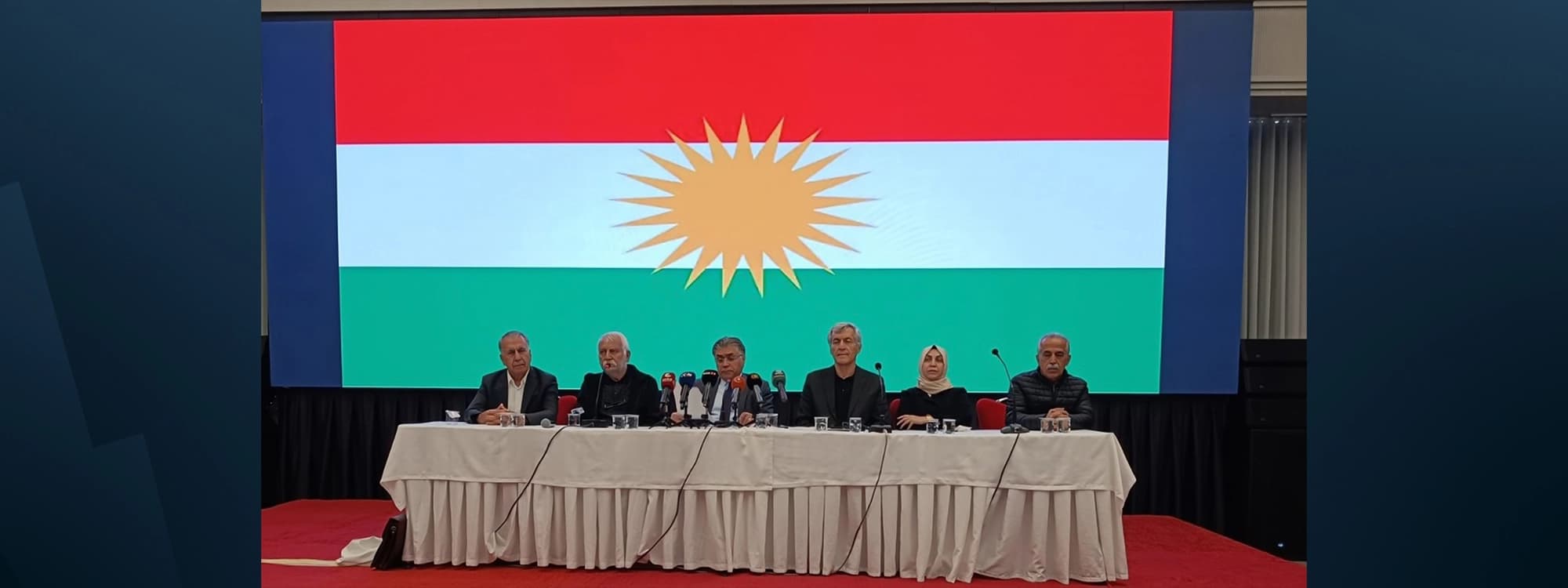
His remarks came in response to a declaration issued by the Kurdistan National Alliance (HEVBENDÎ), a new alliance of Kurdish political parties and independent figures established on November 7 to advocate for Kurdish national and democratic rights.
"Concepts such as self-determination and sovereignty included in the said declaration bring along serious legal and political discussions regarding the constitutional order of the Republic of Turkey and the territorial integrity of our country," Destici told reporters.
He accused the alliance of attempting to launch a Kurdish national struggle, arguing that its demands were receiving insufficient public scrutiny because of concerns about disrupting Turkey's ongoing peace process with the Kurdistan Workers' Party (PKK).
"It is being passed over quietly. There is a process, but let this process not be harmed. Yes, let it not be harmed. May Turkey remain free of terrorism, but no one can challenge the state either. No one can drive a dagger into the existence of the state, the integrity of the country, and the unity of the nation," Destici added.
"We will take that dagger and drive it into their chests."
In a similar threat on Thursday Umit Ozdag, leader of the far-right Victory Party (Zafer Party), warned the Kurdish alliance that its members could face the same fate as two Kurdish leaders executed under the presidency of Mustafa Kemal Ataturk, the founder of modern Turkey.
"Let me ask them: Would you like some dessert with clotted cream on top as well?" Ozdag said sarcastically, mocking the alliance's political demands.
"Look, we will not give you dessert with clotted cream, but we will do to you exactly what Gazi Mustafa Kemal Ataturk did to Sheikh Said and Seyit Riza,” he warned.
Ozdag's reference to Sheikh Said and Seyit Riza carried particular historical significance for Kurds, as both figures were executed during the early decades of the Turkish republic following uprisings against Ankara's rule.
Sheikh Said was executed in 1925 following a Kurdish-led uprising against the Turkish government, while Seyit Riza was executed in 1937 after leading resistance against Turkish military operations in Dersim, now officially known as Tunceli.
Both uprisings took place against a backdrop of repressive state policies toward Kurdish identity and political aspirations during Ataturk's presidency.
Ozdag, a staunch opponent of negotiations with the PKK, has repeatedly accused the ruling Justice and Development Party (AKP) and its nationalist ally, the Nationalist Movement Party (MHP), of making concessions to Kurdish militants under the guise of ending armed conflict.
He has argued that the peace initiative threatens Turkey's national unity and territorial integrity.
New Kurdish alliance demands national rights
HEVBENDÎ was established following a closed-door conference in the Kurdish city of Diyarbakir (Amed) attended by dozens of Kurdish political figures. Its formation was publicly announced two days after the event.
The alliance brings together the Kurdistan Socialist Party (PSK), Kurdistan Patriotic Party (PWK), Kurdistan Democratic Party-North (PDK-BAKUR), PÊLKURD, VEJÎN, the Kurdistan National Initiative and independent Kurdish political figures.
The founding conference elected a 51-member council tasked with coordinating the alliance's political activities. The council is expected to elect a nine-member executive board to oversee the coalition's work and develop a common political program.
According to its founding declaration, the alliance seeks recognition of Kurds as a nation with the right to determine their political future, exercise self-government and obtain political status in Kurdistan.
The coalition also rejected political approaches that deny Kurdish national identity, collective rights and the right to self-determination, including approaches that it described as seeking to integrate Kurds into political arrangements without recognizing their national aspirations.
It called for stronger cooperation and solidarity among Kurdish political movements across Turkey, Iraq, Iran and Syria, where Kurdish populations have long sought varying degrees of political and cultural recognition.
Speaking to Turkey's opposition ANKA News Agency on Monday, PSK leader Bayram Bozyel said the alliance was intended to bring Kurdish political parties and independent figures together around a common platform to advance national and democratic demands.
"For Kurds, the issue of unity is a very vital matter," Bozyel said, explaining that the initiative followed months of discussions that began with a conference in Diyarbakir on March 14.
He stressed that HEVBENDÎ was not established to oppose any particular Kurdish party or political movement.