ERBIL, Kurdistan Region - A senior adviser to Turkish President Recep Tayyip Erdogan has rejected linking constitutional reform and Kurdish political demands to the Kurdistan Workers' Party (PKK) disarmament process, drawing criticism from the pro-Kurdish Peoples' Equality and Democracy Party (DEM Party), which accused him of undermining efforts to achieve lasting peace.
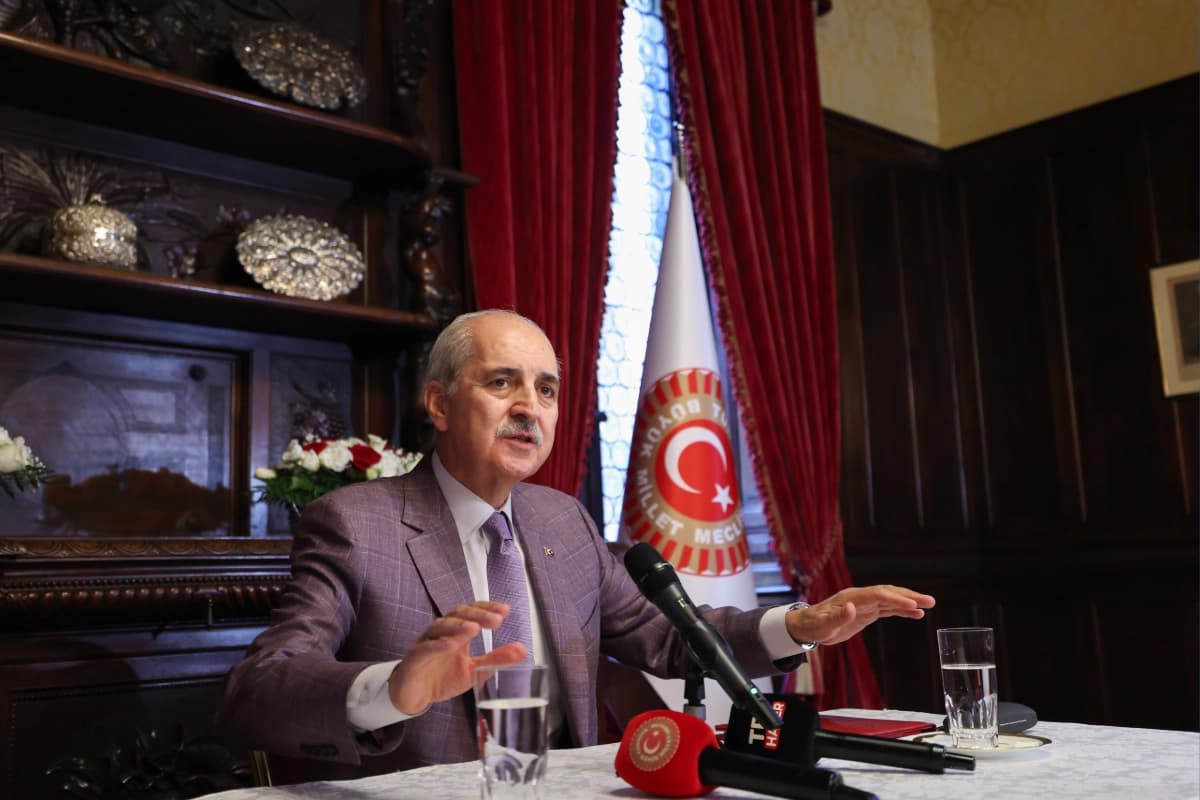
In an opinion article published Saturday by state-run Anadolu Agency (AA), Mehmet Ucum argued that the government's initiative - officially termed “Terror-Free Turkey” but referred by many Kurds as the “Peace and Democratic Society Process” - is a state-led “process of dialogue” as opposed to a new constitution which entails negotiation.
“The legal processes required for a Turkey free from terrorism are also elements of this dialogue process. Advancing democracy, however, is the subject of the negotiation process,” he stated, drawing a clear distinction between the two.
His remarks highlight disagreements over the extent of Ankara's renewed peace initiative, particularly whether the PKK's disarmament and dissolution would result in broader democratic reforms or proceed alongside measures addressing Kurdish political and cultural demands.
Constitutional reform has been a longstanding demand of Kurdish political actors in Turkey amid the renewed peace process between Ankara and the Kurdistan Workers' Party (PKK).
In July 2025, senior PKK commander Cemil Bayik called for constitutional and legal changes rather than an amnesty for the group's members. More recently, DEM Party lawmaker Cengiz Candar told Rudaw’s Rawin Sterk that amendments to Articles 42 and 66 of Turkey's constitution, concerning mother-tongue education and citizenship, would be particularly important in securing Kurdish rights.
Ucum, who also serves as deputy chair of Turkey's Presidential Legal Policies Council, argued that negotiations on constitutional reform must involve the entire Turkish population rather than only those participating in talks concerning the PKK's disarmament, adding that it was “absolutely unacceptable” for the Kurdish side to “demand a new constitution and democracy as conditions for the dialogue process.”
He went further, arguing that the advancement of democracy could be fully realized only after the disarmament process was completed and that a new constitution would not “be negotiated through the lens of ethnic and identity politics,” emphasizing that the latter as a basis for constitutional reform would have to be “left behind” in order for the process to move forward.
Ucum's remarks prompted a sharp response from Tayip Temel, deputy co-chair of the DEM Party, who accused the presidential adviser of undermining the peace process he claimed to support.
“Ucum! From the very beginning, you have been engaged in a provocative effort to prevent the process from taking shape, to obstruct the development of a mutual will for peace, and, most importantly, to undermine the hopes of the Kurdish people and democratic forces regarding the issues being discussed in the process and negotiations,” Temel wrote on X on Sunday.
“You and people like you are the ones obstructing the process,” he added.
DEM Party co-chair Tuncer Bakirhan also called on the Turkish government Sunday to take concrete steps without waiting for the disarmament process to conclude.
Speaking at his party's provincial congress in Bursa, Bakirhan urged Ankara to implement court rulings, end the appointment of government-affiliated trustees to elected Kurdish municipalities and release political prisoners, many of whom were members of DEM’s predecessor, the pro-Kurdish People's Democratic Party (HDP).
“We call on the government: Do not wait to take steps. Start with the prisons. Start with Selcuk Kozagacli, Can Atalay, Demirtas and Yuksekdag,” Bakirhan said, in reference to imprisoned lawyer Selcuk Kozagacli, politician Can Atalay, and former HDP party co-chairs Selahattin Demirtas and Figen Yuksekdag.
Bakirhan argued that the government should reciprocate the steps taken by imprisoned PKK leader Abdullah Ocalan.
“Mr. Ocalan took a very important risk. While he has taken such sincere steps, what is the government waiting for?” he asked.“Why is it waiting to withdraw the trustees and implement the decisions of the European Court of Human Rights and the Constitutional Court?”
He stressed that the DEM Party would continue both negotiations and political opposition, arguing that peace should not be delayed because of disagreements over which political actors were involved.
‘A much bigger issue’
The debate comes as other Kurdish political figures have also emphasized the need to distinguish the PKK's disarmament from a broader settlement of Turkey's Kurdish issue.
In an exclusive interview that aired on Saturday, Zekeriya Yapicioglu, leader of the Kurdish Islamist Free Cause Party (HUDA PAR), told Rudaw’s Rawin Sterk that disarmament negotiations could involve Ocalan and the PKK, but resolving the Kurdish question needed participation from Kurdish society and its political representatives more broadly.
“If negotiations are about ending the PKK, dissolving the organization and completely abandoning weapons, then of course the organization and its leader will be spoken to,” he said, while stressing that the Kurdish issue could not be resolved through negotiations with a single organization, political party or individual.
“This is a much bigger issue. The counterpart is the entire Kurdish people,” he said.
Yapicioglu, whose party supported Erdogan in the latest presidential election and is an ally of his ruling Justice and Development Party (AKP), said the PKK should lay down its weapons but argued that political measures addressing Kurdish grievances should not have to wait until disarmament was completed.
He also advocated recognition of Kurds as equal partners in the foundation of the Turkish Republic, suggesting that recognition of this principle in the constitution could help eliminate inequalities between the two communities.
Ucum also addressed growing debate over Ocalan's imprisonment and his role in implementing the peace process.
He confirmed that a new facility attached to the prison complex on Imrali Island had been constructed to provide Ocalan with a working environment appropriate to his responsibilities and that Ocalan could eventually be permitted to meet a wider range of people as part of his role in the process, but dismissed demands for Ocalan's release as attempts to introduce unnecessary obstacles, arguing that freedom was not even on the imprisoned leader's own agenda.
Yapicioglu, whose party has strained relations with the PKK and DEM Party, offered a different assessment in his interview, saying Turkish society was not yet ready for Ocalan's release but that the possibility should not be ruled out if it helped end the conflict.
“If the bloodshed stops completely and genuine brotherhood is established, and if the price of that is Ocalan's release, that is not a very high price,” he said.
Ucum said the National Security Council (MGK) should verify and formally announce the PKK's dissolution and disarmament “before the end of 2026.”
The Turkish parliament passed a framework law in August granting amnesty to PKK fighters willing to lay down their arms, excluding senior members, and suspending the prosecution of people charged with PKK-related offences.
Under the legislation, a decision confirming the group's dissolution and surrender of its weapons must be published in the Official Gazette before the law is implemented.
Applications must be submitted within six months of the announcement, with judicial authorities determining eligibility and whether particular offenses fall within the law's scope.
Ucum argued that the announcement of the National Security Council's decision would mark a decisive stage in the transition.
His comments come as Turkish media report preparations for further withdrawals of PKK fighters from positions in the Kurdistan Region.
Citing unnamed security sources, Turkey's pro-government Türkiye newspaper (TurkiyeGazetesi) on Saturday reported that PKK positions in the Metin area had been “cleared” and that “the focus has now shifted to the shelters along the Gara and Hakurk lines.”
The newspaper also claimed that arrangements were being considered for former fighters to return to Turkey, while senior PKK figures could be relocated to third countries.
Ucum also addressed the timetable for drafting a new constitution, arguing that the current parliament could establish its fundamental principles before the 2028 elections, suggesting that a new constitution could be adopted by the next parliamentary term and submitted to a public referendum.
In an exclusive interview with Rudaw aired last week, Bakirhan said the peace process was “nearing the end of its first phase” and focused on the PKK's disarmament, while the second would address democracy, Kurdish rights and the return of political prisoners and exiles.
“The PKK has taken a very significant step," he said, adding that the group had "more than fulfilled" its responsibilities. He said the DEM Party was awaiting a National Security Council report confirming the completion of the first phase before moving to the next stage.
The constitutional debate also carries electoral implications.
In an interview with Rudaw’s Rawin Sterk earlier this month, DEM Party lawmaker Cengiz Candar said the party could consider supporting Erdogan's bid for another presidential term if he pledged constitutional reforms recognizing Kurdish rights, particularly amendments to provisions governing mother-tongue education and citizenship.
"If Erdogan makes such a promise, then the situation can be considered," Candar said.