
ERBIL, Kurdistan Region - Jailed Kurdistan Workers’ Party (PKK) leader Abdullah Ocalan must be granted physical freedom and play a direct role in ongoing peace efforts with Turkey, a senior commander of the group has stated, arguing that recent legislation passed by the Turkish parliament falls short of creating the conditions needed for a lasting settlement.
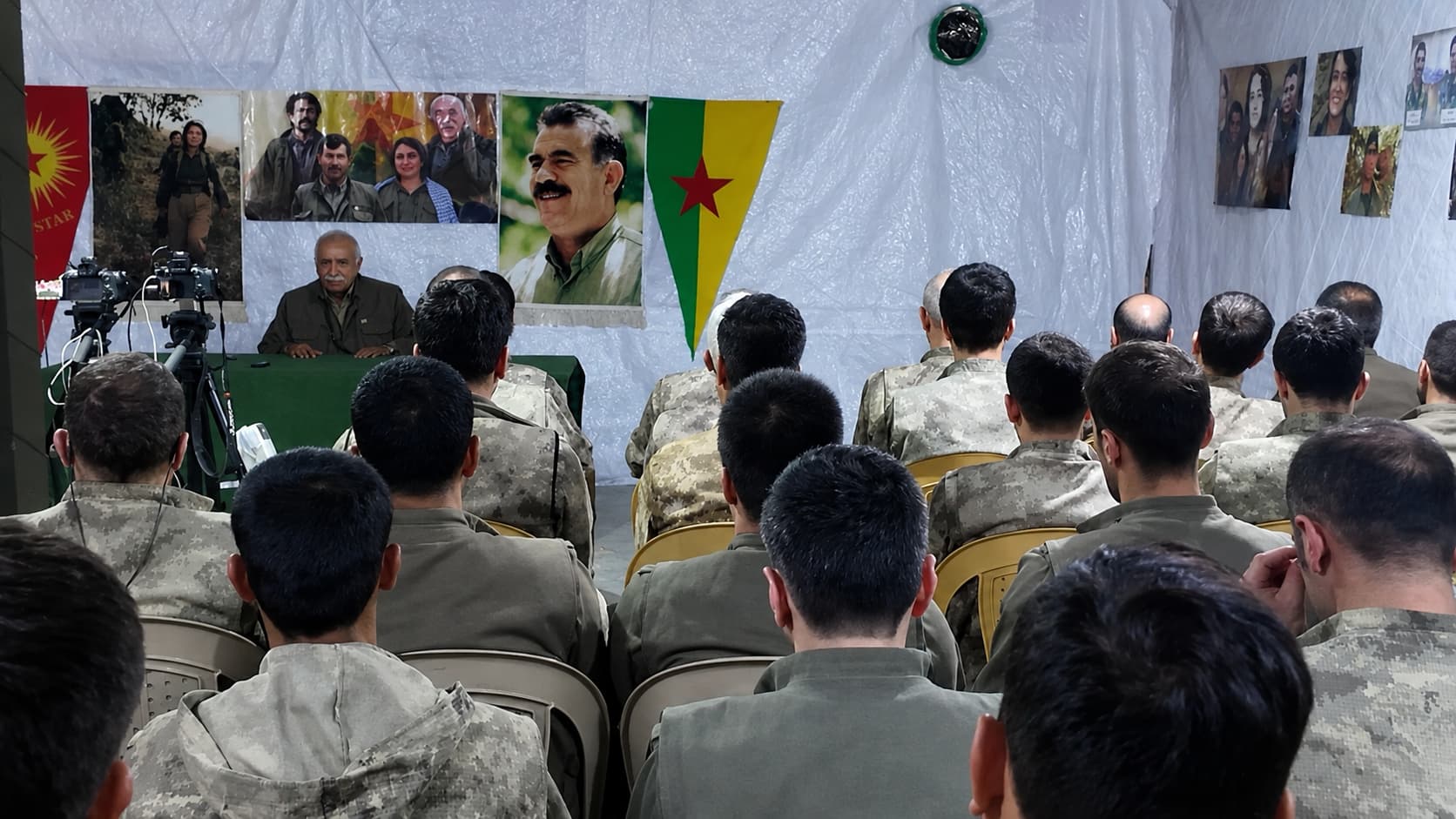
In a message released Sunday by PKK-affiliated Sterk TV marking the anniversary of the PKK’s August 15, 1984 insurgency, Murat Karayilan, a member of the People's Defense Central Command, welcomed Turkey’s newly adopted framework law as a significant step but said it contains major shortcomings.
“The process needs to be led by leader Apo [Abdullah Ocalan]. In other words, leader Apo needs to have his physical freedom. Without this, nothing works,” Karayilan said.
The comments come days after pro-Kurdish lawmakers mediating talks between Ankara and the PKK met Turkish President Recep Tayyip Erdogan to discuss the newly adopted law, widely viewed as the first major legislative contribution by the Turkish state to the peace initiative.
The law allows PKK members who have not been involved in violent acts to be reintegrated into society, including provisions to suspend certain investigations, prosecutions and sentences linked to PKK-related offenses provided the group fully disarms and dissolves, but does not address the future status of Ocalan, imprisoned since 1999.
Karayilan argued that the law, approved by the Turkish parliament on Monday, fails to address Ocalan’s role despite him being “the architect of this process.”
“Above all, it fails to include the architect of this process, leader Apo. Yet it is leader Apo who initiated this process,” Karayilan said. “Likewise, the word ‘Kurd’ doesn't even appear in it. Democracy is never mentioned at all.”
Karayilan said the legislation focuses too narrowly on disarmament and does not adequately address the broader Kurdish issue.
“The matter has been reduced simply to the guerrilla laying down arms. Yet this is a century-old, immense problem,” he said. “Without doubt, this narrow approach cannot bring the problem to resolution.”
Karayilan said the PKK’s decision to dissolve itself was based on expectations that Ocalan would be able to guide the process. He added that Ocalan’s direct engagement would be crucial in convincing fighters to lay down their arms.
“I said before, ‘if leader Apo is in prison, I cannot tell anyone to lay down their weapons and leave,’” Karayilan said. “But now I can say this: ‘Dear comrade, go - leader Apo will receive you. He will give you the perspectives for this new period.’”
Despite his criticism of the legislation, Karayilan reiterated support for the peace process and said the PKK wants to move beyond armed conflict.
“We are ready to move this struggle off the ground of war and weapons and onto the ground of politics and law,” he said. “We want to bring this war to an end, and that is our sincere approach.”
Karayilan also called for the creation of a “Truth and Justice Commission” to investigate abuses committed during decades of conflict between the Turkish state and the PKK.
“We genuinely want to reach an understanding with Turkey, to end this enmity. We want to open a new page,” he said. “We will not be joining the enemy - we will be joining the democratic republic.”
While stressing that the PKK has abandoned its strategy of armed struggle, Karayilan described the August 15 insurgency as a defining moment in Kurdish history.
“We are now moving into the stage of democratic politics,” he said. “But the August 15th Offensive is a milestone in the history of our people.”