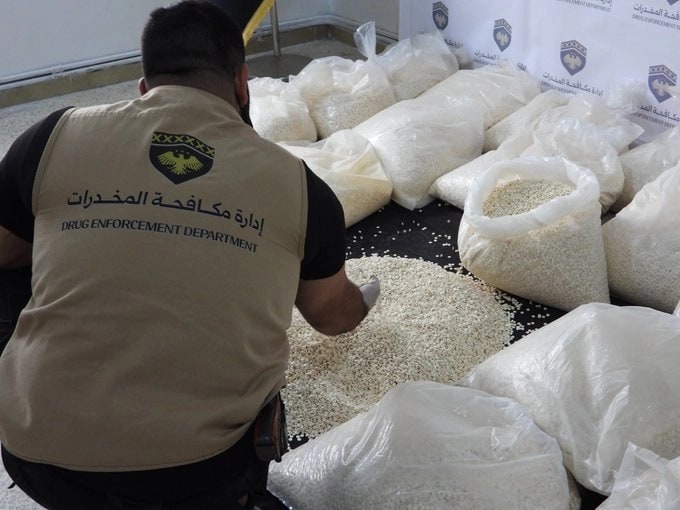

ERBIL, Kurdistan Region - Syrian anti-narcotics forces raided a warehouse in the country’s western Tartus province on Wednesday, seizing approximately 2.3 million Captagon pills and arresting two suspects as they attempted to relocate the shipment, amid months of intense efforts to curb trafficking.
"The Anti-Narcotics Department successfully located a warehouse in Tartus Governorate used to store narcotics, raiding it just as an attempt was being made to transport the shipment and relocate its storage site," the Syrian interior ministry announced.
"The operation resulted in the seizure of approximately 2.3 million Captagon pills and the arrest of two individuals involved," the ministry added. Authorities identified the suspects by the initials B. A. and M. Q., and investigations are ongoing to uncover the network's supply routes and reach, as well as to pursue its remaining members and bring them to justice.
The seizure comes amid months of intensified operations targeting cross-border networks following a late September meeting between Syrian officials and the director of the United Nations Office on Drugs and Crime (UNODC) Division of Operations to expand technical assistance.
Under the regime of ousted dictator Bashar al-Assad, Syria became the world's primary hub for Captagon production and distribution.
The trade served as a financial lifeline and political lever for the regime, with monitors and intelligence agencies widely pointing to Maher al-Assad, the former president’s brother and commander of the elite Fourth Division, as the industry's primary mastermind.
In late June, Syria’s interim President Ahmed al-Sharaa declared a comprehensive war on drugs, aiming to dismantle the vast manufacturing and trafficking apparatus inherited from the former regime.
Marking International Day Against Drug Abuse at the time, Interior Minister Anas Khattab reaffirmed this commitment, pledging to "confront this dangerous scourge by all legitimate means to achieve a drug-free Syria."
Captagon, an addictive amphetamine-type stimulant, has long fueled a regional public health and security crisis.
Stemming the cross-border flow remains a formidable challenge, particularly in the areas surrounding the Lebanese border, where smugglers exploit the border with Jordan to access drug trafficking routes previously established under the former regime to markets in Saudi Arabia.