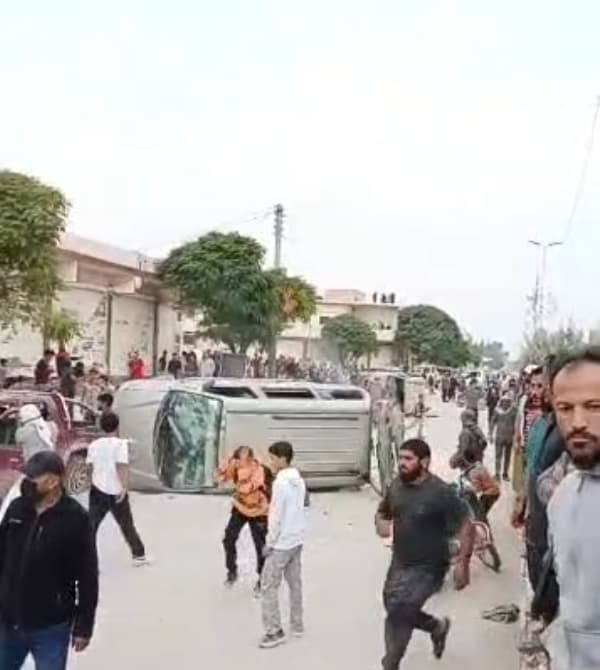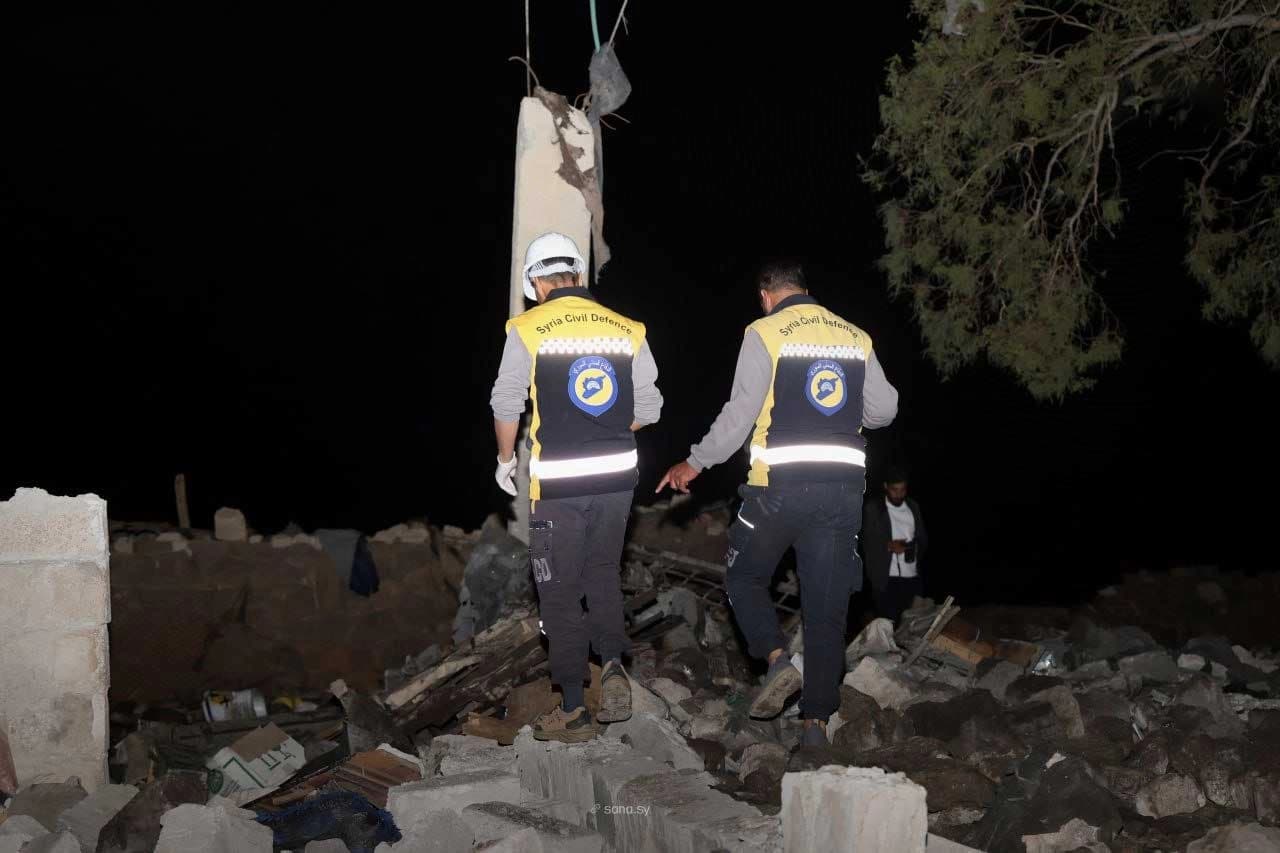

ERBIL, Kurdistan Region - Syria closed its main border crossing with Jordan to travelers and commercial traffic on Tuesday after Jordanian airstrikes killed seven civilians, including three children, in southern Syria, with Damascus disputing Amman's claim that the attacks had been coordinated with Syrian authorities.
"The General Authority for Border Crossings and Customs announces the closure of the Nasib border crossing with the Hashemite Kingdom of Jordan due to prevailing circumstances and developments in Daraa province,” the authority said in a statement carried by the state-owned Syrian Arab News Agency (SANA).
The crossing, located in Syria’s southern Daraa province, was closed to passenger and commercial traffic in both directions on Tuesday “to ensure the safety of travelers and staff at the crossing,” the authority said.
The closure comes a day after Jordanian airstrikes that Amman said targeted armed groups linked to a deadly attack on a Greek Orthodox church in Jordan's Karak governorate last Friday, killing nine people and injuring 34 others.
The strikes have exposed a disagreement between Damascus and Amman over military coordination, despite their previous cooperation on border security, counterterrorism and drug trafficking. The airstrikes come despite Jordan's support for the Syrian government and repeated efforts by the two countries to strengthen security cooperation along their shared border.
In February 2025, Jordan's King Abdullah II received Syrian President Ahmed al-Sharaa in Amman, where the two leaders discussed bilateral cooperation and agreed on the need to strengthen coordination against arms and drug smuggling. Jordan also played a diplomatic role in efforts to contain violence in Syria's southern, Druze-majority Sweida province in July 2025.
The Jordanian military said Monday its air force carried out "Operation Jordanian Deterrence - Hmoud," named after the village where the church attack occurred, targeting what it described as "hideouts of terrorist organizations in southern Syria."
In a statement carried by the state-run Jordan News Agency (Petra), the military claimed the operation had been conducted "in coordination with the Syrian government."
It said those responsible for the church attack had ties to the targeted organizations, claiming that the strikes killed and wounded several militants and destroyed their equipment.
However, the Syrian government disputed Jordan's account, saying the operation had been carried out without prior coordination or notification.
Damascus said it had launched investigations into the attacks and opened direct communication channels with Jordanian officials.
Syria's Foreign Ministry also said it had informed Jordan of its objections to military operations conducted on Syrian territory without prior coordination, while stressing the need for continued communication to address the consequences of the incident.
Khaled al-Amyan, director of Daraa's Health Directorate, told SANA early Tuesday that the death toll from the Jordanian airstrikes had risen to seven people, including three children, three men and a woman.
He said two men and one child were also injured in the strikes, which targeted several locations in Daraa's countryside, including areas near Nasib and al-Muzayrib.
SANA also interviewed relatives of one of the victims in the al-Shiyah area of Daraa, where an airstrike destroyed a family home.
Mohammed Riyadh al-Karad, whose father was among those killed, said his family depended on their orchard for their livelihood and had been returning from the market when the strikes occurred.
"We had gone to the market to sell our olives. Our car broke down, so we got back late. When we got near, we heard the airstrikes, and when we got here, we saw the house lying in ruins," Karad told SANA.
He said the attack had also destroyed the family's solar panels, trees and wells.
"For what sin were we targeted? We haven't done anything," he said.
His brother, Ahmed Riyadh, said the family had gathered at the orchard for the olive harvest, adding that debris from the destruction had blocked access to their home.
"I couldn't drive to the house. Rubble had flown for 100 meters, blocking the roads," he said.
Jordanian security authorities announced Monday that they had arrested three suspects in Friday's church attack following a shootout in Karak, during which all three suspects were wounded.
The two countries have cooperated directly on combating drug trafficking, a longstanding concern along their shared border, since the fall of Bashar al-Assad.
In April, Jordanian and Syrian anti-narcotics authorities announced a joint operation at the Jaber border crossing, known as Nasib on the Syrian side, that intercepted 943 kilograms of Captagon material concealed inside a refrigerated truck, enough to produce approximately 5.5 million pills.