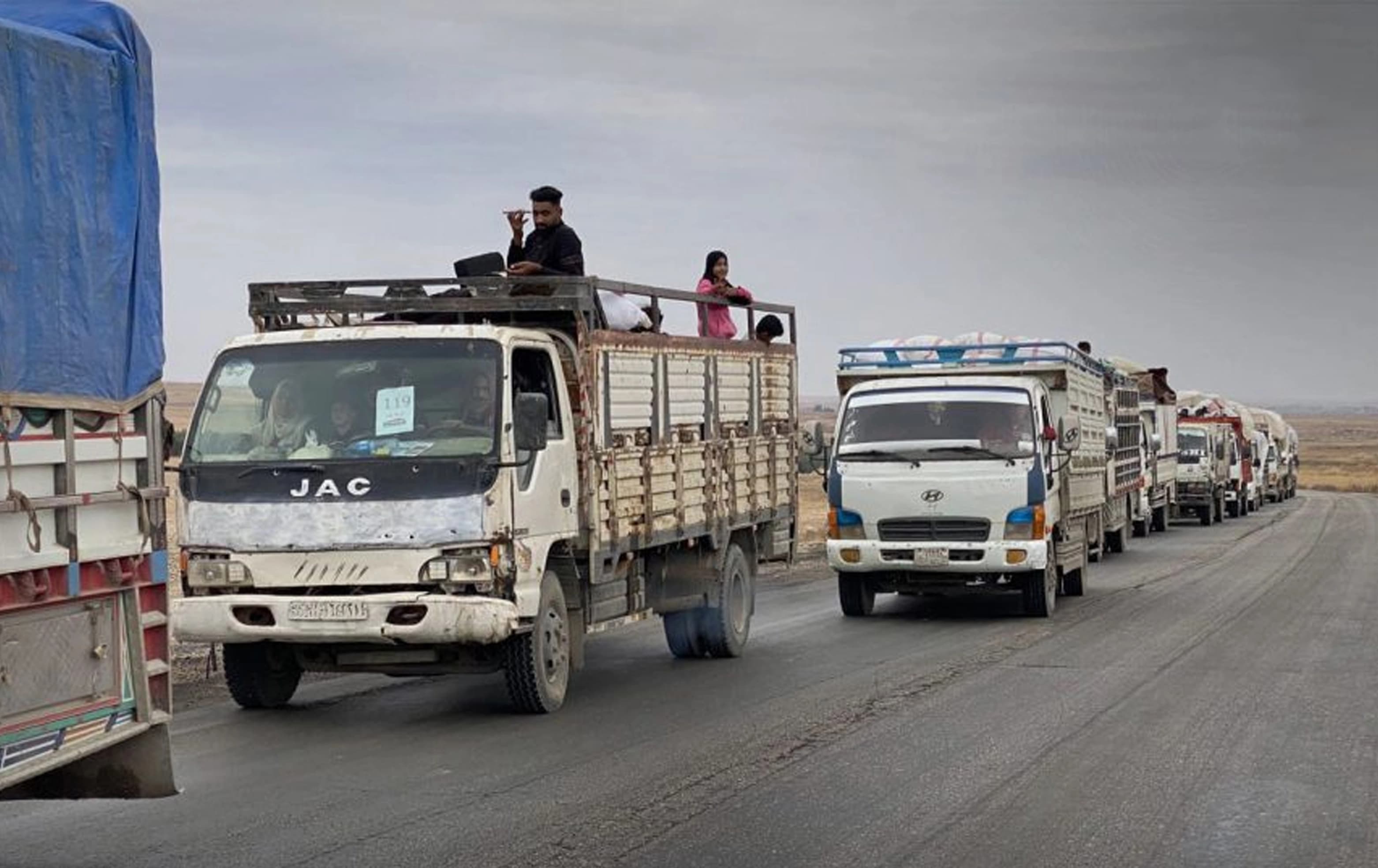

ERBIL, Kurdistan Region— Dozens of displaced residents protested at a camp in northeast Syria's Hasaka province on Wednesday after being excluded from a list of 645 families scheduled to return to their homes in Sari Kani (Ras al-Ayn) and its countryside, demanding that authorities accelerate the return process.
The London-based Syrian Observatory for Human Rights (SOHR) reported that protestors blocked the road in front of the sixth organized return convoy as it prepared to depart from Washokani camp in Hasaka’s countryside, setting tires ablaze to protest their exclusion.
The displaced residents demanded that all families wishing to return be included in the process rather than limiting departures to selected lists. They also called for compensation for damage to their homes and properties.
The protest comes amid growing frustration among families displaced by Turkey’s 2019 military offensive in northeast Syria, as the pace of returns remains constrained by security concerns, damaged infrastructure and unresolved property disputes.
Hasaka Deputy Governor Ahmed al-Hilali told Syria’s state-run SANA news agency Wednesday that the sixth convoy comprised 645 families returning to Sarki Kani and its surrounding countryside.
“Returns in the last two weeks have accelerated, explaining that the authorities are working to organize additional journeys according to available resources and actual need for families wishing to return,” SANA quoted Hilali as saying.
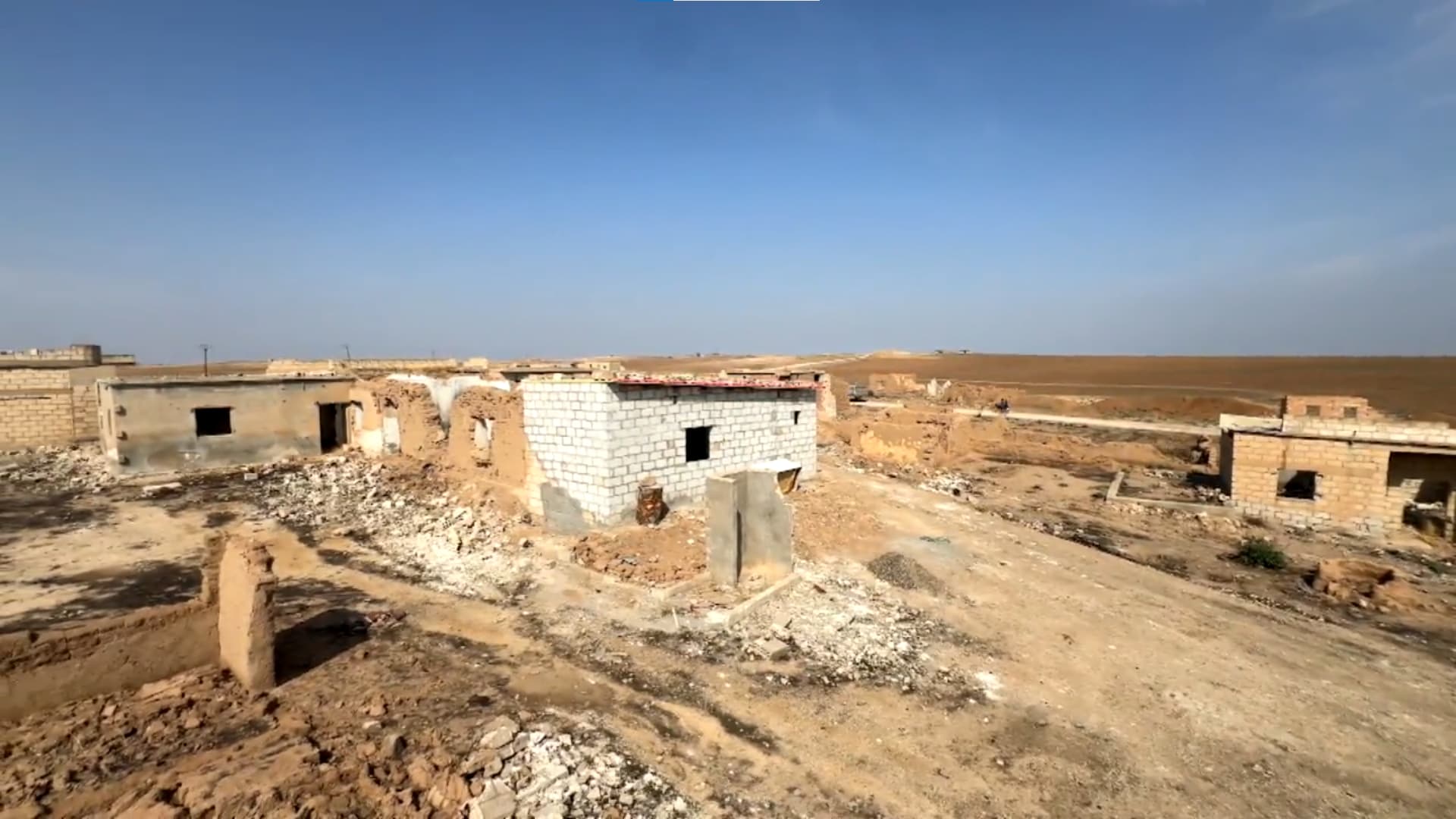
However, he acknowledged that several obstacles continued to delay the process, particularly the need to remove landmines and explosive remnants of war from certain areas and roads, repair damaged infrastructure, and restore essential public services.
“The return of residents is not merely a matter of organizing trips; rather, it requires creating conditions that ensure their stability and prevent them from being forced to flee once again,” he said.
He added that further security and logistical coordination was necessary to ensure the safety of returnees and allow all willing families to return to their homes.
According to SANA, displaced residents have called for more frequent return convoys before the onset of winter to give families time to repair their homes and prepare for resettlement.
Wednesday's convoy was the sixth organized return since the program began in August. Including Wednesday's 645 families, the six convoys have collectively facilitated the return of 3,181 families, according to the official figures.
SOHR confirmed that Wednesday’s convoy included families departing displacement camps in Derik and other areas of northeast Syria, heading to their hometowns and villages around Sari Kani.
The watchdog urged authorities to establish a clear and transparent mechanism for organizing returns, including explaining why some displaced families were excluded from departure lists and when they could expect to return.
It also stressed the need to protect property rights, provide compensation and ensure that families could return voluntarily, safely and with dignity.
Sari Kani and Gri Spi (Tel Abyad) fell under the control of the Turkish military and Ankara-backed Syrian armed groups following Turkey's October 2019 offensive, dubbed Operation Peace Spring.
The offensive displaced tens of thousands of residents, particularly Kurds, forcing many into camps and temporary shelters across Hasaka province.
The return process has faced obstacles beyond damaged infrastructure and explosive remnants of war.
In August, some Kurdish families returning with the first convoy were attacked by armed men, forcing them to flee their homes again.
Earlier this month, Mohammed Hajo, a member of Sari Kani's internally displaced persons committee, told Rudaw that some settlers occupying Kurdish homes were demanding up to $10,000 to vacate the properties.
He also reported that some returning families continued to face threats and intimidation, complicating efforts to restore their homes and livelihoods.
The return of displaced residents forms part of the broader implementation of the January 30 agreement between the Kurdish-led Syrian Democratic Forces (SDF) and the Syrian interim government, which provides for the integration of military and civilian institutions and guarantees the return of displaced people to their areas.