
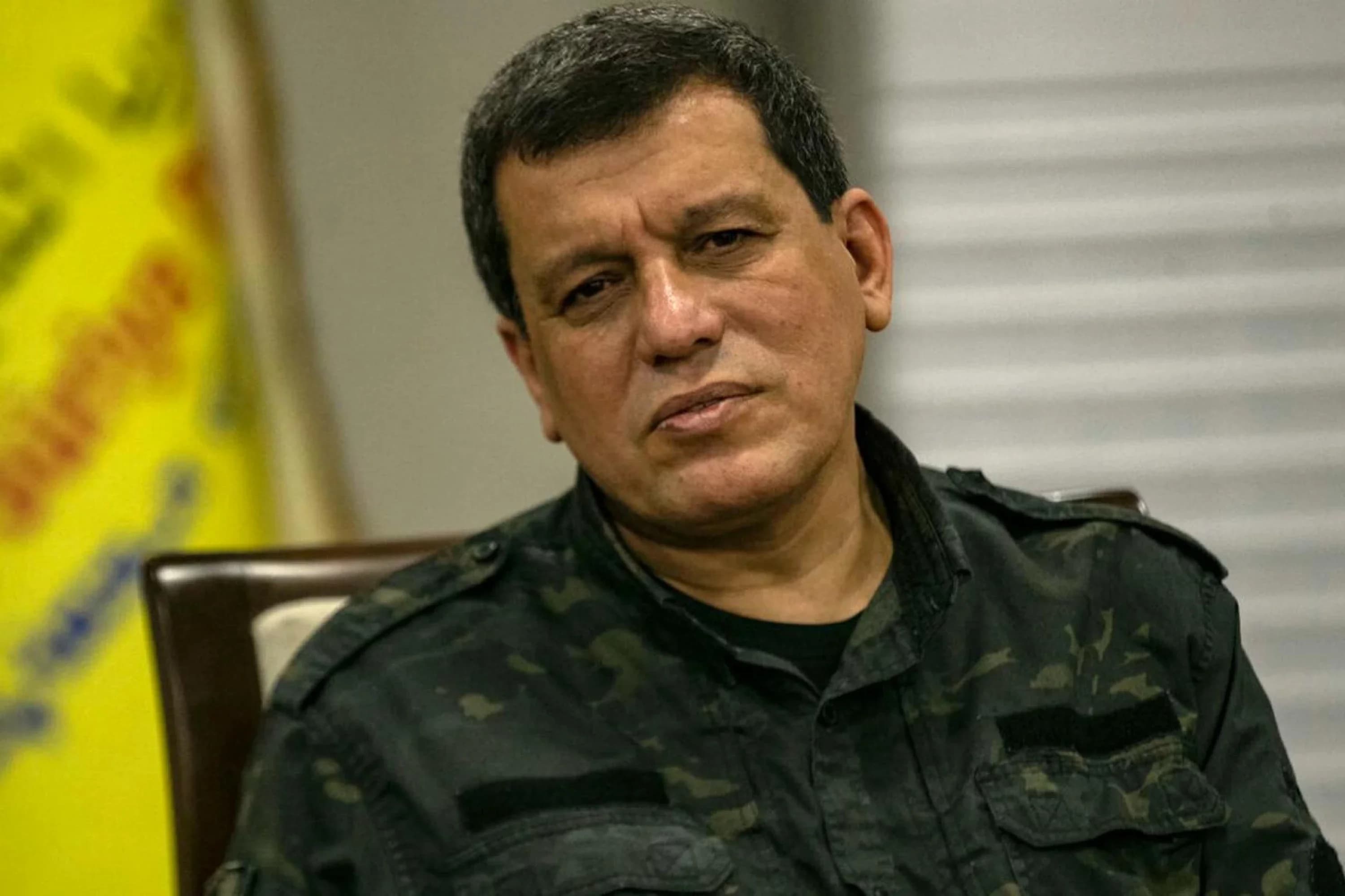

ERBIL, Kurdistan Region - Syrian Democratic Forces (SDF) Commander Mazloum Abdi on Monday condemned attacks on the first convoy of displaced residents returning to Sari Kani (Ras al-Ain), calling for accountability amid assurances that authorities in northeast Syria (Rojava) are coordinating with Damascus to facilitate safe returns.
"We condemn the attack on displaced Kurdish families returning to Sari Kani (Ras al-Ain), which was carried out in coordination with the Syrian state,” Abdi said in a post on X, calling on “the Kurdish street” to “exercise self-restraint, refrain from being drawn into any irresponsible acts, and safeguard our civil and security institutions” while acknowledging their “angry reactions.”
Displaced in 2019 after a Turkish invasion, the first convoy carrying around 400 families of Kurdish families who sought refuge in the Kurdish-majority Hasaka province returned to their homes in Sari Kani. However, they faced violence from a group of Arab settlers in the town.
Footage obtained by Rudaw shows armed men on motorcycles surrounding a vehicle carrying the Kurdish IDPs, attacking the car with AK-47 rifle butts, sticks, and stones.
The incident was followed by a strong reaction in Hasaka, where Kurdish residents stormed the headquarters of the Syrian General Security forces and took down the Syrian flag.
The SDF chief said they are working with “the relevant authorities to ensure the protection of returning displaced civilians and to hold accountable anyone proven to be involved in acts of aggression, in a manner that guarantees the rights of all and preserves the security and stability of the region."
Separately, Sipan Hemo, the SDF-appointed deputy defense minister, said the attack on the IDP convoy was carried out by “a number of saboteurs.”
"The state and relevant authorities will pursue those involved and take the necessary legal measures against them," Hemo added, urging people to “remain calm” and affirming that "no one can prevent the [indigenous] residents from returning to their cities and towns” as their right to return to their homeland is protected."
Sari Kani, a Kurdish-majority town, fell to Turkey and its Syrian proxies in 2019 following an extensive military campaign that forced Kurdish forces to withdraw. An estimated 200,000 residents were displaced to other Kurdish-held areas in Rojava following the takeover.
Properties belonging to displaced Kurdish families in Sari Kani were subsequently seized by Arab settlers and armed factions deployed in the city, with some settlers refusing to relinquish the properties and others demanding significant sums of money.
The return of Kurdish IDPs is outlined in the seventh clause of the January agreement between Damascus and the Syrian Democratic Forces (SDF).
While the final batch of Afrin IDPs returned to their homes in mid-July, the return process in Sari Kani had been delayed. Abdullah al-Jash'am, the chief Damascus-appointed administrator of the town, told Rudaw in late July that the returns depended "on reopening roads and clearing landmines."
"The Syrian defense ministry has been working for over a month to remove mines in the area," Jash'am noted at the time, adding that the territory was "heavily mined and very dangerous."

.png&w=3840&q=75)