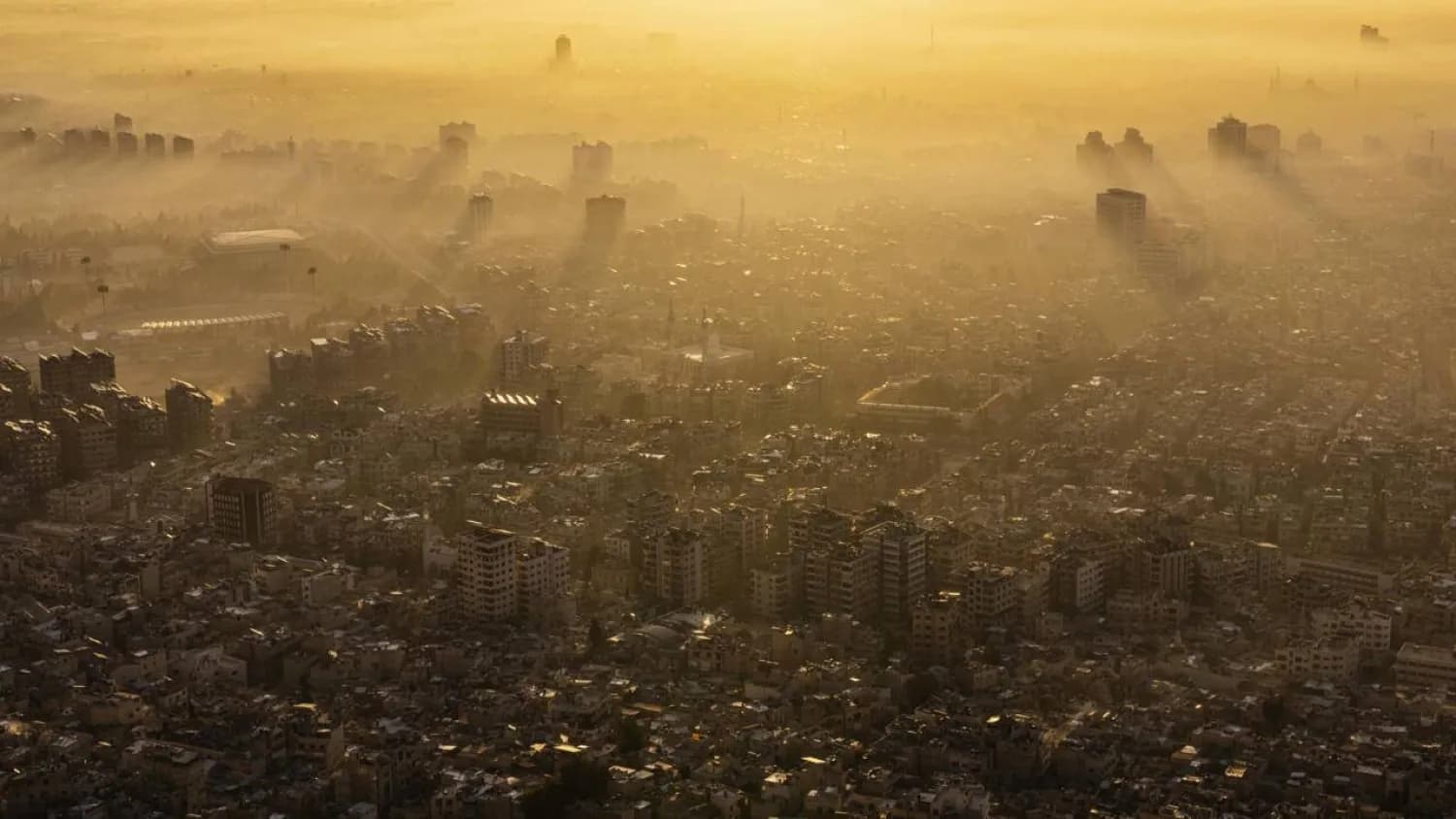
ERBIL, Kurdistan Region - French President Emmanuel Macron arrived in the Syrian capital of Damascus on Monday, marking the first visit by a Western head of state since the ouster of longtime Syrian ruler Bashar al-Assad, French media reported.
Macron, who is in Syria for a one-day visit, is set to advocate for a “free, pluralist Syria that respects each of its components,” Agence France Presse (AFP) quoted the Élysée Palace stating ahead of the French president’s visit, adding that he will further urge Damascus to play a role in moderating Middle East tension.
In a statement posted on X, the French leader declared, “I have come to express France's commitment to the Syrian people. For a sovereign, united Syria in all its plurality, and at peace with its neighbors.”
“Together, let us open a new page of stability and peace,” Macron emphasized.
Macron's visit to Syria is the first by a French president since Nicolas Sarkozy (2007 - 2012) visited Damascus in 2009, two years before the eruption of the Syrian civil war in 2011.
The state-run Syrian Arab News Agency (SANA) reported that the French leader and “his accompanying delegation began an official visit to Syria today, Monday,” adding that Syrian Foreign Minister Asaad al-Shaibani had received them “upon their arrival at Damascus International Airport.”
The visit “embodies the transition of Syrian-French relations into a new phase based on mutual respect and equal partnership,” SANA said.
Earlier that day, the outlet had reported that the December 2024 ouster of Assad presented “historic opportunity” for Damascus and Paris to “reshape their relationship” after a decade of severed ties, since France in 2012 cut diplomatic ties with Syria.
In February 2025, Paris hosted an international conference attended by Shaibani, who met with his French counterpart, Jean-Noel Barrot. In May, Syrian interim President Ahmed al-Sharaa embarked on an official visit to France at Macron's invitation.
Meanwhile, the Syrian presidency on Sunday stated that Macron’s visit is part of wider “communication and political consultations between Damascus and Paris,” adding that talks would center on “ways to strengthen bilateral relations and issues of common interest.”
Moreover, the delegation accompanying the French president “includes investors and representatives from French companies, in a sign that both sides are leaning toward strengthening economic cooperation alongside political files,” the Syrian presidency noted.
The big picture
Macron's visit to Damascus comes shortly before he is set to travel to the Turkish capital to participate in the NATO summit, which Syria's al-Sharaa is also scheduled to attend, as well as to hold a high-profile meeting with US President Donald Trump in Ankara on Wednesday, the White House confirmed on Monday.
Discussions between Sharaa and Trump are expected to touch on the regional situation in the Middle East, including security dynamics in Syria’s western neighbour, Lebanon, specifically the situation of the Iran-backed Hezbollah movement there following the fall of Tehran’s previous ally in Damascus, Assad.
Of note, the US President in mid-June floated the idea of the Sharaa-led government’s “taking care of Hezbollah,” stating, during a meeting with Qatar's Emir Sheikh Tamim bin Hamad Al Thani at the G7 Summit in France, stating that, “To be honest with you, I think they will do a better job at it [than Israel].”
“If Israel can't do the job without killing everyone else, he will do the job, Syria will do the job,” Trump said.
However, Syrian officials publicly resisted the American proposal.
When asked about the issue during a late-June interview with the Dubai-based al-Mashhad TV, Sharaa responded, “We don't want Lebanon to fall into what Syria fell into in the past.”
He added that while Damascus has “a deep problem with Hezbollah … today, the situation in Lebanon requires collective solutions and it is very possible to rely on Syria to seek a safe path towards a solution, but this does not mean war, nor does it mean the previous image of the former regime's tutelage.”
Instead, Sharaa explained that Syria would back “restoring support for the Lebanese state, strengthening its institutions and searching for channels of communication between Lebanon's political parties, including Hezbollah.”
On its part, Paris has long denounced foreign military intervention in Lebanon, warning that it would create more instability. In an early-June readout of a phone call between Macron and Trump, the Élysée Palace quoted the French president lauding his American counterpart's “commitment to the sovereignty and territorial integrity of Lebanon,” while emphasizing the importance of “collective support for the Lebanese authorities.”
Earlier, in March, during an emergency United Nations Security Council (UNSC) meeting on Lebanon, France's Permanent Representative to the UN, Jerome Bonnafont, had also warned that “interventions and occupation would only create a breeding ground for new instability, rather than lasting peace.”
“It is crucial to step up support to the Lebanese Armed Forces, whose mission in this difficult context is to continue disarming Hezbollah,” the senior French diplomat added, asserting Paris's “firm commitment to Lebanon's sovereignty and stability.”
Last updated 09:30 PM.