
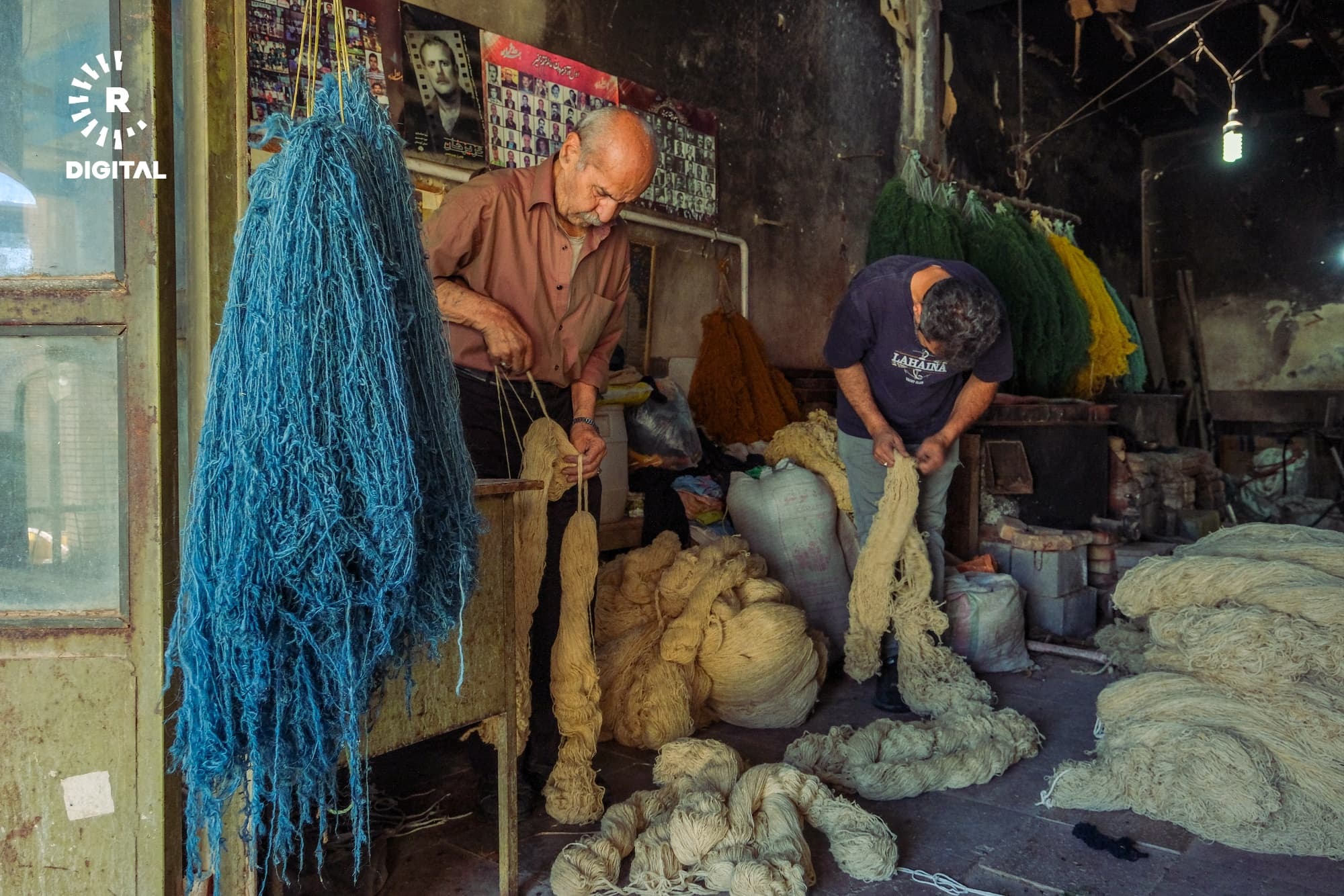

ERBIL, Kurdistan Region - A 700-year-old traditional wool dyeing craft in the city of Sanandaj, Kurdistan province, in the western areas of Iran (Rojhelat) is at risk of disappearing, as the last remaining workshop struggles to survive amid modern industrial competition.
Locally known as Khomkari, the craft has been preserved by veteran artisan Mohammad Ali Ilanpour, who has dedicated 65 years of his life to the profession.
"I have been doing this work for nearly 65 years," Ilanpour told Rudaw. "The profession is fading away and is gradually being forgotten. This craft has a history of 700 years, and it should not be allowed to disappear."
Ilanpour began learning the trade when he was 15. Today, however, few people are willing to enter the profession due to its physically-demanding-nature and declining demand.
His son Pedram Ilanpour, is expected to become the sole heir to the family trade.
"There are only about five or six people across Iran who still practice khomkari like my father," Pedram said, adding that preserving the craft is more important than financial gain.
Sanandaj, long known as one of the main centers of Kurdish handmade carpet production in Rojhelat, has seen demand for traditionally dyed wool decline as machine-made carpets have become more widespread.
"In the past, people wove carpets at home and kept them as valuable possessions, but that culture has largely disappeared," Ilanpour said.
Despite the decline, some carpet weavers remain committed to using hand-spun wool and natural dyes.
Parang Vakili, a carpet weaver, told Rudaw that although naturally dyed wool is more expensive, many artisans continue to prefer it.
"Even though the cost is higher, we spin our wool by hand and have it dyed in Sanandaj," she said.
In an effort to adapt to changing market demands, Ilanpour has expanded his range of dyes from 12 colors to more than 80 shades.
Sanandaj is home to two internationally recognized carpet brands, known as Hawshar Carpet and Sanandaj Carpet.
Ilanpour now hopes that carpet exports from the city can be revived, believing that renewed international demand could help save the centuries-old craft from extinction.
Kurdish carpet weaving is part of a centuries-old tradition of handmade textile production across the wider Iranian and Mesopotamian region, rooted in family apprenticeship and natural materials.
According to UNESCO, carpet-making skills are passed down through generations, preserving techniques, patterns, and dyeing methods rooted in local culture. The craft reflects regional identity and cultural heritage, but it is increasingly threatened by industrial production and changing lifestyles.
Photos by Sawsan Malaki