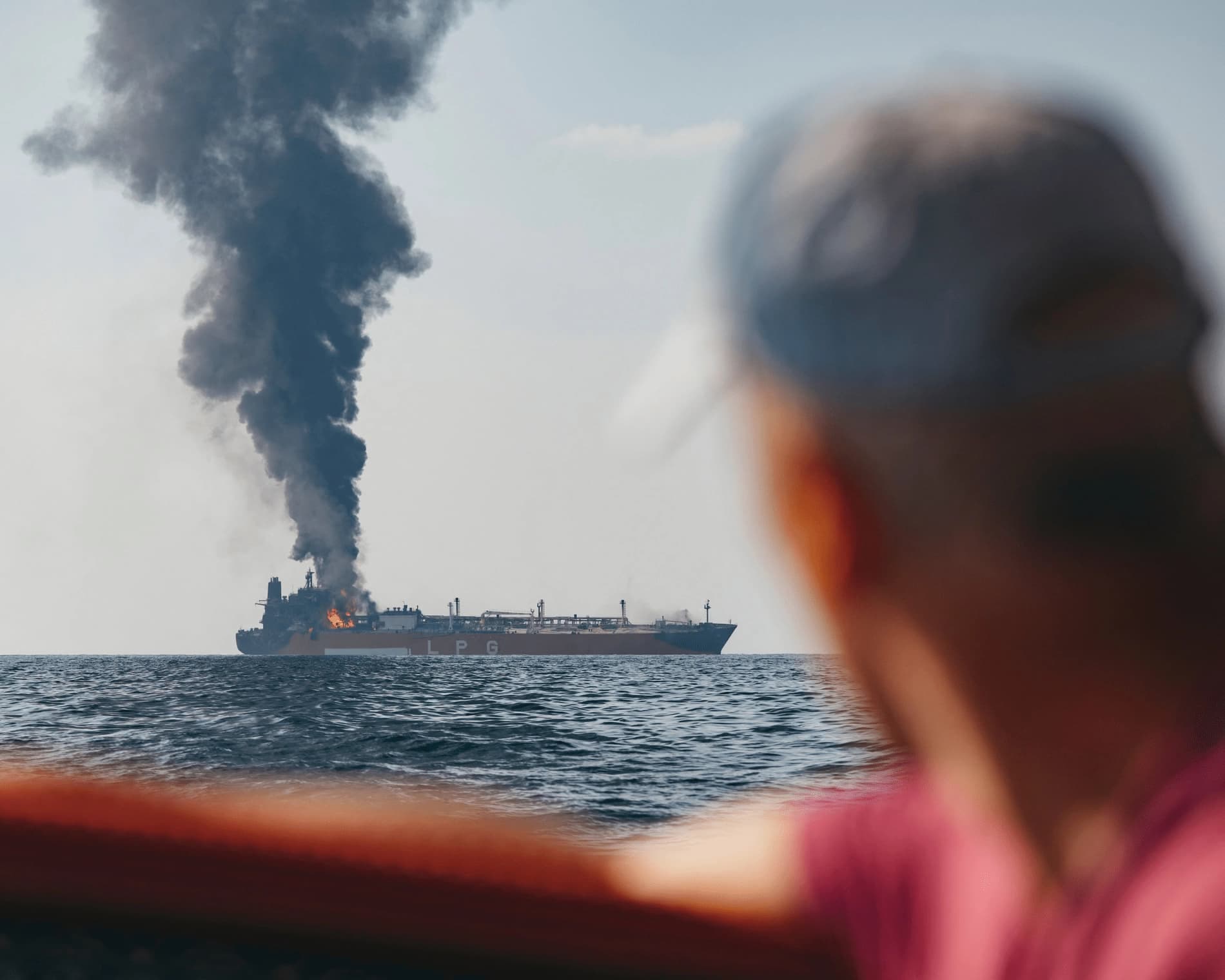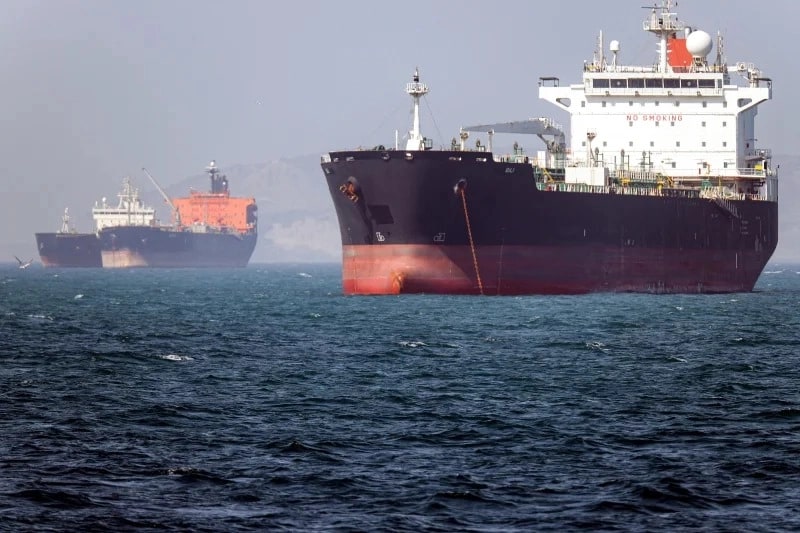

ERBIL, Kurdistan Region - A vessel was reported on fire in the Strait of Hormuz, north of Oman’s Khasab, on Thursday, with the crew’s status unknown, a maritime security monitor said, as the US military rejected Iranian media claims that commercial ships were striking sea mines in the strategic waterway.
The United Kingdom Maritime Trade Operations (UKMTO) said it received a report of the incident on Thursday, approximately nine nautical miles north of Khasab, Oman, after the master of a third-party vessel reported seeing another vessel on fire.
The incident follows a fortnight of alleged attacks from the Islamic Republic’s Guard Corps (IRGC), planting sea mines to prevent vessels from transiting the strategic waterway.
“Over the past 24 hours, 3 oil tankers exploded and caught fire after hitting a mine while passing through the unauthorized southern route of the Strait of Hormuz,” the IRGC-affiliated outlet ISNA reported on Thursday, adding that the tankers reportedly “turned off all their radar and navigation systems … and ignored the warnings of the IRGC Navy.”
However, the US Central Command (CENTCOM) rejected the claims.
“Over recent days and weeks, Iranian-controlled media have reported Iranian claims that commercial vessels are hitting sea mines while transiting the Strait of Hormuz. These claims are FALSE,” CENTCOM said.
The US military maintained that all internationally recognized primary transit routes through the strait had been “cleared of sea mines by U.S. forces,” saying that thousands of commercial vessels “have safely used the transit lanes and continue today.”
CENTCOM’s statement comes amid reported mediation efforts between Washington and Tehran to ease months-long tensions following the regional war that erupted in late February, with Qatar facilitating talks between the two sides.
Donald Trump and Washington have repeatedly claimed that hostilities against Iran might resume after the midterm elections.
Speaking to Rudaw on Wednesday, US Ambassador to the United Nations Mike Waltz described Trump as having “all options on the table” in the pursuit to stop Tehran obtaining a nuclear weapon.
Likewise, the Wall Street Journal reported on Tuesday that the US has told several Gulf countries to be prepared for a “short, intense military campaign after the U.S. midterm elections.”
On Monday, Tehran welcomed senior officials from Saudi Arabia, Turkey, and Pakistan following the latter’s request, according to state-run Islamic Republic of Iran Broadcasting (IRIB).
Iranian President Masoud Pezeshkian said that Iran “is ready to take steps towards deepening regional cooperation, resolving differences, and utilizing the shared capacities of Islamic countries,” IRIB reported.
In mid-June, the United States and Iran signed the Islamabad Memorandum of Understanding, brokered by Pakistan with Qatar's support, to establish a framework for ending hostilities and pursuing a broader agreement.
However, the understanding failed to produce a lasting settlement. Military tensions subsequently escalated, with the United States resuming its naval blockade of Iranian ports in mid-July and carrying out strikes on Iranian military targets, as Iran’s oil exports are down to zero.
Iranian strikes on ships in the Strait of Hormuz have surged significantly since the start of October, with at least 30 vessels being reported and confirmed since Monday, marking the month with the highest number of incidents since March, according to the Washington Institute.