
ERBIL, Kurdistan Region - Three Saudi nationals were killed and several “citizens and residents” were injured in two attacks on Riyadh’s main airport on Thursday, the Kingdom’s aviation authority said on Friday, amid escalating hostilities between the Iran-backed Ansarullah movement in Yemen - widely known as the Houthis - and the Saudi-led coalition backing the internationally recognized government in Aden.
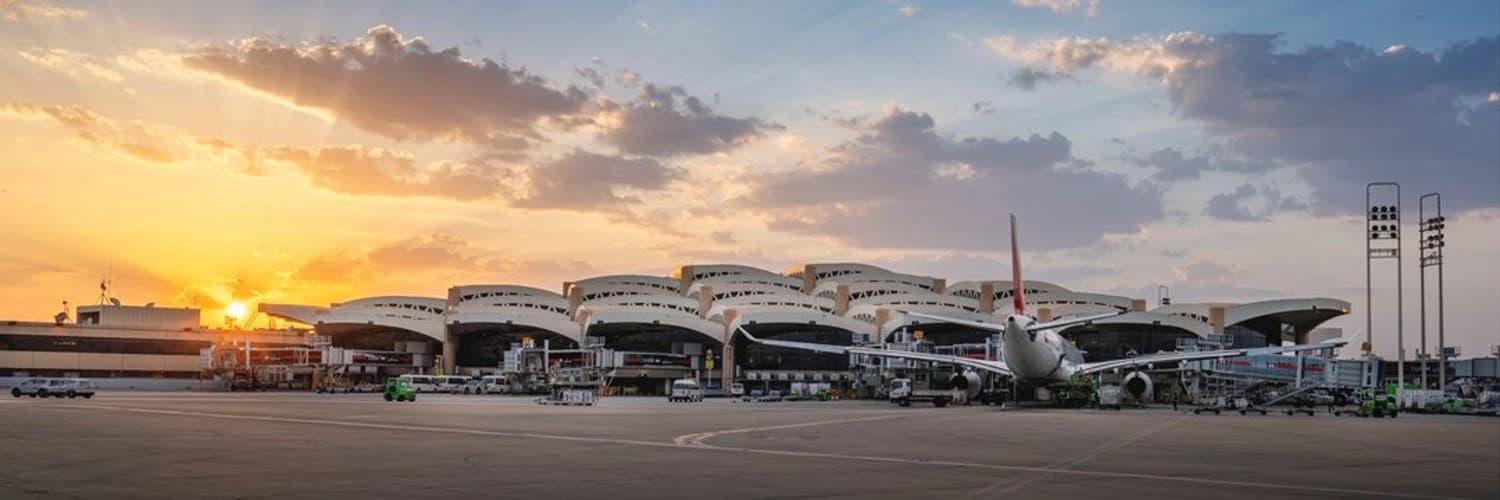
“King Khalid International Airport [in Riyadh] was subjected to two attacks,” the General Authority of Civil Aviation (GACA) said in a statement, detailing that “the first attack targeted airport facilities” and the second “targeted an aircraft belonging to Saudi Arabian Airlines.”
“The two attacks resulted in the martyrdom of three Saudi citizens” and caused “injuries to a number of citizens and residents of various nationalities,” ranging “from minor to severe,” as well as “some material damage.”
The GACA noted that it was coordinating “with relevant security authorities to assess damages and take all necessary measures to ensure the safety of passengers and workers,” and to maintain the security of the Kingdom’s civil aviation system. It added that operations at the airport had resumed and air traffic had “returned to normal.”
While the GACA did not say who was behind the attacks, Major General Turki al-Malki, spokesperson for the Saudi-led coalition backing the IRG in Aden, warned earlier in the day that “Houthi attacks on civilians and civilian objects will be met with a firm response.”
Malki on Thursday pointed to a previous attack on the Riyadh airport and another on Abha International Airport in the Kingdom’s southwest, saying that in response, “the [Saudi-led] Coalition’s joint forces carried out a comprehensive operation involving the destruction of a total of 82 legitimate military targets” belonging to the Houthis in the northwestern Saada, western Hodeidah, northeastern al-Jawf, and east-central Marib governorates.
The targets comprised “11 ballistic missile storage facilities in mountainous areas in Saada, as well as command and control centers, communication systems, missile and weapon depots, and headquarters” for the Houthis, Malki added.
Thursday’s deadly attacks are the latest in a wider round of escalation that began in mid-July, when the Saudi-aligned internationally recognized government in Aden disabled a runway at Houthi-controlled Sanaa International Airport to prevent an Iranian aircraft from landing.
The Houthis then launched ballistic missiles and drones at Abha International Airport and announced a blockade of Saudi shipping in the Red Sea, framing it as “siege for siege,” a reference to what they describe as a Saudi blockade of their ports.
Riyadh categorically denied the latter accusation. In response, Saudi-led coalition warplanes struck Hodeidah Port, while the IRG’s Yemeni Air Force carried out strikes on Houthi missile and drone sites in Marib and al-Jawf.
In September, the Iran-backed group launched a broad offensive across western Yemen, capturing the strategic Hodeidah districts of Hays and al-Khawkhah before advancing on the Red Sea port city of Mokha, Perim and the Hanish Islands, taking control of Yemen’s entire Red Sea coastline and strengthening their leverage over international shipping lanes critical to Saudi’s oil exports.
The Houthis also struck economic and military sites in the Kingdom's southern cities, including Abha, Jizan, and Khamis Mushait, causing fires and injuries.
On Monday, Rashad al-Alimi, head of the IRG’s Presidential Leadership Council (PLC), announced Operation Dawn of Yemen, a full-scale military counteroffensive backed by the Saudi-led coalition to retake Houthi-held territory. Meanwhile, the defense ministers of Saudi Arabia, Turkey, and Pakistan met in Riyadh to discuss the implementation of regional deterrence measures under the Mecca Joint Defense Agreement.