ERBIL, Kurdistan Region - US Central Command (CENTCOM) on Sunday said it shot down two Iranian one-way attack drones that were threatening maritime traffic in the Strait of Hormuz.
CENTCOM said on X its forces “shot down two Iranian one-way attack drones that threatened international maritime traffic in the Strait of Hormuz,” adding that they “remain postured and ready to continue defending against Iranian aggression.”
The incident comes amid ongoing diplomatic efforts to secure a permanent truce between the US, Israel, and Iran following the six-week war. Although large-scale hostilities have eased, tensions persist through continued maritime confrontations in the Strait of Hormuz.
Similarly, on Saturday, CENTCOM said that Iran launched seven ballistic missiles toward Kuwait and Bahrain. The launches occurred hours after US forces shot down four Iranian one-way attack drones heading toward the Strait of Hormuz, prompting the US to subsequently strike “Iranian coastal surveillance radar sites in Goruk and on Qeshm Island to defend against further maritime attacks.”
Meanwhile, Iran’s Islamic Revolutionary Guard Corps (IRGC) detailed Saturday that “four violating tankers - provoked and guided by the aggressor US military - attempted to exit the Strait of Hormuz illegally” without coordinating with Iranian naval authorities. It added that one tanker was “targeted and stopped,” while the others retreated.
The IRGC further stated that, in response to US actions near Iranian southern islands, “two US airbases in Kuwait named Ali al-Salem, as well as key remaining facilities at the US Navy’s Fifth Fleet in Bahrain, were immediately targeted by ballistic missiles.”
Iran in early May established the Persian Gulf Strait Authority (PGSA) to enforce a permission-based transit system in the Strait of Hormuz, collecting fees from vessels and inspecting or targeting those that do not comply.
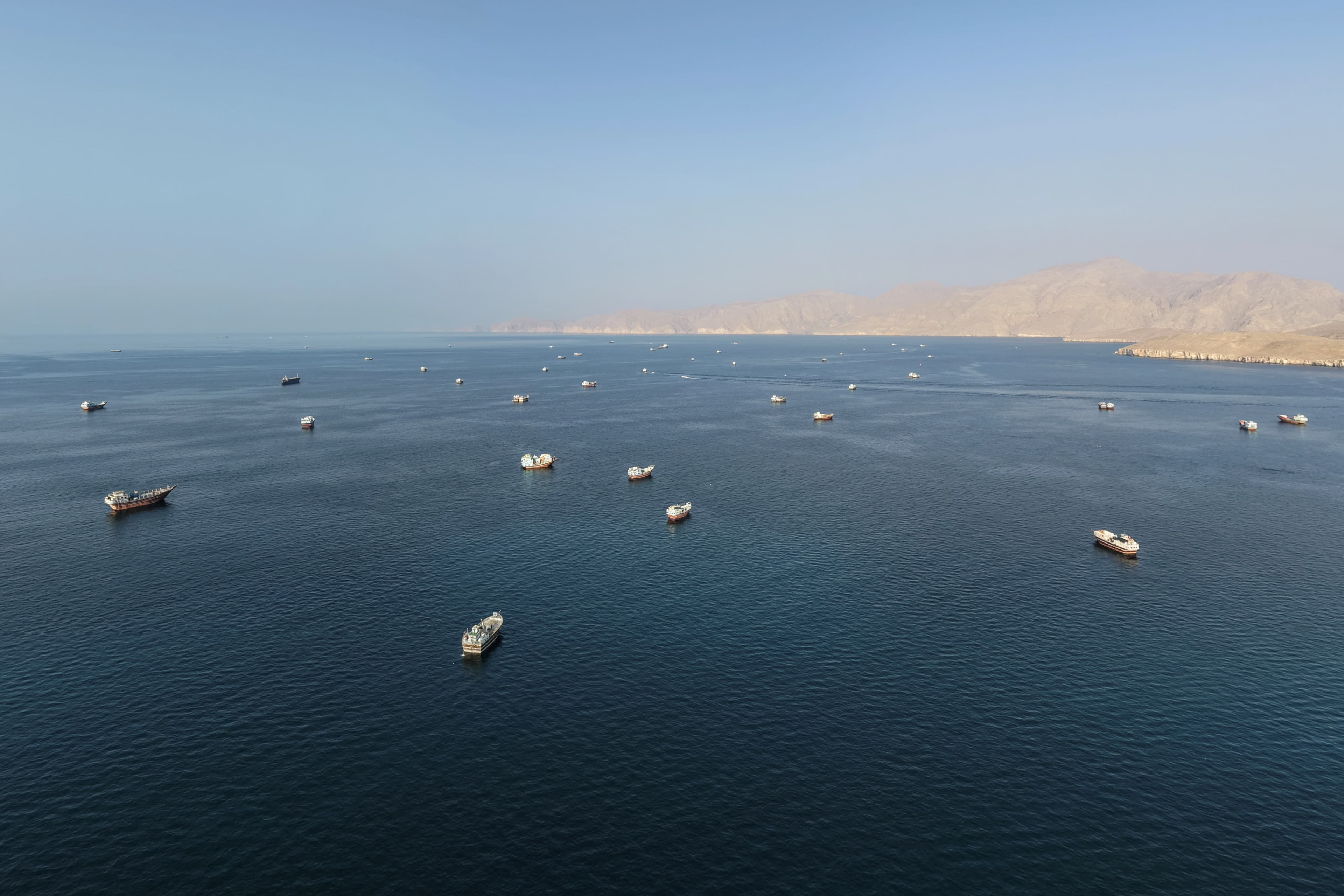
The Strait of Hormuz, a vital chokepoint linking the Persian Gulf to the Gulf of Oman and the Arabian Sea, handles roughly 21 million barrels of oil per day during peacetime - about a quarter of global seaborne oil trade and around 20 percent of global petroleum consumption. It also serves as a key route for nearly 20 percent of global liquefied natural gas (LNG) exports.