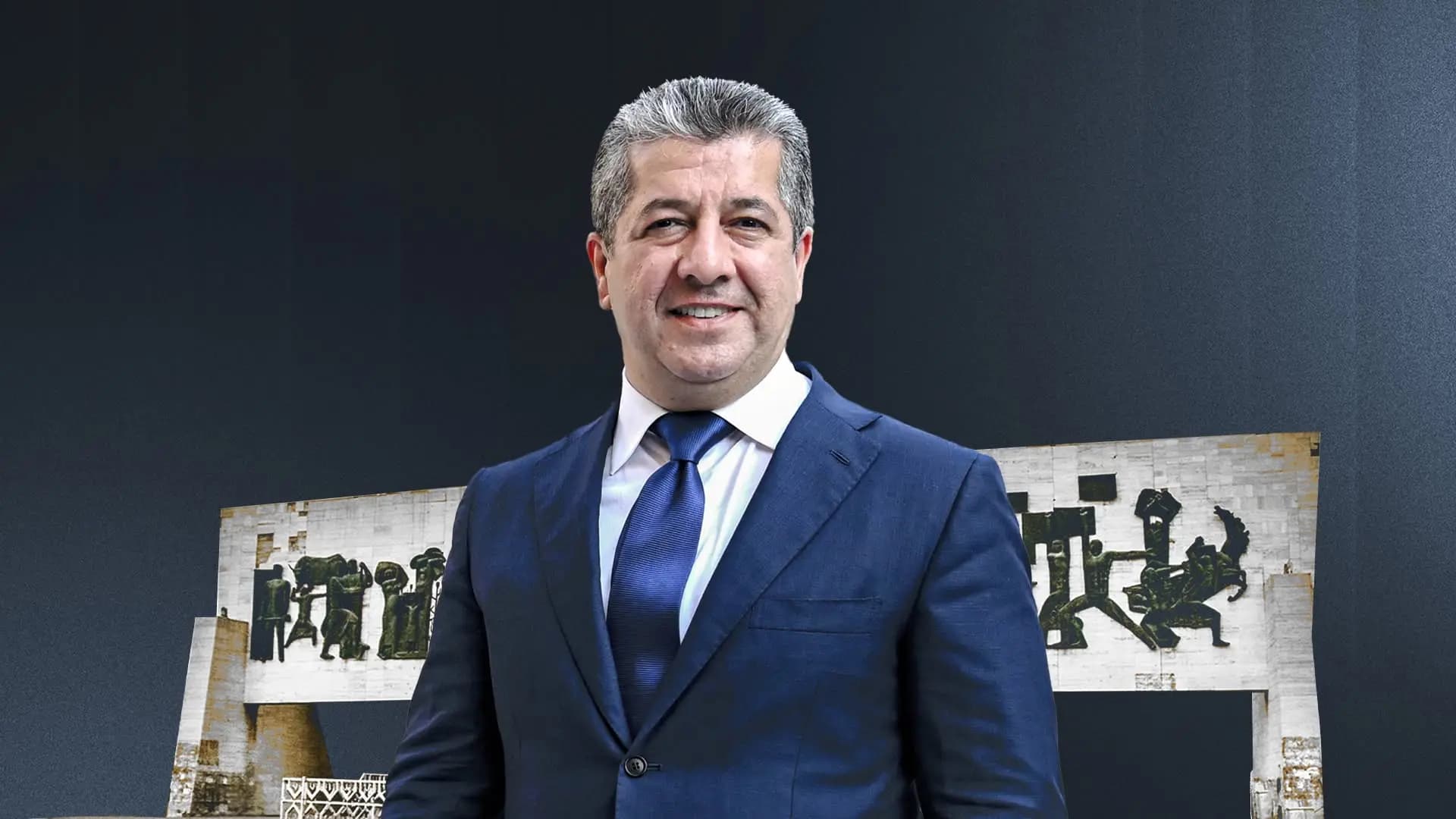

ERBIL, Kurdistan Region - Kurdistan Region Prime Minister Masrour Barzani arrived in Baghdad on Monday, leading a high-level Kurdistan Regional Government (KRG) delegation for talks with Iraqi officials over the Region’s budget share in Iraq’s 2027 federal budget, the KRG said.
KRG said Monday that Barzani would meet with Iraqi Prime Minister Ali al-Zaidi and several other political leaders.
“The main focus of the talks is securing the constitutional rights, financial entitlements, and the Kurdistan Region's share in the 2027 federal budget,” the statement said.
The visit comes a day after a separate senior KRG delegation arrived in Baghdad to resume negotiations with federal officials over the Region’s financial entitlements in the draft 2027 budget bill.
Danar Abdulghaffar, spokesperson for the Kurdistan Democratic Party (KDP) parliamentary bloc, told Rudaw’s Nahro Mohammed on Monday that the delegation had presented the Region’s demands to the Iraqi Ministerial Council for Economy on Sunday.
The demands were submitted to Mohammed Tamim, deputy prime minister and head of the council, who is expected to relay them to Zaidi, Abdulghaffar said.
The KRG’s Department of Media and Information said the delegation would meet with relevant federal authorities to “present its comments on the draft bill's provisions and seek to secure the constitutional rights” of the people of Kurdistan and the financial entitlements of public sector employees.
The negotiations come ahead of an Iraqi Council of Ministers meeting scheduled for Tuesday. However, a source in Baghdad told Rudaw’s Hiwa Jamal that the regular cabinet meeting would proceed without discussing the 2027 federal budget bill, with deliberations on the draft postponed to a later date.
The source said at least seven ministers are currently outside the country, prompting the postponement. Budget discussions could instead be rescheduled for Saturday.
The draft budget allocates the Kurdistan Region 12.7 percent of federal funds, subject to several conditions, including the transfer of oil and non-oil revenues to Baghdad.
Erbil seeks to increase its share to 14.14 percent, citing the results of Iraq’s 2024 population census.
Another major sticking point is the volume of oil the Region must deliver to the federal government’s State Oil Marketing Organization (SOMO). Baghdad is seeking at least 400,000 barrels per day starting in 2027, while Erbil has proposed handing over between 250,000 and 280,000 barrels daily.
The draft bill also outlines a mechanism to settle accumulated financial obligations between Erbil and Baghdad, estimated at 12.7 trillion Iraqi dinars ($8.4 billion) for the 2004–2026 period, over three years. It also addresses the Region’s outstanding debts to the Trade Bank of Iraq (TBI).
Despite a 2025 agreement between the two governments to market Kurdistan Region oil through SOMO, disagreements over production volumes, payments to oil companies and revenue-sharing arrangements have continued to obstruct a lasting settlement.