
ERBIL, Kurdistan Region - Erbil Governor Omed Khoshnaw said Sunday that rescue teams saved 300 people from devastating flash floods that killed two residents overnight, pledging to clear affected neighborhoods within two days and establish a mechanism to compensate those who suffered material losses.
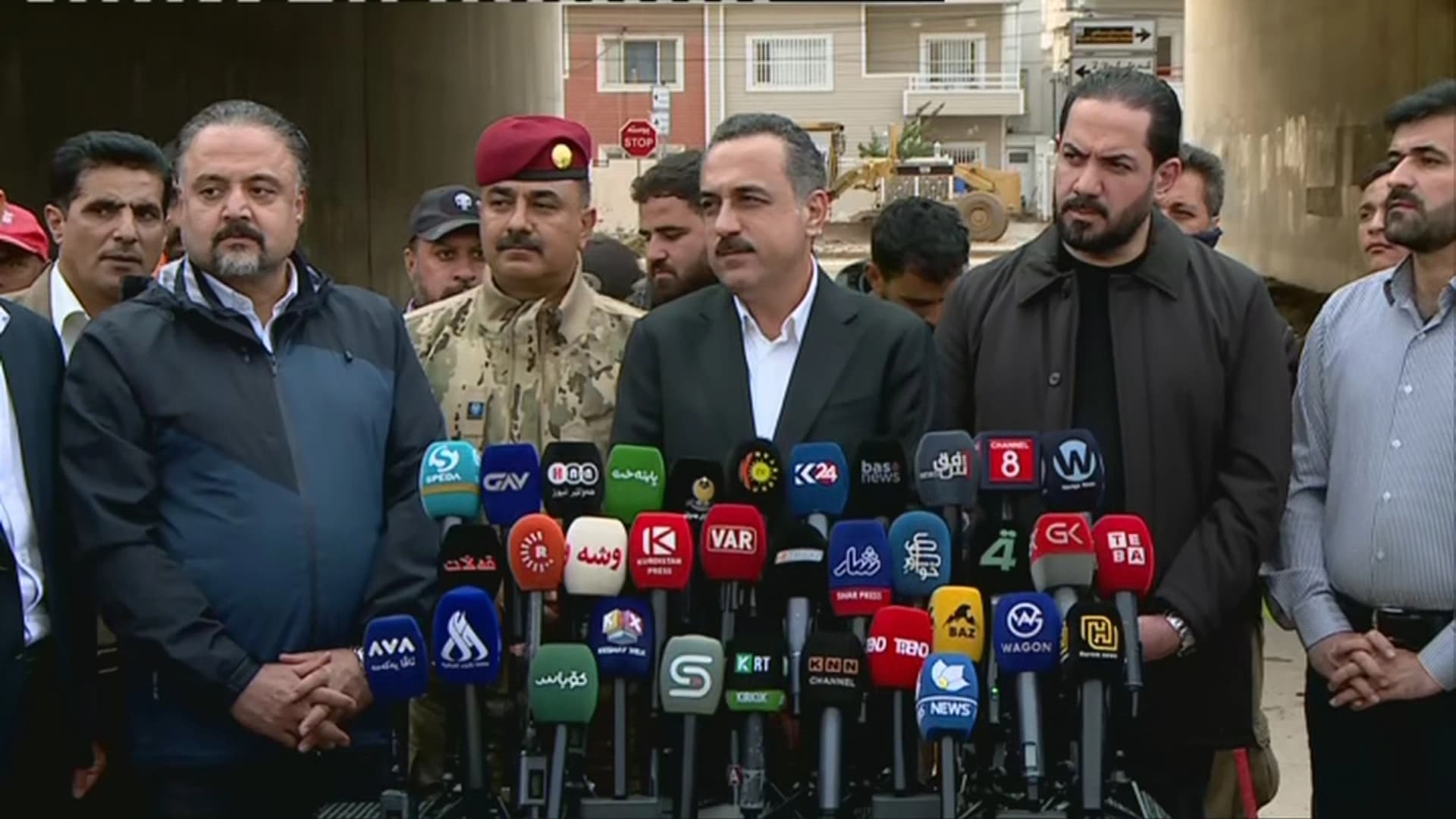
Speaking at a press conference, Khoshnaw said a committee involving trained members of the Kurdistan Regional Government's (KRG) Joint Crisis Coordination Center (JCC) and the Barzani Charity Foundation had been established to assess damage to homes, businesses, and other properties.
"We will try to evaluate the damage soon and compensate the people," he said, adding that a brigade of Ministry of Interior’s (MoI) military police known as the Zeravani forces had joined municipal teams to clear debris and restore access to damaged neighborhoods. "We will be done with the cleaning in the next two days."
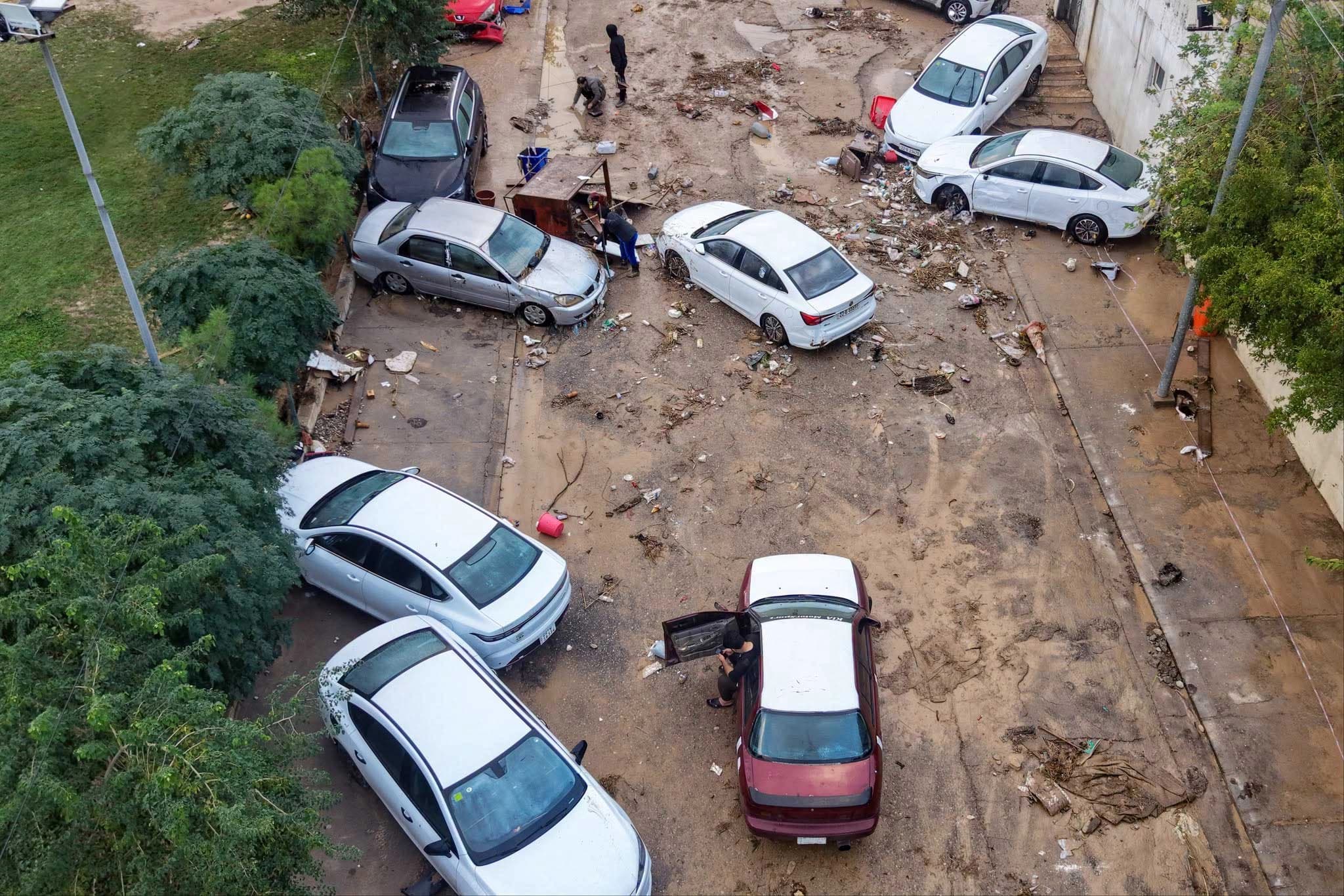
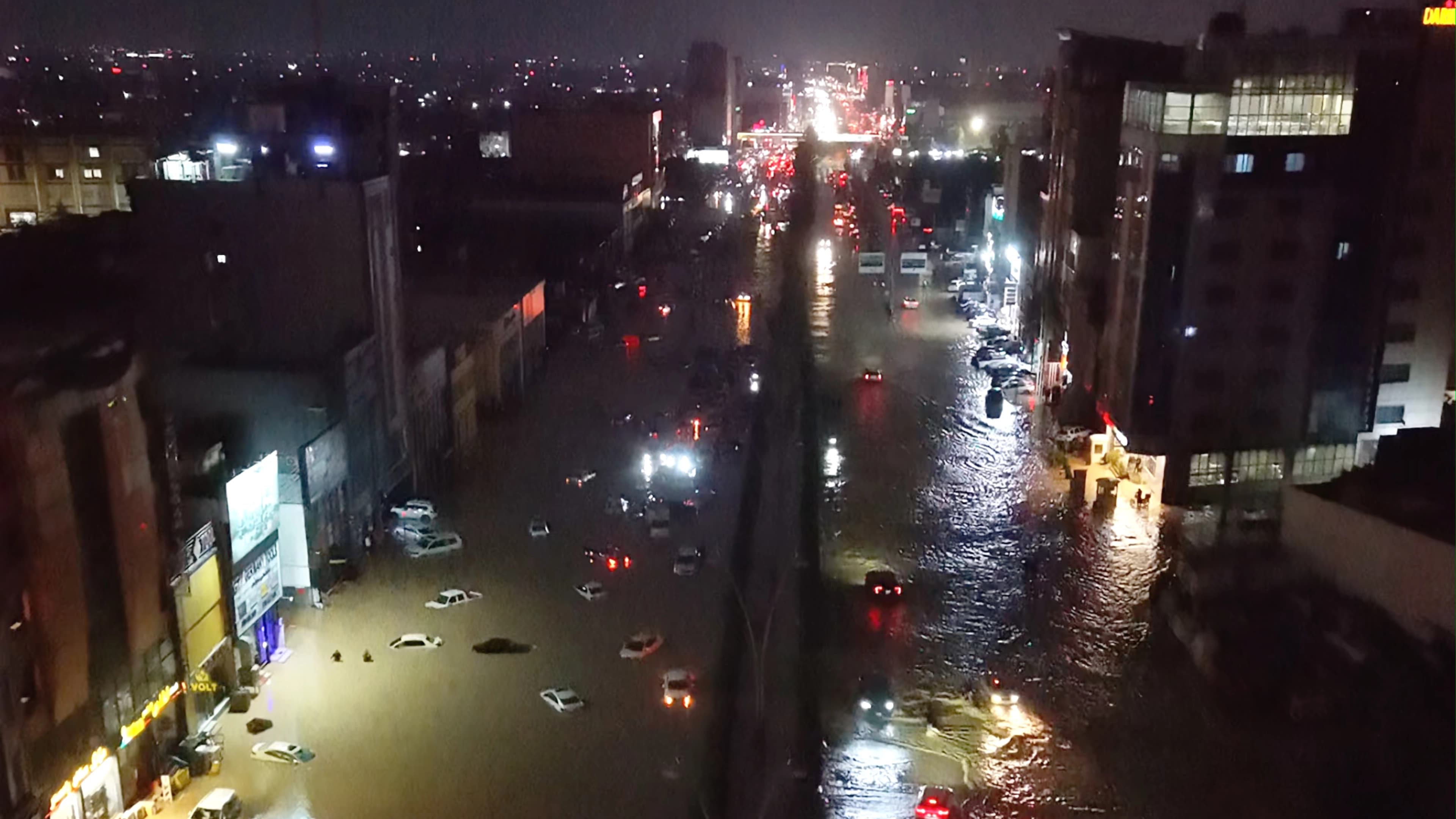
Saturday's torrential rainfall triggered widespread flooding across Erbil, sweeping away vehicles, submerging homes and businesses, and disrupting traffic. The floods killed a five-year-old child and a volunteer who had been assisting rescue operations, renewing concerns about the city's drainage infrastructure and preparedness for increasingly destructive rainstorms.
"Two people unfortunately lost their lives," Khoshnaw said, offering condolences on behalf of the KRG and the Erbil governorate.
Kurdistan Region Prime Minister Masrour Barzani on Sunday afternoon telephoned the families of Mohammed Rasoul and Mustafa Sarkawt, who died in Saturday night's floods in Erbil, to offer his condolences. Erbil Governor Omed Khoshnaw also attended both mourning ceremonies on Barzani's behalf.
Khoshnaw praised the efforts of civil defense personnel, police, Asayish, Zeravani forces, and municipal workers, saying their cooperation had prevented further casualties.
"Hundreds who had been stranded atop the rooftops of their houses have been rescued," he said.
"If there had been no solidarity, the human loss would have been more significant."
He added that Prime Minister Masrour Barzani had remained in contact with emergency teams throughout Saturday night, instructing them to prioritize the safety of residents.
According to figures released by the Kurdistan Region's General Directorate of Meteorology and Seismology on Sunday, Erbil's city center recorded 70 millimeters of rainfall over the preceding 24 hours. Other parts of the province received even more, with 88.5 millimeters recorded in Choman and 83.3 millimeters at the Gomaspan Dam.
Khoshnaw said the meteorological department had recorded at least 47 millimeters near the governorate building in central Erbil, while the heaviest rainfall was concentrated in the city's outskirts.
He cited the Kasnazan retention pond as an example of the extraordinary volume of water, saying the pond had taken the entire previous rainy season, from the winter of 2025 to spring 2026, to overflow.
"Yesterday, it overflowed in an hour and a half, and the water flowed a meter above the pond," he said.
"Most of the water that flooded Erbil came from the outskirts of Erbil, and it rained a lot inside Erbil as well."
The governor acknowledged weaknesses in the city's flood protection infrastructure despite preparations undertaken before the rainy season.
"We have a waterway weakness located in Seberdan, but we haven't had the budget to construct the systems," he said, adding that drainage and sewage cleaning had been carried out ahead of the storm.
"Therefore, the large amount of rain was the reason, but there were weaknesses."
He also said flooding had interrupted electricity supplies in some areas near retention ponds, disabling pumps intended to remove accumulated water.
Khoshnaw said a meeting held at the governorate on Sunday morning had ordered an investigation into the response, with officials who failed to perform their duties facing accountability.
The governor also criticized Baghdad for what he described as inadequate emergency funding for the Kurdistan Region.
He said previous flood damage in Erbil had exceeded 40 billion dinars (approximately $26.7 million), while the federal government had allocated only 2 billion dinars ($1.3 million).
Khoshnaw maintained that the Region had not received its emergency funding entitlements from Baghdad, accusing the federal government of allocating funds on paper without transferring them.
"We would like to call on the federal government to transfer us the emergency budget of Erbil which they have only allocated to us on paper in the past years," he said.
He urged Baghdad to provide financial assistance to compensate residents affected by the latest flooding.