
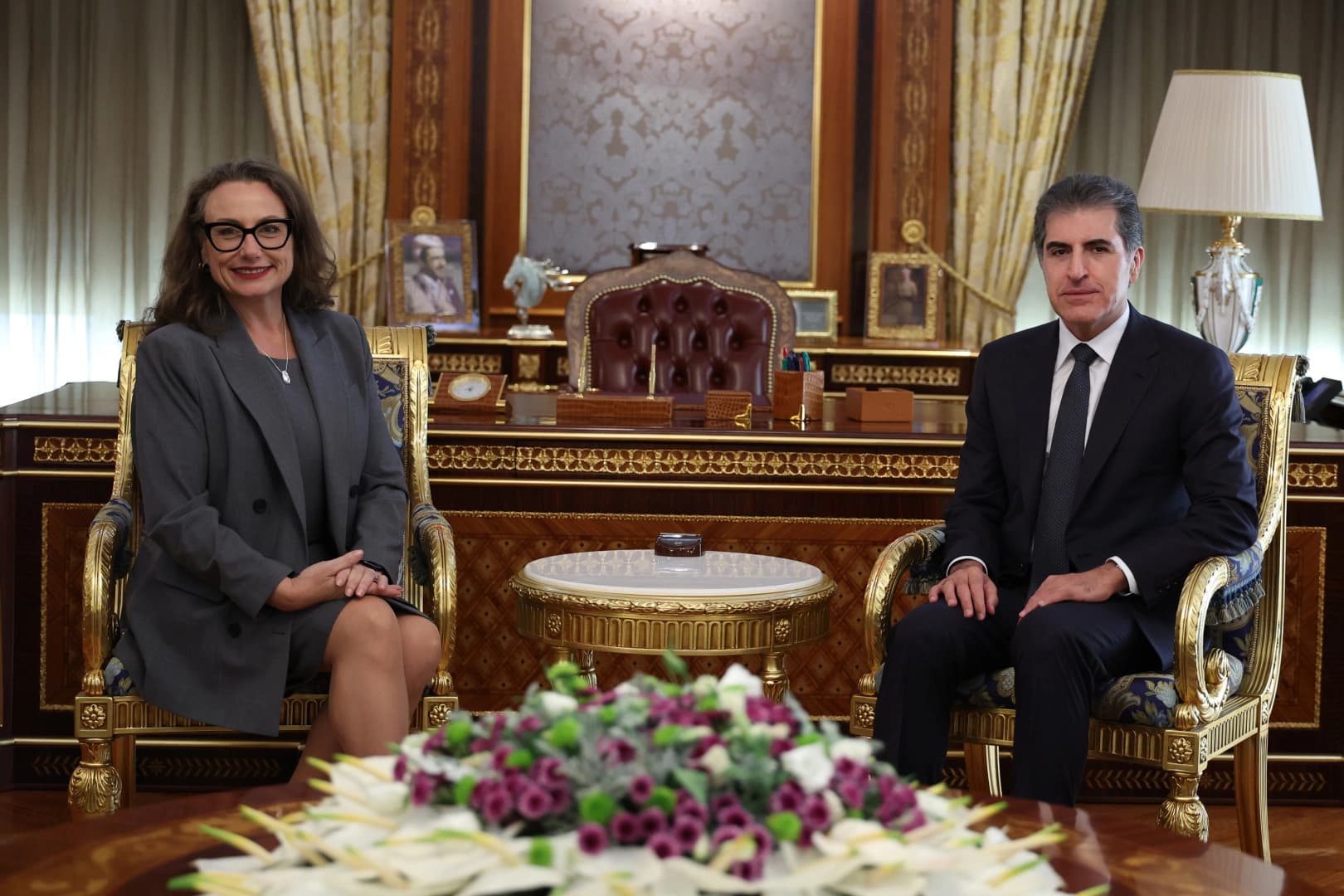

ERBIL, Kurdistan Region - Kurdistan Region President Nechirvan Barzani received US Consul General in Erbil Gwendolyn Green, the presidency said in a statement on Wednesday, highlighting the need to accelerate steps to form the tenth cabinet of the Kurdistan Regional Government (KRG).
“Both sides agreed on the necessity of internal unity, as well as working to expedite steps” toward the formation of the new KRG cabinet, read a statement from the Region’s presidency.
While the Kurdistan Region held parliamentary elections in October 2024, cabinet formation remained stalled due to political disagreements between the Kurdistan Democratic Party (KDP) and the Patriotic Union of Kurdistan (PUK) over political appointments and governance system.
The PUK’s alliance with the main opposition party, the New Generation Movement (NGM) in July served to exacerbate tensions. The bloc combined their respective 23 and 15 seats in government formation talks with the KDP, which holds 39 seats in the Region’s 100-seat legislature, giving the bloc greater leverage - a move rejected by the KDP, which insisted on dealing with each entity separately.
Recent meetings between senior officials from both parties have signaled the possibility of a breakthrough, despite the absence of a mutually-agreed framework to resolve the outstanding issues, including the PUK’s demands for larger shares in key posts.
Of relevant note, the KDP holds the KRG presidency, premiership, and judiciary, along with ministries such as interior and oil as well as the Region’s Foreign Relations Department.
Furthermore, President Barzani and Green on Wednesday underscored resolving lingering issues between Erbil and Baghdad “on the basis of the constitution, preserving stability, and reviewing the latest political and security developments in the region.”
Issues between the KRG and the federal government primarily revolve around the scope of constitutional privileges granted to the Kurdistan Region, including the extent of control over oil exports, as well as budget allocations.
Due to tensions over the Region’s permissibility to export oil, Baghdad has cut Erbil’s budget share since 2014.
Baghdad passed a three-year federal budget law in 2022, under which previous arrangements set the KRG's share at roughly 12.5 percent after deducting sovereign expenditures, including defense and foreign affairs.
The KRG has demanded 14.1 percent of the national budget based on the country's recent census in 2024, as the Iraqi government prepares the 2027 budget bill for submission to parliament before the end of the year.
The draft budget bill has raised alarm in Erbil, where regional officials argue that the financial allocations prepared in Baghdad fail to uphold constitutional decentralization or meet basic public obligations.
.png&w=3840&q=75)