
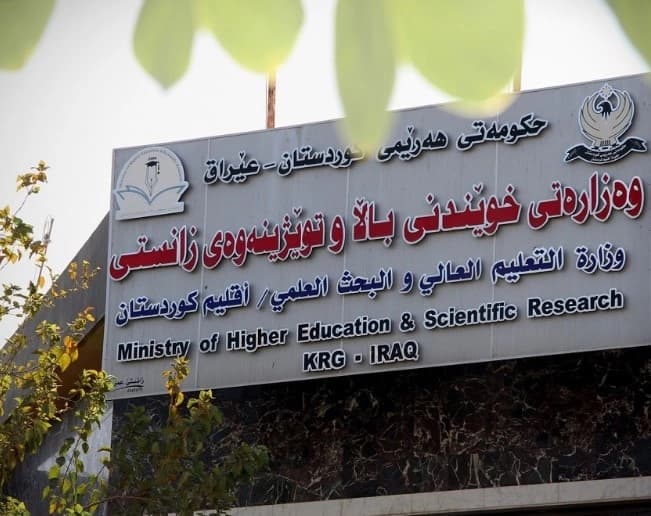

ERBIL, Kurdistan Region - The Kurdistan Regional Government’s (KRG) Ministry of Higher Education and Scientific Research on Sunday issued an eight-page regulatory decree enforcing strict behavioral and academic standards for faculty and students, following a recent scandal involving a prominent Salafist preacher and university lecturer.
The new directive, signed by minister Aram Mohammed Qadir, outlines 30 provisions for instructors and 32 for students across all public and private institutions. The regulations take effect immediately and will be fully enforced starting the 2026–2027 academic year.
The guidelines follow the ministry's late June decision to permanently ban controversial Salafist preacher and university lecturer Abdullatif Ahmad from teaching following allegations of sexual misconduct involving female students. Investigations into the case are ongoing, while Ahmad has taken a leave of absence and traveled abroad.
Under the new framework, the ministry mandates non-discriminatory teaching practices and strictly prohibits instructors from pursuing personal or romantic relationships with students. If an instructor marries a student during their education, the instructor will lose teaching rights in that department and must be transferred out of the college or institute.
"If an instructor marries a student during their education, the instructor must be transferred out of the department, college, or institute and lose teaching rights in that department," the decree states.
Direct phone calls between instructors and students are also banned; all communication must occur exclusively through official university channels or class representatives. Lecturers are barred from joining off-campus personal trips with students, limiting outings to official, university-sanctioned field trips.
Accepting gifts from students is classified as bribery under the new guidelines and will trigger an investigation and referral to competent courts.
The directive also addresses conflicts of interest, barring instructors from teaching, supervising, or evaluating classes or committees that involve a spouse or relatives up to the fourth degree.
Students are similarly prohibited from relying on favoritism (wasta), pursuing romantic relationships with staff, or inviting instructors to personal meals. Furthermore, students are barred from bringing food into classrooms, hosting personal celebrations on campus, and using mobile phones during lectures without the explicit permission of instructors.
Violations of the directive will be handled under applicable public sector discipline laws, student disciplinary codes, or criminal courts.

.jpg&w=3840&q=75)
.png&w=3840&q=75)