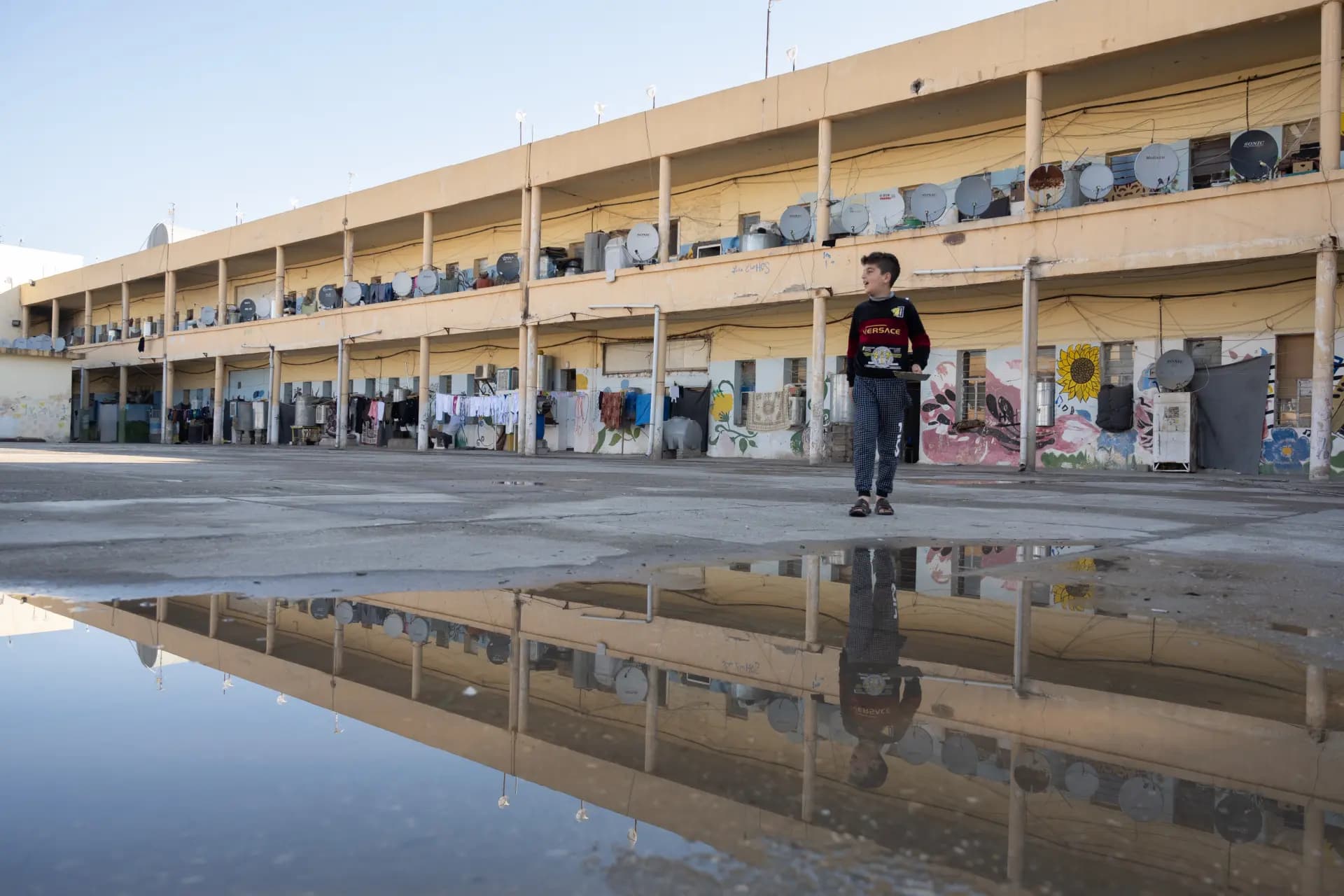

ERBIL, Kurdistan Region - The Kurdistan Region Statistics Authority on Wednesday began conducting refugee livelihood assessments in 1,600 households to evaluate household demographics, poverty rate, employment barriers and integration of displaced populations.
Shwan Abbas, supervisor of the refugee survey at the Statistics Authority, told Rudaw's Syamand Mohammed that they "have been working on the survey for some time, and it covers all refugees."
He said the survey aims to gather information on refugees’ living conditions and livelihoods through qualitative and quantitative means. The process covers refugees across the Kurdistan Region and is expected reach completion by mid-September.
The survey will collect data from 1,600 refugee households in the region’s provinces over the course of one month, according to the Statistics Authority. One of its objectives is to determine the extent of poverty among refugees, amid concerns over poor living conditions among some refugee communities.
The Kurdistan Region hosts the majority of refugees and asylum-seekers registered in Iraq. According to the United Nations High Commissioner for Refugees (UNHCR), more than 343,000 refugees and asylum-seekers were registered in Iraq as of July 2026, with nearly 80 percent living in the Kurdistan Region.
The UN agency said 42 percent of registered refugees and asylum-seekers in Iraq live in Erbil, 26 percent in Duhok and 11 percent in Sulaimani provinces, while the remainder are in other governorates. About one-third of those in the Kurdistan Region live in nine refugee camps.
The latest UNHCR figures show that 88 percent of registered refugees and asylum-seekers in Iraq are from Syria, followed by Iran at 2.6 percent, Palestine at 2.4 percent and Turkey at 2 percent.
The Kurdistan Region’s Joint Crisis Coordination Center reported in 2025 the residence of more than 900,000 refugees and internally displaced people living in the region, including around 269,000 refugees. Of those, roughly 251,000 were refugees from Syria and the Kurdistan Region’s west, while more than 7,000 were from Turkey and about 8,000 from Iran.
The UNHCR's July 2026 update confirmed the organization’s continued support for refugee registration and documentation in Iraq and facilitated the voluntary return of 271 Syrian refugees in July. It recorded 149 refugees and asylum-seekers having departed Iraq for resettlement in Canada, Australia and the United Kingdom during the month.
The survey is expected to provide updated data on refugees’ socioeconomic conditions, household data, access to resources and poverty levels in the Kurdistan Region, according to the Statistics Authority.

.png&w=3840&q=75)