ERBIL, Kurdistan Region - Oil production in the Kurdistan Region remains "at a very low level" due international companies having suspended production over security threats, the Kurdistan Region Interior Minister said Tuesday, adding that firms will resume work if adequate security guarantees and protection are provided.
“The conflict has stopped, but there has continuously been a type of threat against the Kurdistan Region,” Rebar Ahmad, the Kurdistan Region Interior Minister, told Rudaw's Ranja Jamal on Tuesday, reiterating hopes “that the efforts of the honorable Federal Prime Minister will succeed in putting an end to these threats, so that no longer - neither from outside Iraqi territory nor from within Iraqi territory - will attacks be carried out against the Kurdistan Region.”
“If there are guarantees, the companies will resume their work; however, a very large part of the companies have suspended oil production, which is why oil production in the Kurdistan Region is currently at a very low level,” he said.
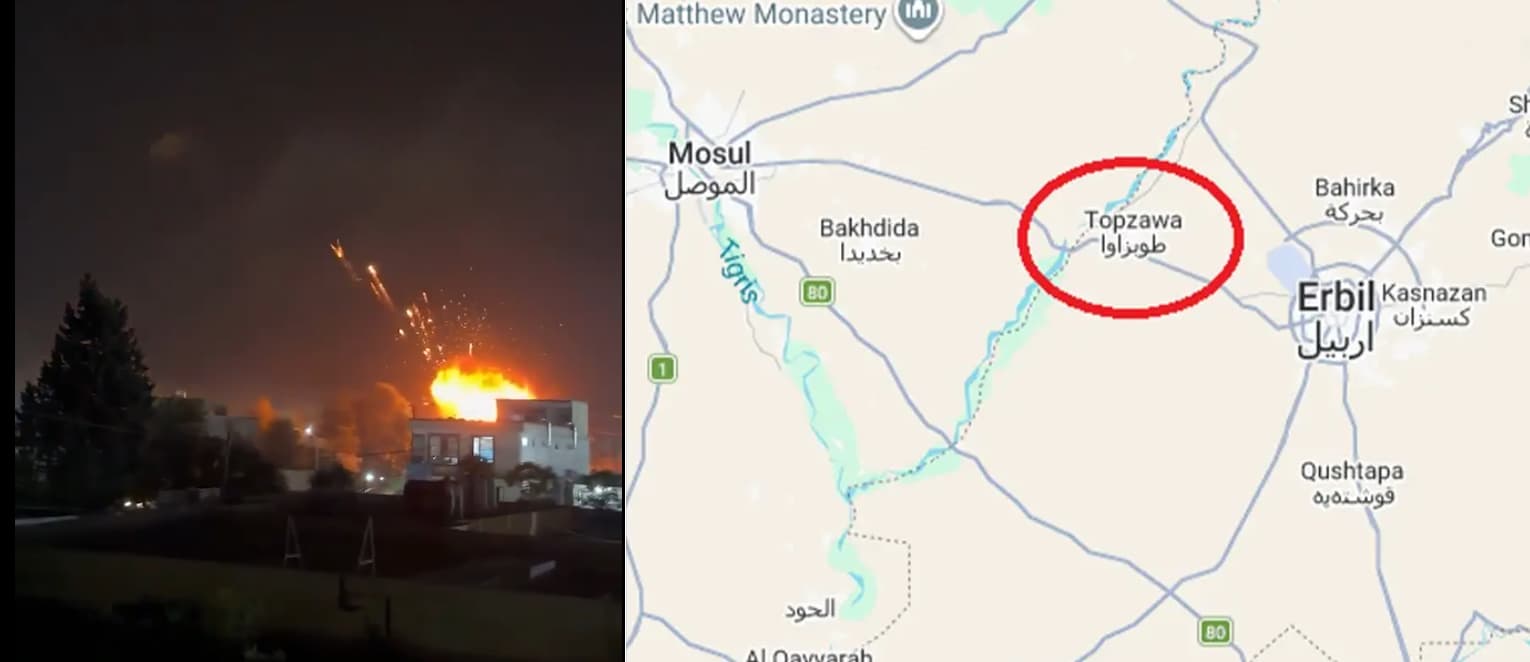
Security threats have jeopardized energy production in the Kurdistan Region since the start of the Iran-US war in late February, with several international companies suspending or reducing operations following drone attacks during the war and renewed regional tensions in July.
Concurrently, the US-led coalition to confront the Islamic State (ISIS) and several European military missions is fast approaching its September 30 withdrawal deadline, taking with it Patriot and other defense systems the Region had relied on for defense protection.
“What remains is what the nature of the relationship between Iraq and these countries - especially the United States and European nations - will be based upon, and that is something that will be discussed,” said Ahmad, who emphasized that “shared interests, security, and regional stability are important both for Iraq itself and for the international community.”
Ahmad said the Kurdistan Regional Government (KRG) is working with international oil companies and the Iraqi army’s General Staff to establish security arrangements, including the deployment of defense and anti-drone systems around energy facilities since Baghdad does not currently have sufficient capacity to protect the facilities.
“They have promised that since they themselves do not have the capacity to protect us, they [Baghdad] have promised to cooperate by allowing the companies to bring in these defense systems,” he said.
Several international firms, including Dana Gas, Pearl Petroleum, and ShaMaran Petroleum initiated shut-ins and suspended production for prolonged periods, following drone and missile attacks.
ShaMaran, who reported a sharp decline in production at its Atrush and Sarsang fields in Duhok province, said average combined production fell to 1,900 barrels per day in the second quarter of 2026, down 94.7 percent from the previous quarter, citing security conditions and the impact of the Iran war.
The Kurdistan Region has repeatedly called for stronger protection of its territory and critical infrastructure amid drone attacks in recent months even as Dana Gas confirmed in late July that production "will be carefully and gradually increased."
While Baghdad and Erbil have discussed security arrangements and the role of international forces after the coalition’s planned transition in Iraq, US and UK defense pull-outs highlight a gap with far-reaching effects that extend to the Kurdistan Region’s finances and the very heart of the economy itself.