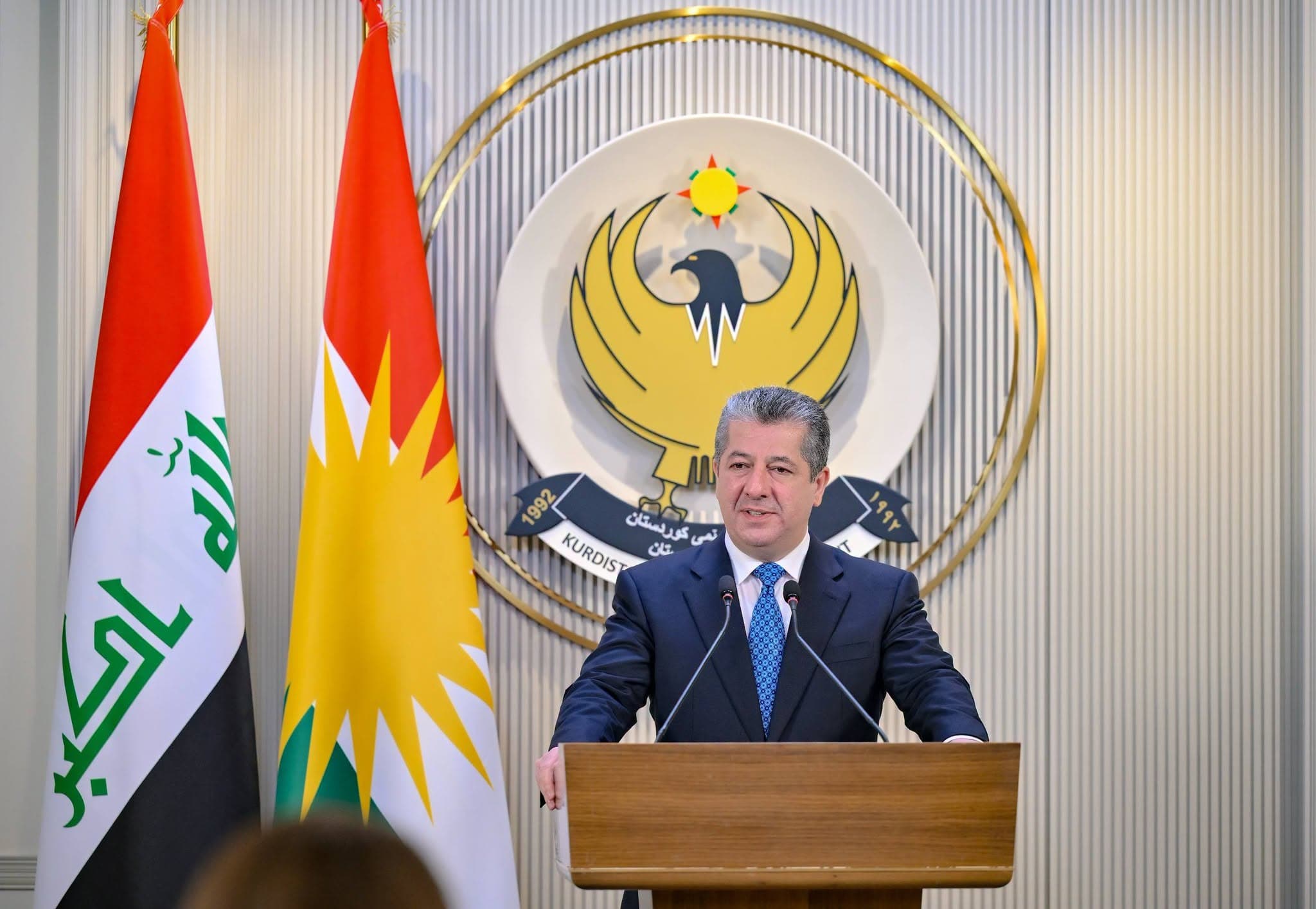

ERBIL, Kurdistan Region - A number of drones that recently targeted the Kurdistan Region were launched from the direction of Iraq's northern city of Mosul, Prime Minister Masrour Barzani said during a press conference on Monday, urging Baghdad to prevent armed groups from operating outside state control as power outages and limited fuel supply continue to impact the Region.
"Unfortunately, in the past two or three days, some of the drones that targeted Erbil once again came from within Iraq itself, from the direction of Mosul," Barzani told reporters.
"We have once again addressed our request to the federal government, and we reiterate that the federal government is responsible for stopping the sources of these risks and threats against the Region. It must not allow those who operate outside the law to jeopardize the security and stability of the Kurdistan Region and, consequently, all of Iraq in this manner."
Prime Minister Masrour Barzani's remarks come amid the ongoing drone and missile strikes on the Kurdistan Region following renewed US-Iran tensions over the past two weeks.
Calls for stronger air defense
Prime Minister Barzani reiterated that the Kurdistan Region, despite not being a party to the US-Iran war that began in late February, has repeatedly come under attack.
"We've raised our concerns about the vulnerability of the Kurdistan Region, especially that we are defenseless; we don't have adequate defense systems against incoming drones or missiles," he said.
Prime Minister Barzani said discussions are ongoing with both Baghdad and Washington over security arrangements regarding the planned withdrawal of the US-led coalition from Iraq at the end of September.
Coalition forces "have been providing protection because of their own presence, but of course, after the departure of these troops, there will be a different situation."
He also said energy companies, including Dana Gas, have sought approval for their own protection systems around critical infrastructure, describing remaining issues as largely logistical.
Fuel price caps under review
In response to a question from Rudaw's Payam Sarbast regarding the Iraqi government’s intervention regarding the fuel shortage as well as Prime Minister Barzani’s recent intervention and subsequent gasoline price caps, Barzani responded that the fuel shortages stem in part from Baghdad allocating the Kurdistan Region less than its fair share of fuel for domestic consumption, a move he attributed as one that "lacks all justice."
"The Iraqi government currently provides one million barrels of oil for domestic use to its citizens. Based on our quota, the Kurdistan Region should receive between 12.6 percent and 14 percent... However, the previous government in Baghdad imposed a rate on us, saying we were only entitled to 50,000 barrels [5 percent] and could not use more for domestic purposes."
The fuel shortages follow a wave of Iranian drone attacks and heightened tensions between the United States and Iran, which disrupted operations at several international energy companies in the Kurdistan Region.
Power shortage
Prime Minister Barzani said the government's Runaki initiative to provide 24-hour electricity saw disruptions after operations were temporarily suspended at Khor Mor gas field in Sulaimani's Chamchamal district, responsible for the provision of 80 percent of the Region’s gas.
"Recently, due to some security threats, the company unilaterally decided to reduce gas production, which significantly decreased the volume of gas in the Kurdistan Region and naturally impacted electricity generation," he said.
The temporary suspension of production came after multiple drones targeted Erbil in mid-July, marking a surge in regional hostilities and exchanges of strikes between the United States and Iran in recent months.
Cooperation with Baghdad
Prime Minister Barzani concluded the press conference by reaffirming support for Iraqi Prime Minister Ali al-Zaidi's administration and reiterating Erbil’s commitment to cooperation on reforms, anti-corruption efforts, and resolving longstanding political and security issues.
"We are ready to assist the federal government in every way and to help Mr. Ali Zaidi so that the Kurdistan Region can be an active part of the solution to these existing crises," he said.

.jpg&w=3840&q=75)