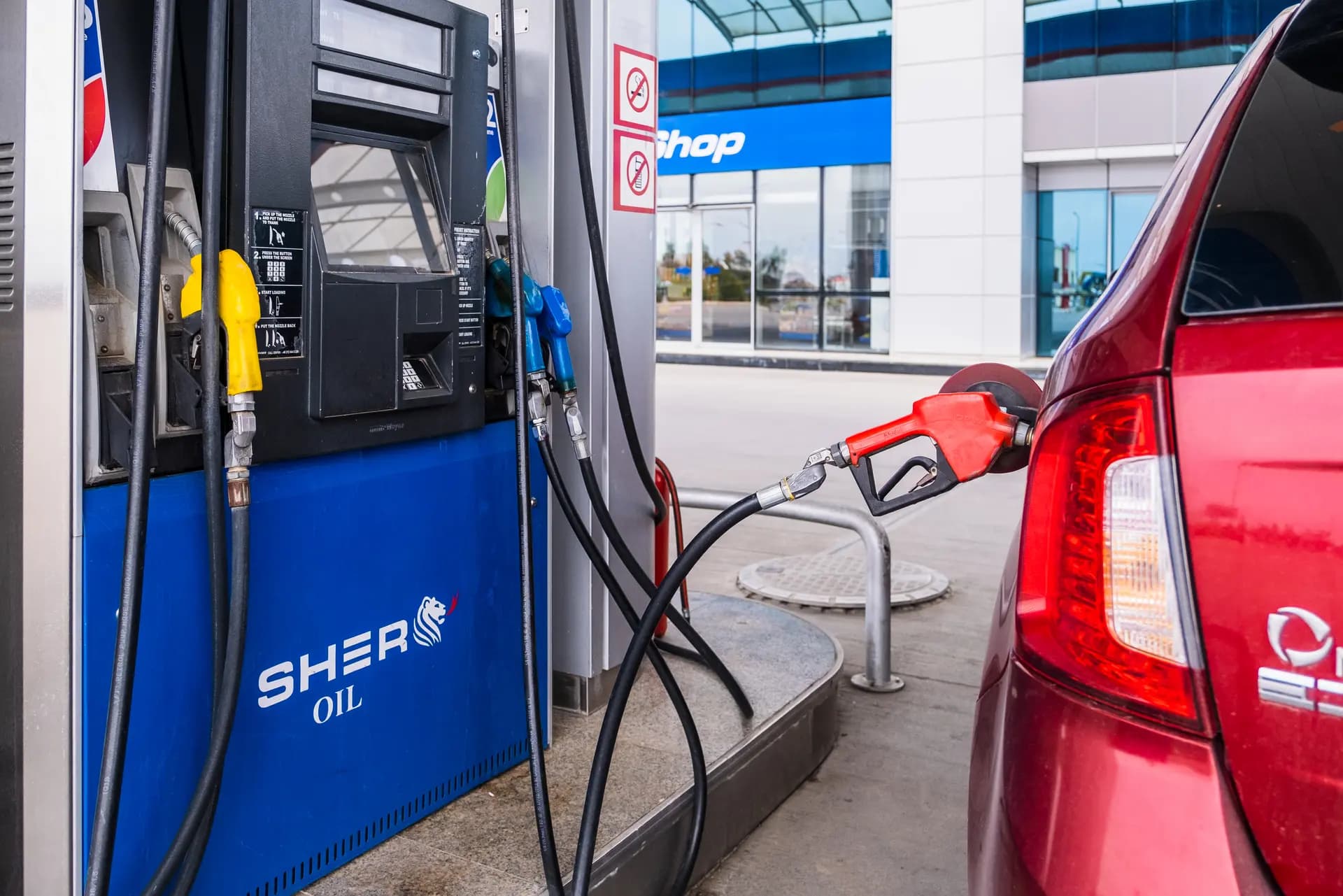

ERBIL, Kurdistan Region - The crude oil allocated by the Iraqi government is not sufficient to meet petrol demand, an official from the Kurdistan Region's natural resources ministry said on Saturday, vowing to enforce recently-issued price caps as the Region's petrol market continues to face shortages and rising prices.
"We receive 50,000 barrels [per day] from the federal government, but it is not enough," Rebin Zangana, the chief of staff of the Kurdistan Regional Government's (KRG) Ministry of Natural Resources, told Rudaw's Sangar Abdulrahman.
"The Kurdistan Region needs six million liters [of petrol per day], leaving us with a shortage of nearly 4.5 million liters," he added, noting that Erbil has asked Baghdad to increase its crude oil allocation to the Region.
Under the 2025 Erbil-Baghdad oil agreement, the KRG retains 50,000 barrels per day for domestic consumption. The remaining production - committed at a baseline target of 230,000 barrels - is handed over to the federal State Organization for Marketing of Oil for export.
Zangana's statement comes as petrol prices have risen sharply since the beginning of July, prompting the KRG on Monday to mandate that regular grade petrol not be sold for more than 850 Iraqi dinars ($0.64) per liter.
The regional government extended the price caps to midgrade and premium grade fuel on Tuesday, setting maximum prices of 1,000 dinars ($0.76) and 1,200 dinars ($0.91) per liter, respectively.
Under the decision, petrol stations that fail to comply with the new price caps will be "punished."
As a result, many stations across Erbil and Duhok provinces have shut down, citing wholesale prices well above the new caps. Drivers have been waiting in long lines at the few stations still operating to fill their tanks.
Zangana accused some petrol stations of hoarding fuel rather than selling it.
"Committees have been formed to monitor prices and see whether the stations have complied," he said, noting that the petrol market in the Kurdistan Region is "free" but that fuel stations "cannot exploit citizens."
He claimed that some stations had bought midgrade fuel for less than 850 dinars and sold it for more than 1,500 dinars.
Meanwhile, Sulaimani and Halabja provinces have yet to comply with the new prices. Most stations there are still selling at pre-decision prices while experiencing no shortages in supply.
"The decision applies to all provinces," Zangana said, adding that all governors and heads of independent administrations - Raparin, Garmiyan, Soran, and Zakho - were notified in advance.
The natural resources ministry official said the new price caps will be enforced across the Kurdistan Region "in a matter of days."
.png&w=3840&q=75)