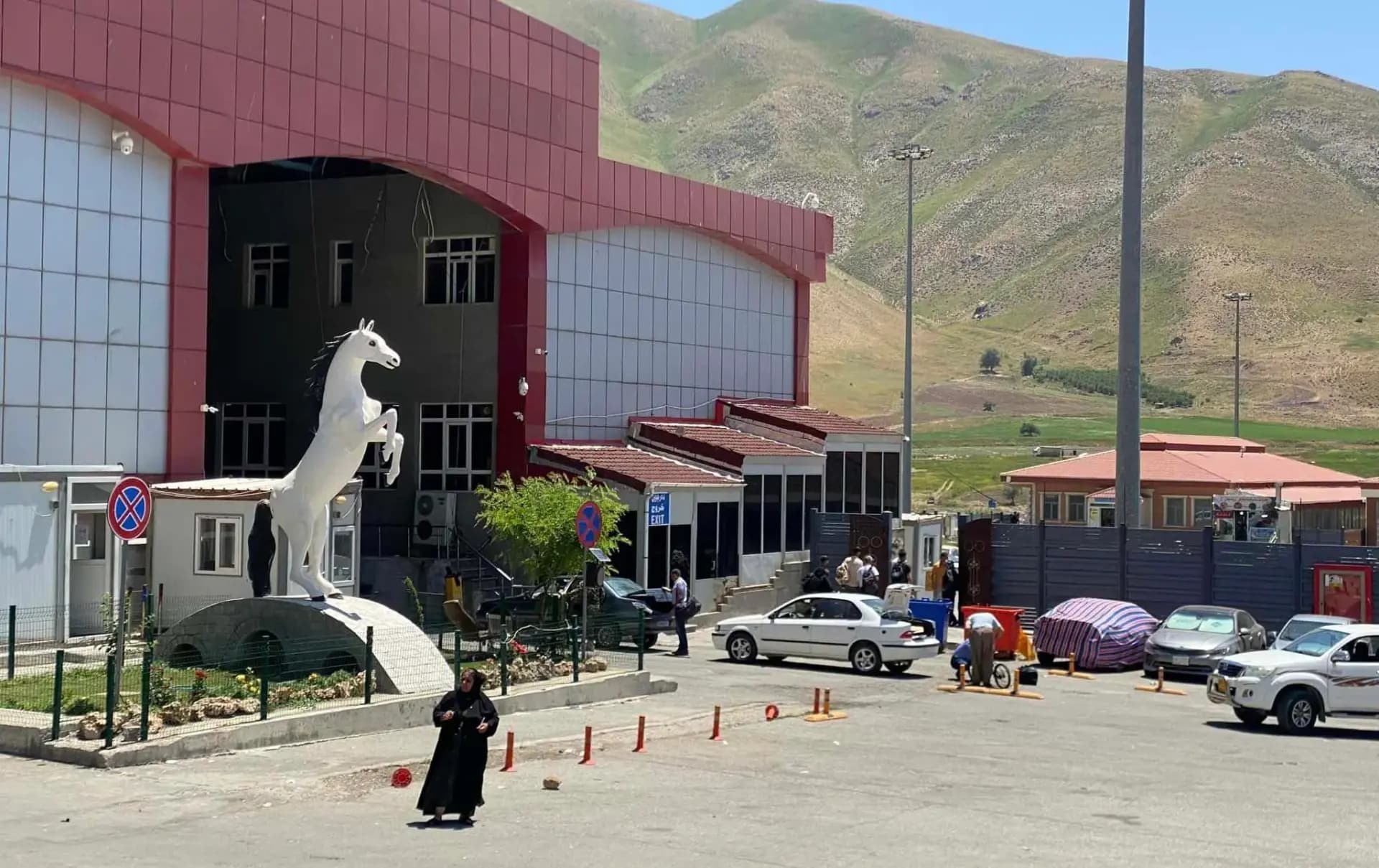

ERBIL, Kurdistan Region - Around 600 licensed border porters, known in Kurdish as kolbars, are transporting goods between Iran and the Kurdistan Region through the Haji Omaran border crossing each day, a local official from Choman district northeast of Erbil where the crossing is located, told Rudaw on Monday, noting that the suspension was lifted by Tehran ahead of a massive pilgrimage in southern Iraq that draws millions of Iranians annually.
“The movement of kolbars has resumed,” Abdulwahab Mahmoud, mayor of Haji Omran sub-district in Choman, told Rudaw's Soran Hussein adding that “permission is being granted for 600 kolbars to transport goods through the Haji Omaran border crossing every day.”
The Haji Omaran border crossing is one of the main entry points that allows regulated kolbars to enter the Kurdistan Region from Iran through official channels.
Kolbar border activity has been prone to disruptions following attacks from the US and Israel against Iran. The unstable nature of the work presents economic challenges for the community, in addition to periodic restrictions in the number of available permits issued by Iranian authorities.
According to Mahmood, the resumption of the movement of kolbars through Haji Omaran by Iranian authorities follows a recent suspension that was eased ahead of the upcoming Arbaeen pilgrimage in southern Iraq, expected to be marked on August 4 this year.
Arbaeen marks the end of a 40-day mourning period for the third Shia Imam, Hussein ibn Ali, killed in battle at Karbala in 680 AD. Millions of pilgrims - especially from Iran - travel to southern Iraq each year to commemorate the event in a symbolic 80-kilometer walk between the shrine cities of Najaf and Karbala.
Many Iranian pilgrims cross into Iraq through the Kurdistan Region's border crossings.
Chiefly hailing from Iran's Kurdish-majority western regions (Rojhelat), kolbars carry untaxed goods - including coffee, fabric, tea and even auto parts - on foot across the mountainous border between Iran and the Kurdistan Region, earning minimal wages despite significant risks and deepening economic hardship driven by the rampant inflation and continued devaluation of the Iranian rial.
The latest suspension was eased after Iranian authorities had in late June permitted to licensed kolbars to resume work after a four-month suspension, since the February 28 onset of the Iran war, that had left many without income.
In addition to disruptions, Iranian authorities have also limited the issuance of permits to border porters. While more than 10,000 permits were issued in June 2025, recent restrictions on the number of permit cards granted, along with border closures affecting kolbar activity, have left thousands more without work.