
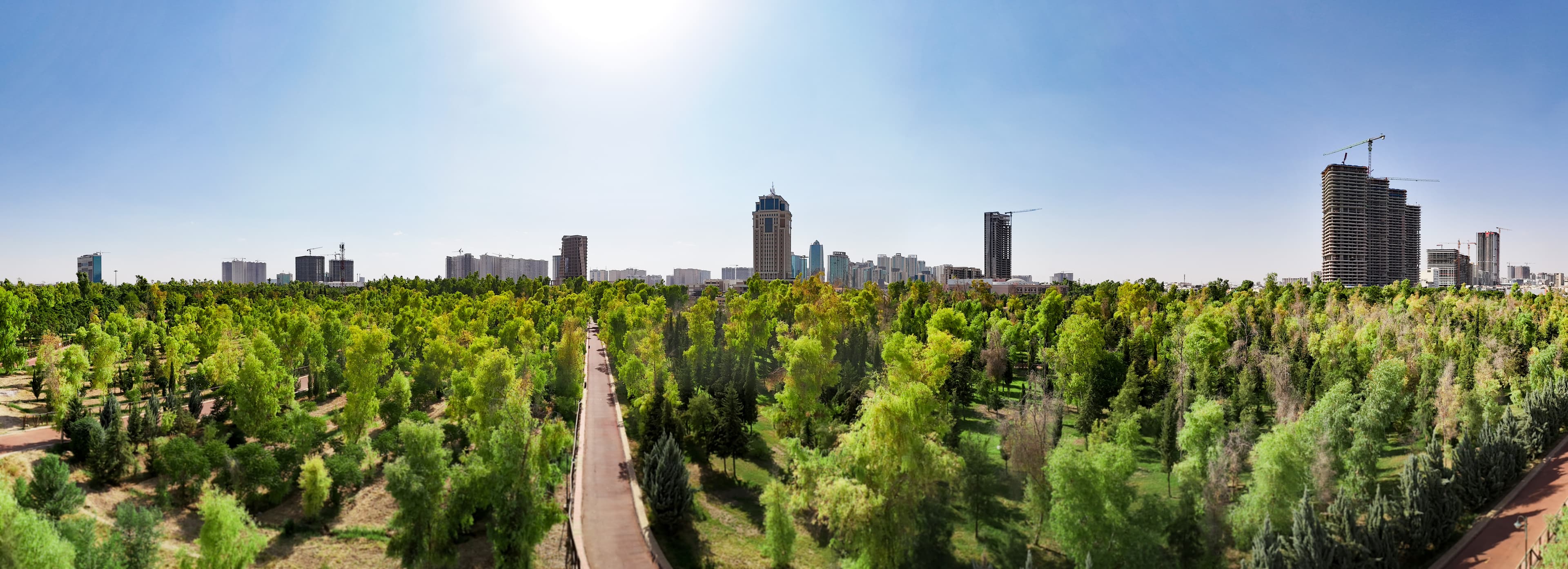

ERBIL, Kurdistan Region - Kurdistan Region's cities have expanded their green spaces in recent years, with some approaching or surpassing international standards, authorities said on Monday, while investors are now required to allocate between 20 and 40 percent of their projects to green areas.
Erbil's city center currently has approximately 19 percent green space, nearing the international benchmark of 20 percent.
"The percentage of green space in Erbil's city center is approximately 19, which is an increase compared to the past three years," Erbil Mayor Karzan Abdulhadi told Rudaw on Monday.
He attributed the increase to a series of major infrastructure projects.
"The rate is continuously increasing because several new projects have recently been worked on, such as the 150-meter road interchange, the 120-meter Erbil-Mosul road, Rashid Park, Shorish Street, the airport road, and several other projects," Abdulhadi said.
The increase of green space in the Region's capital comes as the Kurdistan Regional Government's (KRG) Board of Investment says environmental standards have become a key requirement for new projects.
"One of the conditions for granting licenses to investment projects and housing units is that investors must allocate 20 to 40 percent of their projects to green space," Board of Investment spokesperson Bargasht Akrayi told Rudaw.
According to Akrayi, many investors have gone beyond the minimum requirement.
"Out of approximately 280 investment projects completed over the last 20 years, a large portion have adhered to the legal requirements for green space," he said.
"While we at the Board of Investment have conditions and regulations for licensing, we simultaneously encourage investors to assist the government in increasing the greenery rate in the Kurdistan Region."
He added that several investment projects in Erbil have green space exceeding 40 percent and that a number of investors are also participating in the Erbil Green Belt campaign.
Last year, Prime Minister Masrour Barzani inaugurated a major green belt around Erbil, which includes planting millions of pistachio and olive trees around the capital city, a landmark initiative aimed at combating air pollution and climate change.
The mayor said the first phase is nearing completion, while legal and technical preparations are underway for the remaining stages.
"If the Erbil Green Belt is completed, the greenery rate will reach approximately 25 percent, thereby surpassing international standards," he added.
In Sulaimani, green areas cover 23.6 percent of the city's 143 million square meters, according to local authorities.
"According to the latest data, there are currently 522 gardens, 85 boulevards (medians between roads and streets), and 7 large parks in Sulaimani, some of which have been recently completed," Bahroz Salar, director of parks in Sulaimani, told Rudaw on Monday.
However, in Halabja, officials said green space remains below international recommendations despite recent improvements.
"The greenery rate in the provincial center is 13 percent. However, there is extensive natural vegetation and greenery in the city's peripheral belt; if those are included, the percentage is higher," Halabja Mayor Salam Bilal told Rudaw.
Bilal said staffing shortages, limited funding, and water scarcity continue to slow efforts to expand green areas, adding that "compared to previous years, the greenery rate has increased."
Duhok has also recorded steady progress, increasing its green space by roughly two percentage points over the past year.
"The greenery rate in Duhok's city center is about 15 percent and is continuously rising," Shirwan Hassan, spokesperson for the Duhok Municipality, told Rudaw.
Hassan said expanding green areas has become increasingly important "due to industrial development and the increase in the number of vehicles."
.png&w=3840&q=75)