
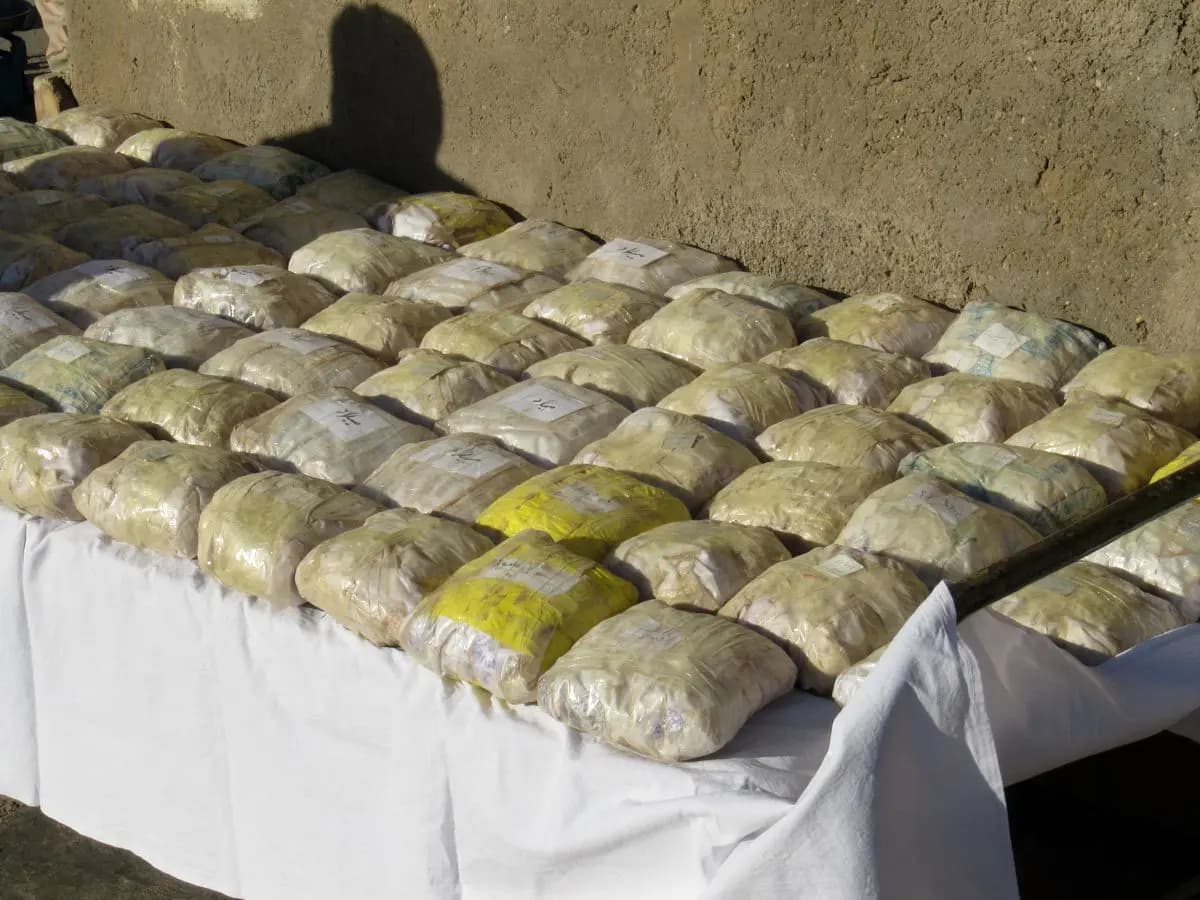

ERBIL, Kurdistan Region - More than 460 “homeless drug users” have been arrested and hundreds of kilograms of narcotics seized in western Iran’s Kurdistan province in recent months, officials said on Wednesday, warning of a deepening drug crisis and calling for stronger measures. This comes as rights groups have often criticized Iranian authorities for their aggressive response to the surge, marked by a sharp rise in executions on drug-related charges.
“Since the beginning of this year until mid-June, about 467 homeless drug users have been arrested across the province,” said Colonel Goudarz Amiri, head of the Anti-Narcotics Police in Kurdistan, as cited by the semi-official Mehr News Agency on Wednesday.
“Approximately 243 kilograms of various types of narcotics have also been seized” during the same period, he added.
Amiri further emphasized “the continuation of intelligence and practical measures to combat drug traffickers and distributors,” underlining “the necessity of comprehensive action against this issue due to the social harms it causes.”
The security official made the remarks during a meeting of the Supply Reduction Committee of the Provincial Coordination Council for Combating Narcotics in Kurdistan - an inter-agency body responsible for coordinating counter-narcotics operations and disrupting drug trafficking networks in the province.
Speaking at the same event, Colonel Hossein-Reza Rashidi, deputy commander of Kurdistan Province’s Law Enforcement Command, highlighted “the impact of drug use on families,” urging “stronger cooperation and coordination among executive, supervisory, and judicial bodies.”
He emphasized the formation of joint inspection teams to monitor venues suspected of involvement in the drug trade, noting that Kurdistan’s police forces “are actively engaged in anti-narcotics efforts,” while stressing “the need for decisive judicial action against offenders and drug distributors.”
Mirroring a wider trend in the Middle East, drug trade has surged in Iran’s economically strained western provinces, which have shifted in recent years from low-volume transit routes into high-volume hubs for smuggling and local consumption.
While the illicit market was traditionally dominated by opiates, it has recently shifted toward ephedra-based synthetic methamphetamine, with traffickers moving these drugs across the porous Iran-Iraq border and using Kurdistan as a key redistribution point.
At the same time, local demand in Kurdistan is increasing, especially in light of the severe economic pressures, including hyperinflation, high youth unemployment, and limited livelihood opportunities, which have contributed to rising addiction rates.
Iranian authorities have faced criticism for their response to the surge, which has relied heavily on punitive measures, including extensive use of the death penalty.
In its Death Sentences and Executions 2025 report, Amnesty International stated that at least 2,707 executions were carried out globally across 17 countries last year, a 78 percent increase from 2024 and the highest total recorded since 1981.
The report further detailed that Iran accounted for about 80 percent of global executions, with at least 2,159 people put to death in 2025, noting that the increase was largely driven by anti-drug policies that, according to international law, should be limited to the “most serious crimes” involving intentional killing.
Amnesty found that nearly half of all known drug-related executions worldwide - 1,257 cases - were carried out for drug offenses, including 998 in Iran, warning that the use of capital punishment in Iran disproportionately affects vulnerable socio-economic groups and ethnic minorities, including Kurdish and Baloch communities
Zhila Assad contributed to this article from Erbil, Kurdistan Region.
.png&w=3840&q=75)

.jpg&w=3840&q=75)