ERBIL, Kurdistan Region - Iraqi armed groups are sharply divided over a government initiative to bring weapons under state control, officials and faction representatives told Rudaw on Monday, detailing that the core dispute centers on the willingness of some groups to surrender their arms, while others firmly reject the proposal.
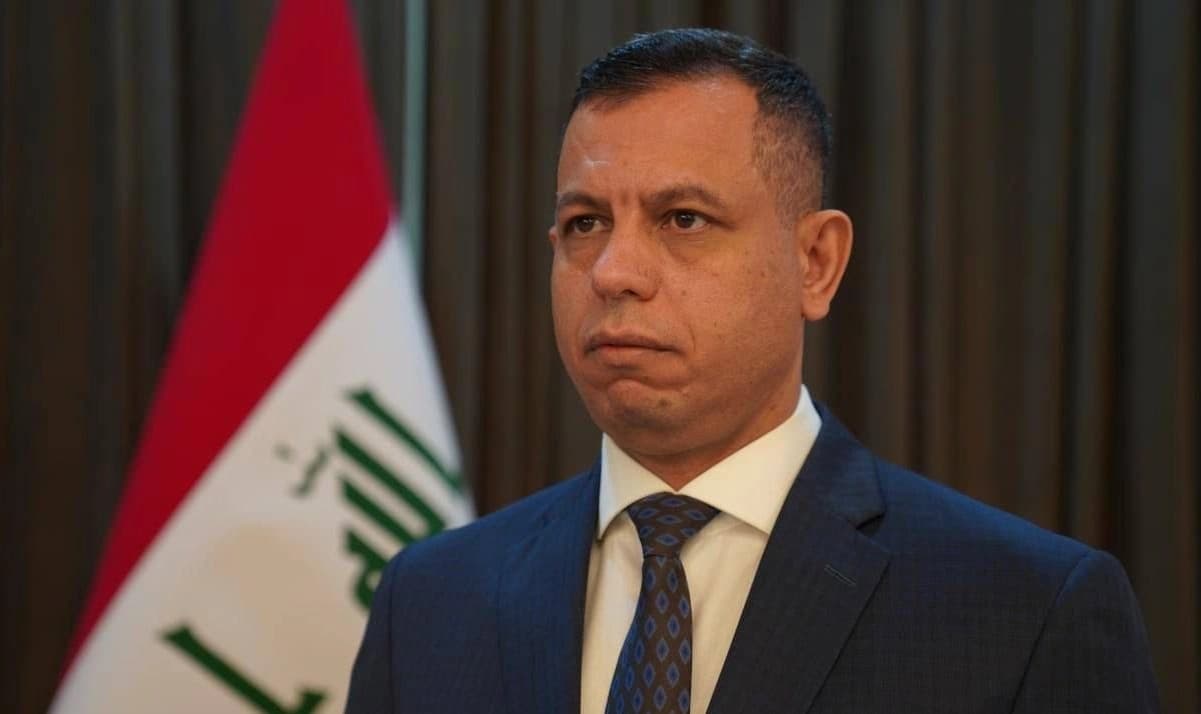
A senior security official in Baghdad, speaking on condition of anonymity, said that at least three Iraqi armed groups - including Saraya al-Salam, which answers back to influential Iraqi Shiite cleric and politician Muqtada al-Sadr - “have shown flexibility and expressed readiness to engage in dialogue with the government of [newly appointed] Prime Minister Ali al-Zaidi on establishing a mechanism for handing over their weapons.”
However, the official noted that other factions remain firmly opposed to the initiative.
“Groups such as [the Iran-aligned] Kata’ib Hezbollah and Harakat Hezbollah al-Nujaba [armed groups] strongly oppose the initiative and are not prepared to hand over their weapons,” he said.
Harakat Hezbollah al-Nujaba, a key armed faction aligned with the Iran-led “Axis of Resistance” and a prominent component of the Islamic Resistance in Iraq entity, has staunchly rejected the initiative.
Firas Yasser, a member of the group’s politburo, told Rudaw that discussions on disarmament are meaningless as long as US troops remain stationed in Iraq.
“As long as Iraq does not have financial, political, and security sovereignty, and US forces remain in the country, handing over weapons is merely media propaganda,” he said, adding that his group’s arms are directed only at “Iraq’s enemies.”
Yasser further alleged that Washington continues to exert influence over Baghdad’s political affairs, including the selection of prime ministers, questioning how weapons could be surrendered under such circumstances.
On the regional stage, the Harakat Hezbollah al-Nujaba senior member pointed to developments in Syria as “justification” for retaining arms.
“Let’s not forget the developments, mobilization, and training of [Sunni] armed groups taking place in Syria,” he said, claiming that “it is not far-fetched” that such groups could make a move in Iraq, after a coalition of Sunni armed factions led by Ahmed al-Sharaa toppled longtime Syrian dictator Bashar al-Assad in late 2024, with Sharaa later becoming Syria’s interim president in January 2025.
For its part, the Kata’ib Hezbollah armed group on Saturday welcomed efforts by armed factions to hand over their weapons to the Iraqi state, while offering to assume responsibility for and even purchase advanced systems.
In a statement, Abu Mujahid al-Assaf, the spokesperson and senior security official of the group, praised what he described as a decision by “[armed] brothers not involved in the Islamic Resistance [of Iraq]” to end their armed activities, in order to help “confine weapons to the hands of the state and enhance security, stability, and civil peace.”
He further stated that Kata’ib Hezbollah is ready to “receive certain specialized weapons for which state institutions lack expertise, such as drones, loitering munitions [suicide drones], cruise missiles, anti-armor weapons, and others,” and is even prepared to “purchase them.”
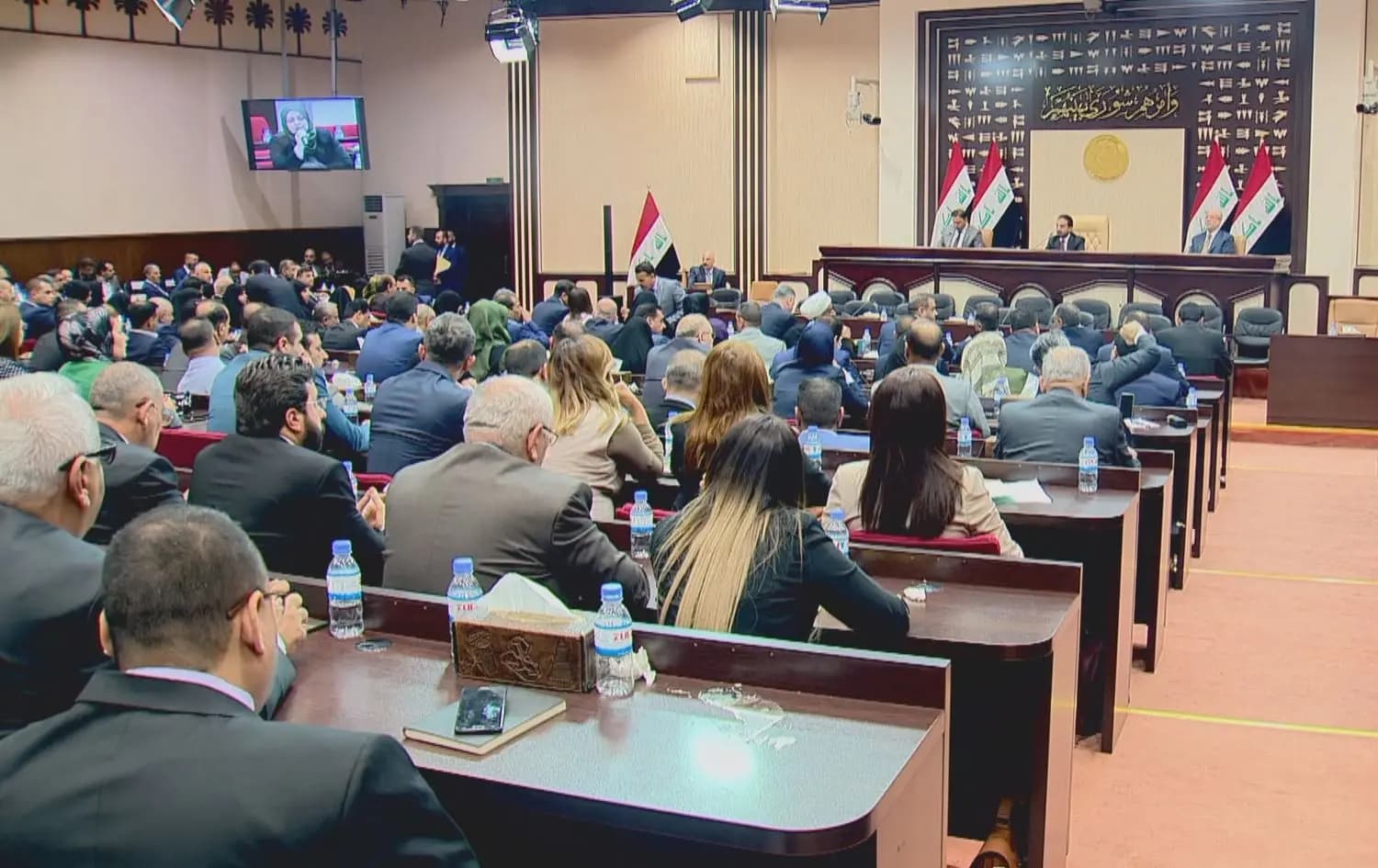
In his inaugural address to the Iraqi parliament in mid-May, Iraqi Prime Minister Zaidi pledged to “confine weapons to state control” as part of a broader agenda to strengthen the rule of law, enhance national security and bolster the capabilities of the country’s security forces.
Amer al-Fayez, head of the Tasmim alliance, one of the 12 parties that make up the Shiite Coordination Framework that backed Zaidi to office, told Rudaw on Tuesday that “indirect discussions are underway between the government and certain armed groups that operate outside the umbrella of the Popular Mobilization Forces [PMF].”
The PMF was established in 2014 during the Islamic State group (ISIS) blitz, which saw the group seize control of large parts of Iraq’s north and west.
Created in response to a religious edict, fatwa, by Iraq’s highest Shiite authority, Grand Ayatollah Ali al-Sistani, the PMF was initially an umbrella organization of roughly 70 predominantly Shiite armed groups, with approximately 250,000 members.
While the PMF is a state‑funded institution, it includes factions widely believed to overlap with the Iran-led “Axis of Resistance,” which have, since the outbreak of the Iran war in late February, carried out attacks against alleged US targets in the region in support of Tehran, often operating through shadow groups under the banner of the Islamic Resistance in Iraq.
The Islamic Resistance in Iraq emerged in the immediate aftermath of the outbreak of the Gaza war in October 2023, with its core overlap within the PMF including Asa’ib Ahl al-Haq, Kata’ib Hezbollah, Harakat Hezbollah al-Nujaba, and Kata’ib Sayyid al-Shuhada armed groups.
Notably, the Asa’ib Ahl al-Haq armed group claims it “had already handed its weapons to the Iraqi state in 2017,” according to Hussein al-Sheihani, a politburo member of the al-Sadiqoun Movement - the political wing of Asa’ib Ahl al-Haq.
Sheihani told Rudaw that the weapons of the group’s 41st, 42nd, and 43rd brigades, which operate under the PMF, are stored in the umbrella entity’s “depots” and since the PMF is “state-sponsored,” those arms are therefore considered under state control, he said.
Malik Mohammed contributed to this article from Erbil, Kurdistan Region.