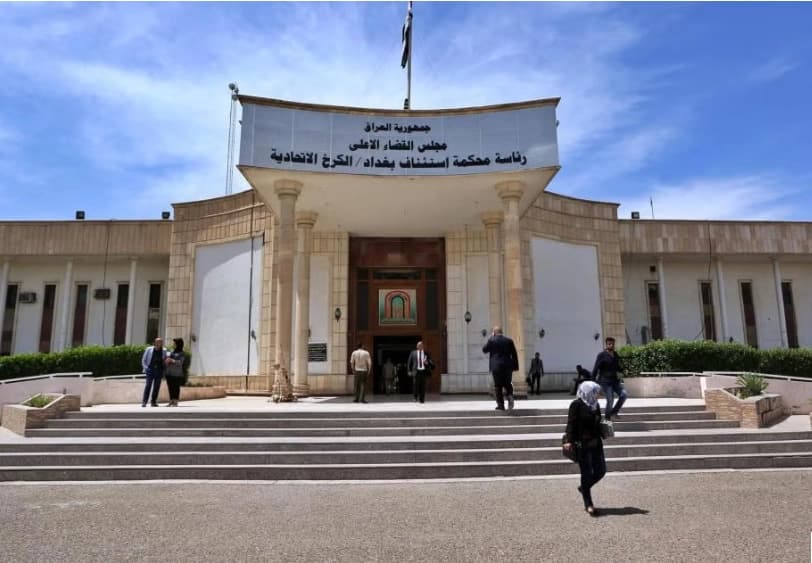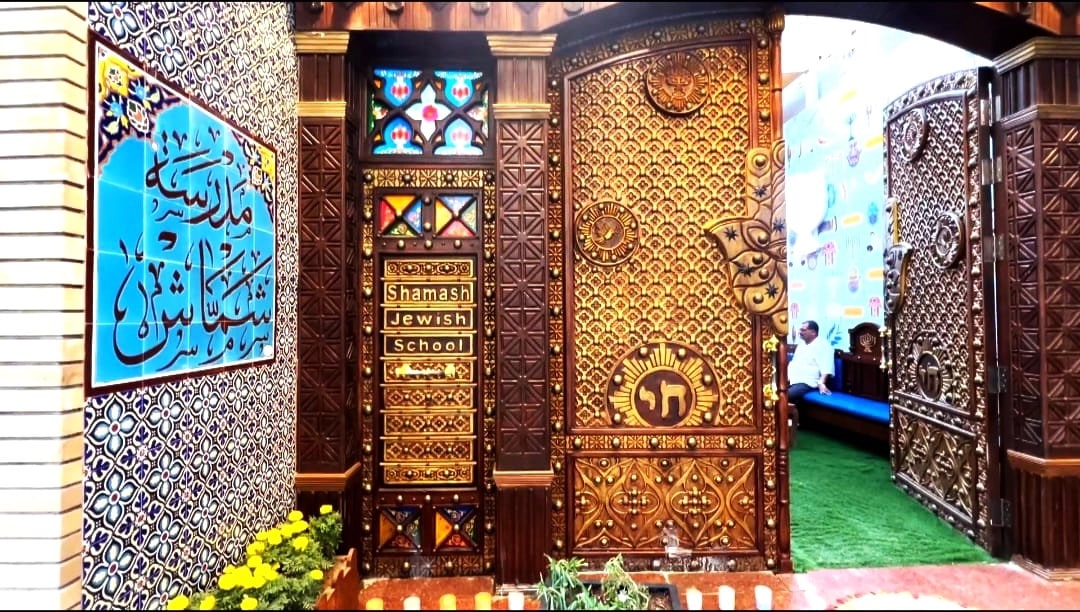

ERBIL, Kurdistan Region - The opening of Shamash Jewish Museum in downtown Baghdad, once housing Shamash Jewish Secondary School founded in 1928, has opened a window into Iraq’s Jewish past, drawing a myriad of reactions from officials, residents, visitors, and former students, including sentimental recollections.
The museum reflects the tireless efforts of Khalida Eliyahu, one of the few remaining Jews in the country, who spearheaded the restoration despite pushback, and offers a rare glimpse into a 2600-year-old community - whose residents once comprised 30 percent of the Iraqi capital in the 1940s - nearly a century after its founding.
Ammar al-Tamimi, an Iraqi lawyer who represents the Jewish Endowment overseeing the project, told Rudaw English’s Mohammed Rwanduzy that the end of a decades-long lease paved the way for the opening of the museum.
“It was the opinion of [mostly] Dr. Khalida Fuad Eliyahu, head of the Jewish Endowment - who said this cannot be left abandoned after we removed the previous tenant. So it became a small museum for the school, with a section of it for the community.”
The museum exhibits school records, academic certificates, family photographs, memorabilia, documents and personal belongings connected to Jewish life in Iraq, as well as photos of its founder, Joseph Shamash.
Al-Mutanabbi and al-Rashid Street have been renovated, said Tamimi, and the area became a tourist attraction.
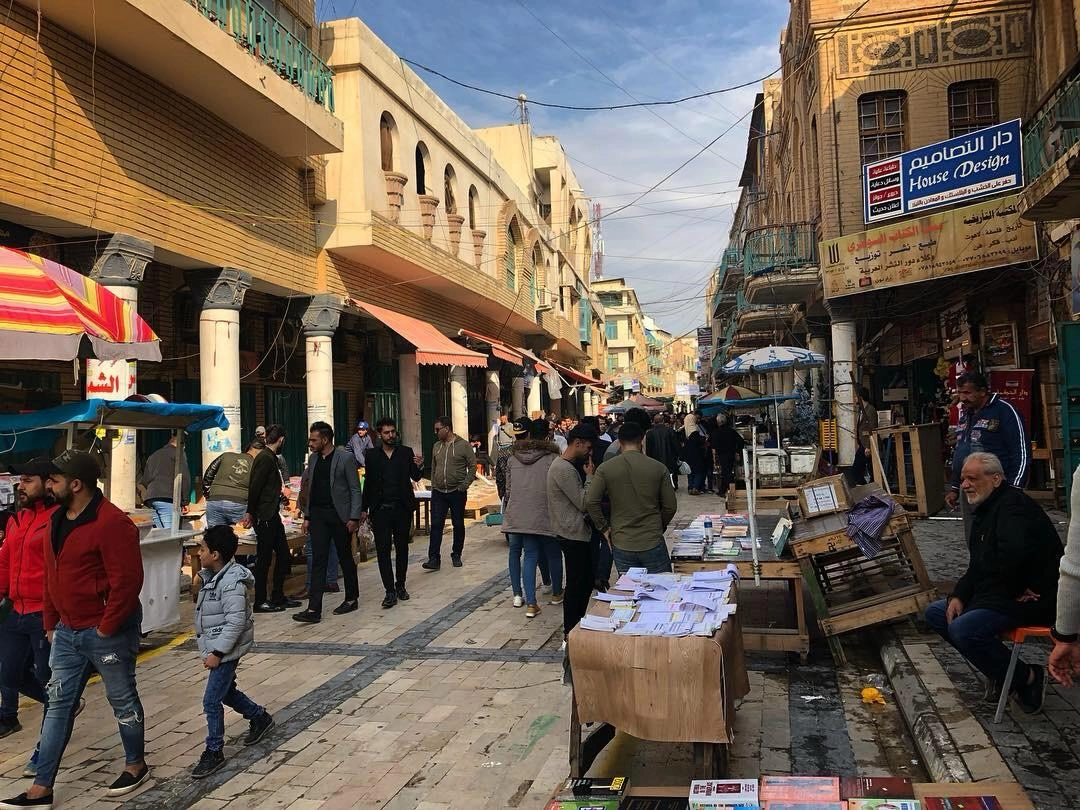
Al-Rashid Street on November 30, 2018. Photo: Fazel Hawramy
“We actually wanted to make it a school… but the area no longer has residents, so we said we must abide by the donor's [Joseph Shamash] will. It became a museum that immortalizes the name of the school, the names of its male and female graduates, their certificates, everything related to them, and the school principals,” Tamimi stated.
“Every book we managed to obtain, we placed in the museum.”
At its peak in 1939, the school served more than 900 students and recruited faculty from the UK, offering English-language proficiency certificates which allowed students to enter British universities without taking an additional language exam. In 1949, it became a high school exclusively until its closure and in 1951, following the mass departure of the Jewish community.
The museum, which is partly being expanded and whose official inauguration has yet to be announced, has drawn both interest and criticism. A reported 1,000 people visited the museum on the first day. Visitors told Rudaw in early November that the museum revived memories of Jewish life in the community.
“Even though they left, their traces remain in Iraq,” a visitor named Hiba Ibrahim told Rudaw’s Ziyad Ismail.
“They were the main driving force in the economy. I remember my late mother saying that Jews had shops and that we used to do business with them,” Saleh Ghanem said. “They treated us very well.”
Meanwhile, the museum elicited a different kind of response from one of Iraq's oldest Iran-aligned armed and political groups.
“Baghdad is not an arena for testing Zionist projects - and its identity is a red line!” Mohammed Naji Mohammed, Head of the Badr Organization’s political bureau, stated in a post on X earlier in the month.
“We hold all parties responsible for this development, which we consider a form of normalization [with Israel]. We regard it as a security and cultural breach that threatens our identity and our national existence,” the statement read, adding that the group would “not tolerate such activities with Zionist dimensions on Iraqi soil.”
Likewise, on Monday, Harak al-Nujaba, another Iran-backed faction in Iraq, issued a similar statement conveying “deep concern and strong condemnation” over the administration of a different site, the tomb of Prophet al-Uzair - known in the Jewish tradition as Ezra the Scribe - in what they described as “international committees backed by Zionist entities under the guise of projects to ‘revive the Jewish heritage of Iraq.’”
“There have been - there were threats, and statements were issued by armed factions, but we did not take them into consideration,” Tamimi stated.
“As for the factions, the factions have been around from 2003 until now; they haven't been weakened,” he said. “So our work is ongoing; the Administrative Committee's work is continuous.”
“The school is our property, the museum is our property, the previous [records and site] are ours, the documents are ours. As for funding, as a directorate, our funds are held in state banks and were withdrawn from state banks; we have high transparency in these matters. So, as they say, we are doing everything by the book,” he detailed.
“There are people who are against life itself, against minorities, so we can't debate them on every single issue.”
Notwithstanding the threats, Tamimi said that Khalida aimed to convey “a message of peaceful coexistence, a message to minorities, a message of respect, a message of coexistence, a message to the free world, to the proud world, and to the state - considering that Iraq is a nation that includes Kurds, Arabs, Sunnis, Shiites, Christians, Turkmen, Jews, Yazidis, and Sabaeans.”
“Iraq is not reduced to a single sect or a specific group; Iraq belongs to all Iraqis as a whole.”
Former students recount memories, mixed reactions
While the records and photographs are evidence of neighbors, classmates and families who were once part of everyday life in Baghdad, for one group - those who studied within the school’s four walls or have relatives that did - the museum falls short of acknowledging the factors behind the community’s departure.
“On the one hand, it reminds Iraqis that Jews once were an important part of Baghdad’s fabric. On the other hand, it says nothing of the way the community was ethnically cleansed, never to return,” Lyn Julius, the founder of Harif, the UK Association of Jews from the Middle East and North Africa, told Rudaw English. Her own parents left Baghdad for the UK in the 1950s.
A.B. [not her real name] attended Shamash secondary school in the 1960s for three years - transferred to Frank Iny Jewish school but with diplomas issued under Shamash - after the building in the downtown location shut its doors following the departure of most of the Jewish population in the early 1950s. “By that time there were too few students, so they put us all in one building.”
Her favorite subject was English literature, A.B. said.
She recalls her teachers, a British instructor by the name of Ms. Lucy and a French teacher, Mme. George, and that the students all knew one another by name, if not by face.
“We went through thick and thin together. Every revolution, every change of government - we were all together and we felt protected within the walls of the school.”
“We all became like one family,” she said.
“The friendships we formed with our classmates are the longest lasting because we all went through the same difficult times together,” she said. “We grew up listening to Elvis Presley, dancing to Enrico Macias and the Beatles, and twisting to Chubby Checker. Life was still tolerable until the Six Day War in 1967.”
“What I miss most is sleeping on the roof in front of the Tigris and hearing the rippling of the water. From time to time, a slow boat with a light would glide on the water,” she said.
Then she paused.
“The museum shows a time when life was good; they’re not showing why we’re not there anymore,” said A.B., expounding on the reasons for her family’s exodus in 1970. “They made us feel like we didn’t belong.”
A.B. recalled that her cohort still holds school reunions in the countries where they reside.
Two others who attended Frank Iny in the mid-1960s told Rudaw English on condition of anonymity that the museum gives the impression that “they are exhibiting something of an extinct race.”
“We are the same people, we are [still] alive,” they said.
Now in their seventies, the former students shared that the exhibition of personal records that visitors could access “like old relics” more readily than them was "unsettling."
"What is the purpose of exhibiting us after we were dispossessed, denied our nationality, our properties and even denied our certificates that stayed behind and are now being exhibited?" they asked.
"We do not know whose certificates are being exposed and if it belongs to any of us; we can neither get hold of it nor see it.”
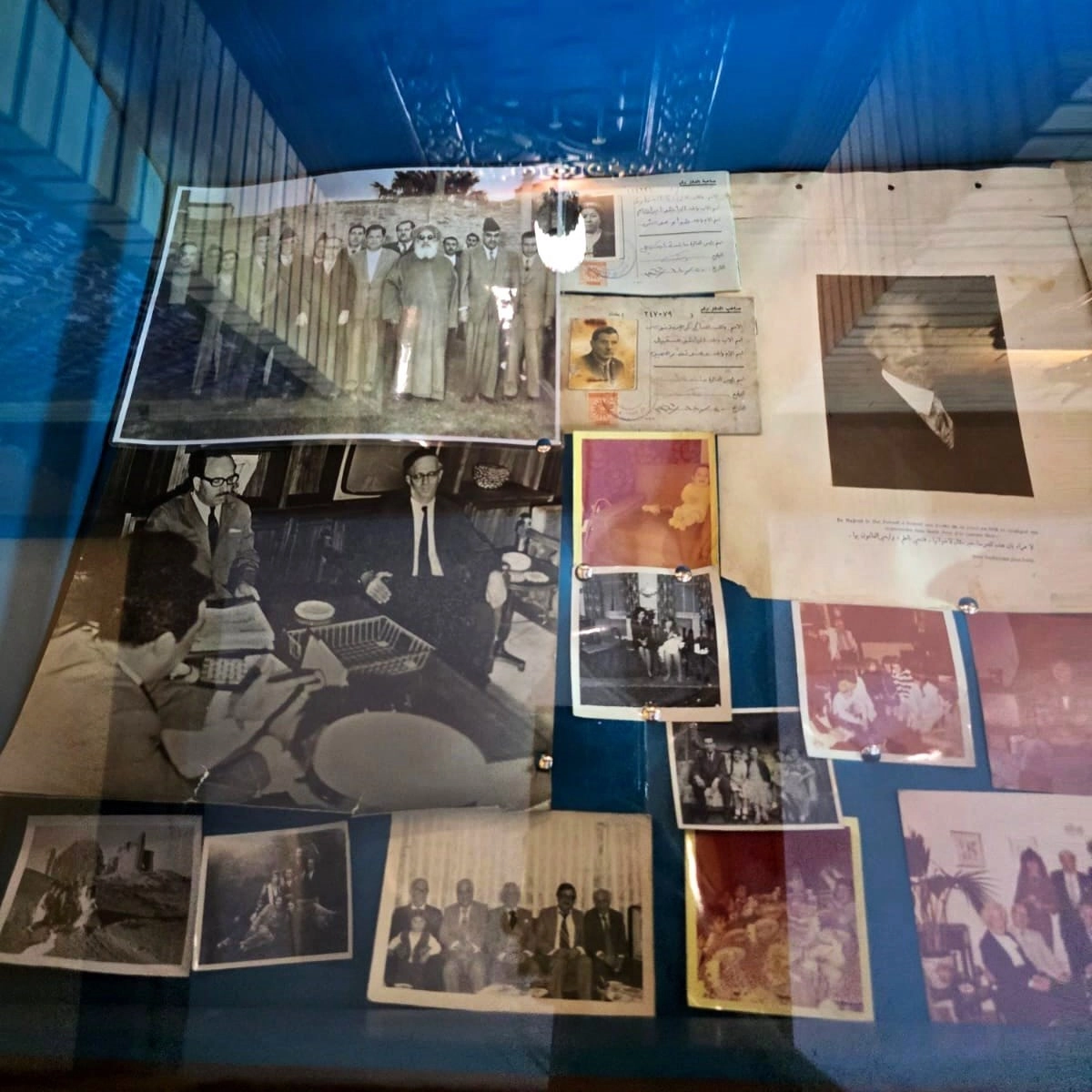
Photographs and documents on display at the Shamash Museum in Baghdad, Iraq. Photo: Sardar Abdullah
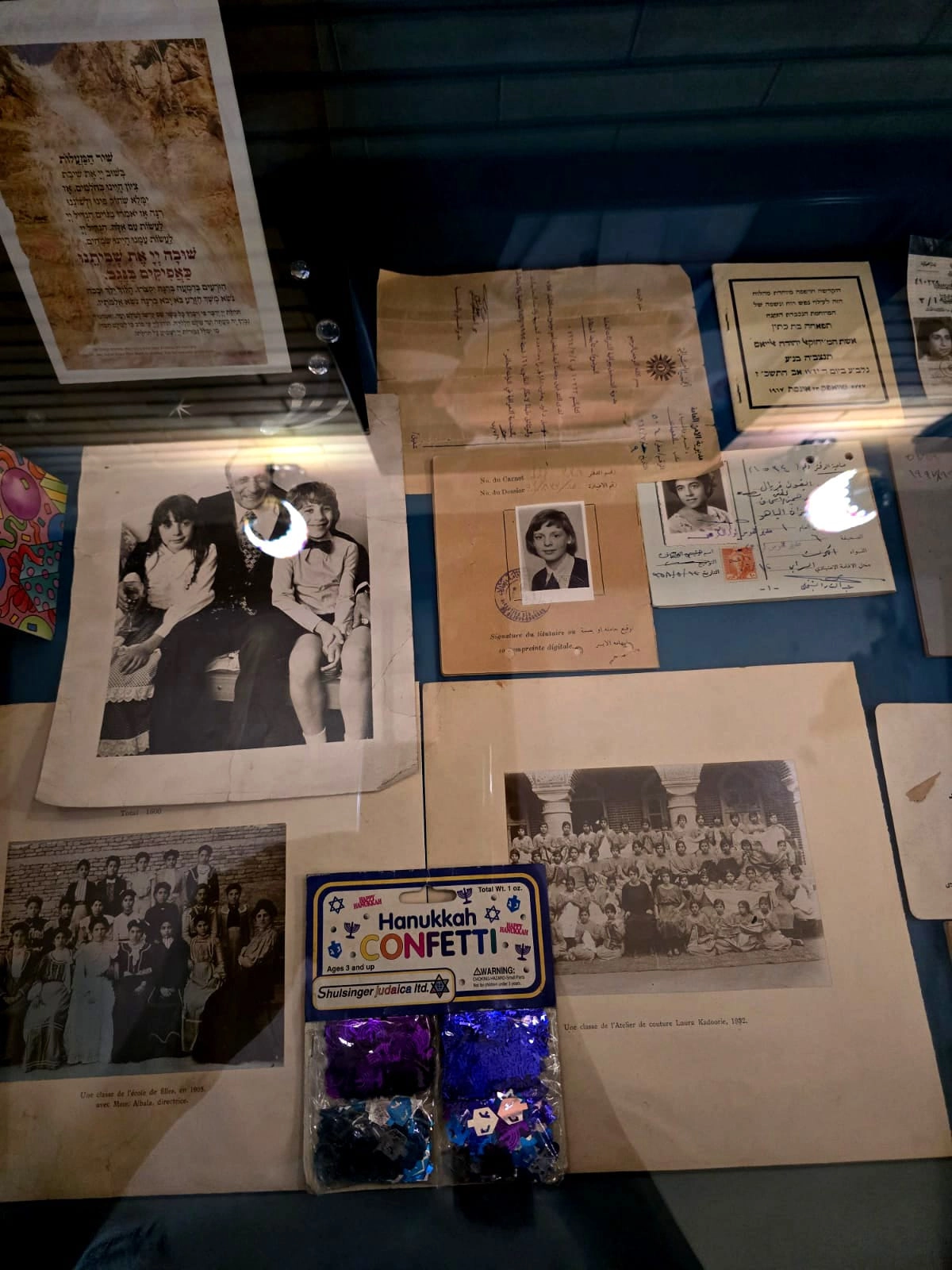
Photographs and documents on display at the Shamash Museum in Baghdad, Iraq. Photo: Sardar Abdullah
In addition to personal school records, displays feature photos of notable figures including Salima Mourad, a Jewish-Iraqi singer known as the “voice of Baghdad,” as well as prominent religious figures such as Rabbi Yosef Hayyim, a leading scholarly authority in Baghdad for more than 50 years in the latter half of the 1800s.
Sasson Heskel, the country’s first finance minister in 1920, is also displayed. During World War II, Heskel insisted that the British would issue payments of oil concessions in gold rather than the British pound and helped the country avoid currency depreciation when Britain later abandoned the gold standard.
He is known for laying the groundwork for much of the Kingdom of Iraq's early budgeting, tax, and fiscal framework.
A photo hanging adjacent to an ark housing Torah scrolls features a photo of Hakham Ezra Reuben Dangoor, the Chief Rabbi of Baghdad from 1923 to 1926 and the founder of Baghdad’s first publishing company.
His granddaughter, Renée Dangoor, was the first beauty queen of Iraq, winning the title of Miss Baghdad in 1946 and Miss Iraq in 1947.
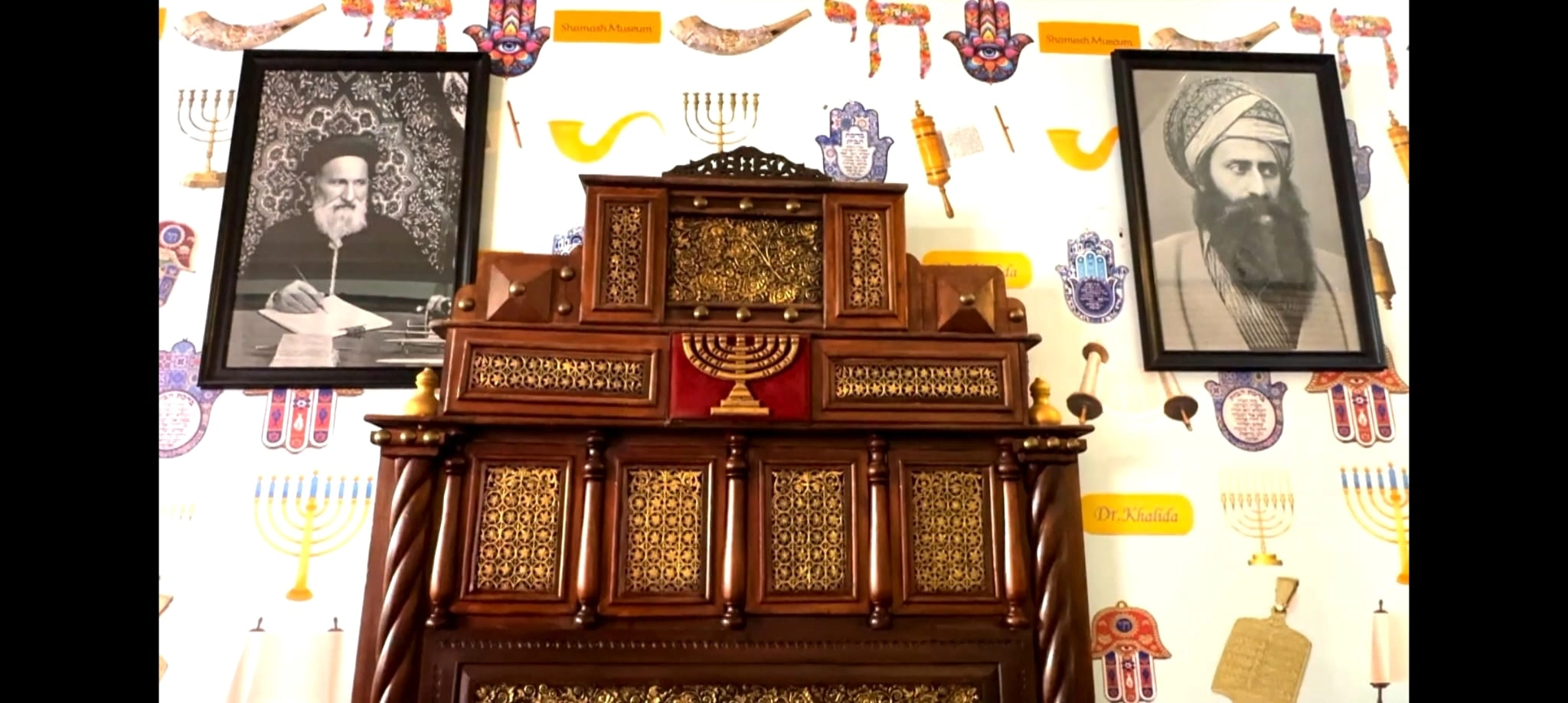
Hakham Ezra Dangoor (left) and Rabbi Yosef Hayyim (right). Photo: Rudaw
A window into the past
The community’s history stretches far beyond Baghdad.
Jewish communities trace their roots back to the Babylonian exile in 586 BCE. By the early 20th century, Jewish life spanned Baghdad, Basra, Diwaniyah, Mosul, and other southern cities, as well as across what is now the Kurdistan Region.
In the mid-1940s, historians estimate that Iraq was home to anywhere between 130,000 to 150,000 Jews, according to British census figures and a later Iraqi 1947 census.
In the Kurdistan Region, Jewish families lived in towns and villages, including around Erbil, Kirkuk, Amedi, Soran, Akre and Zakho, many who spoke Kurdish, Aramaic, and Arabic and were well-integrated into their communities.
In “My Father’s Paradise,” which won the 2008 National Book Critics Circle Award for Autobiography, Ariel Sabar, whose father hails from Zakho, traces his roots to the once-flourishing history of Kurdish Jews and their millennia-long survival.
Jewish presence in Iraq saw a turning point following the rise of Rashid Ali al-Gaylani, aligned with Axis powers at the time, who served as prime minister from March 1940 to February 1941 and from April to May 1941.
The collapse of Gaylani’s government and subsequent British victory gave rise to the Farhud, a two-day incident in early June 1941 on the Jewish holiday of Shavuot, which saw a violent wave of anti-Jewish violence across Baghdad culminating in the killings of around 180 identified victims and injuries numbering almost a thousand. Riots and attacks led to property damage, looted homes, and shops set ablaze and estimates of another 600 unidentified victims buried in mass graves.
In the following decade, growing insecurity and legal changes affecting Jewish status, employment, and property led to the exodus of most of the Jewish community between 1948 and 1951, many of whom were forced to renounce their Iraqi citizenship per the 1950 denaturalization law in order to be allowed to leave, though migration had begun earlier.
“They were able to get passports, unlike the vast majority of Jews. But they were still stripped of Iraqi citizenship within three months” and “became stateless” Julius said, as a result of the legislation.
One of the former students told Rudaw English that her family left Baghdad and was in the Kurdistan Region for a whole month in 1967 “looking for a way out… with two babies in diapers.”
They appealed for help to Masoud Barzani, 21, the son of then-leader Mullah Mustafa Barzani. He would later become the president of the Kurdistan Region and leader of the Kurdistan Democratic Party.
“My husband told Barzani, ‘if I go back to Baghdad they will kill me because I am Jewish, so please kill me now.’”
When Barzani realized they were not spies, he graciously helped them leave for Iran, she said.
She estimates that Barzani aided “nearly a thousand other Jews to leave Iraq.”
A few thousand remained and emigrated shortly after the rise of Ba’athist dictator Saddam Hussein, under whose rule nine Jews were hanged in Tahrir Square in January 1969 on alleged charges of espionage and spying for Israel.
At 23 years old, A.B. and her family left during the second wave of the community’s exodus with the help of Kurdish smugglers across the border with Iran in 1970. The journey took less than 24 hours.
The family was able to subsequently relocate overseas to Canada.
Issues of ownership remain unresolved
The Shamash Museum not only preserves part of the history of a community that once knew Iraq as their only home, but brings the Jewish community’s heritage to the forefront at a time when the Iraqi government grapples with the effects of the Iran war amid domestic issues of internal security and sovereignty.
Despite internal and broader regional challenges, its opening has managed to highlight overlooked vital components – a history of a people who once contributed to Iraq’s rich musical, cultural, and economic foundations.
The museum joins other Jewish sites in the region - shrines of Rabbi Isaac Gaon, the tombs of the prophets Jonah and Nahum, and the cemetery of Asenath Barzani - the latter two located in the Kurdistan Region - which remain largely inaccessible to the community.
Tamimi said that the museum is “fundamentally a museum for the school” and is “no more than 150 square meters,” which prevents them from capturing the story of the community in its entirety.
“If we were to establish a comprehensive museum, then perhaps we could take those things into consideration - the exodus of the Jews, the Farhud, and so on. Today, however, the museum is very small.”
“If a large museum is ever established, all ideas will be discussed,” Tamimi stated. “In the future, God willing, yes, there are ideas - there are ideas to open synagogues, and other ideas. We have many topics and projects for our office, the Administrative Committee.”
Nevertheless, as remnants of the community are displayed to visitors as relics of the not-so-distant past, the precarity of narrative and preservation have yet to be determined, raising questions of what role the community and its descendants - many of whom have followed the museum’s developments from afar - can take in preserving their own family histories.
While Iraq's 2005 Constitution and the Iraqi Nationality Law No. 26 of 2006 grants citizens who lost their nationality for political, racial, or sectarian reasons the right to request its restoration, Iraqi Jews or “the children of Iraqis denaturalized by virtue of the provisions of Law No. (1) of 1950 and Law No. (12) of 1952” are explicitly barred from these provisions.
The diaspora is, essentially, prevented from reclaiming and gaining access to their own personal records or rejoining their community.
“We can’t visit and we can’t live in our properties,” A.B. lamented.