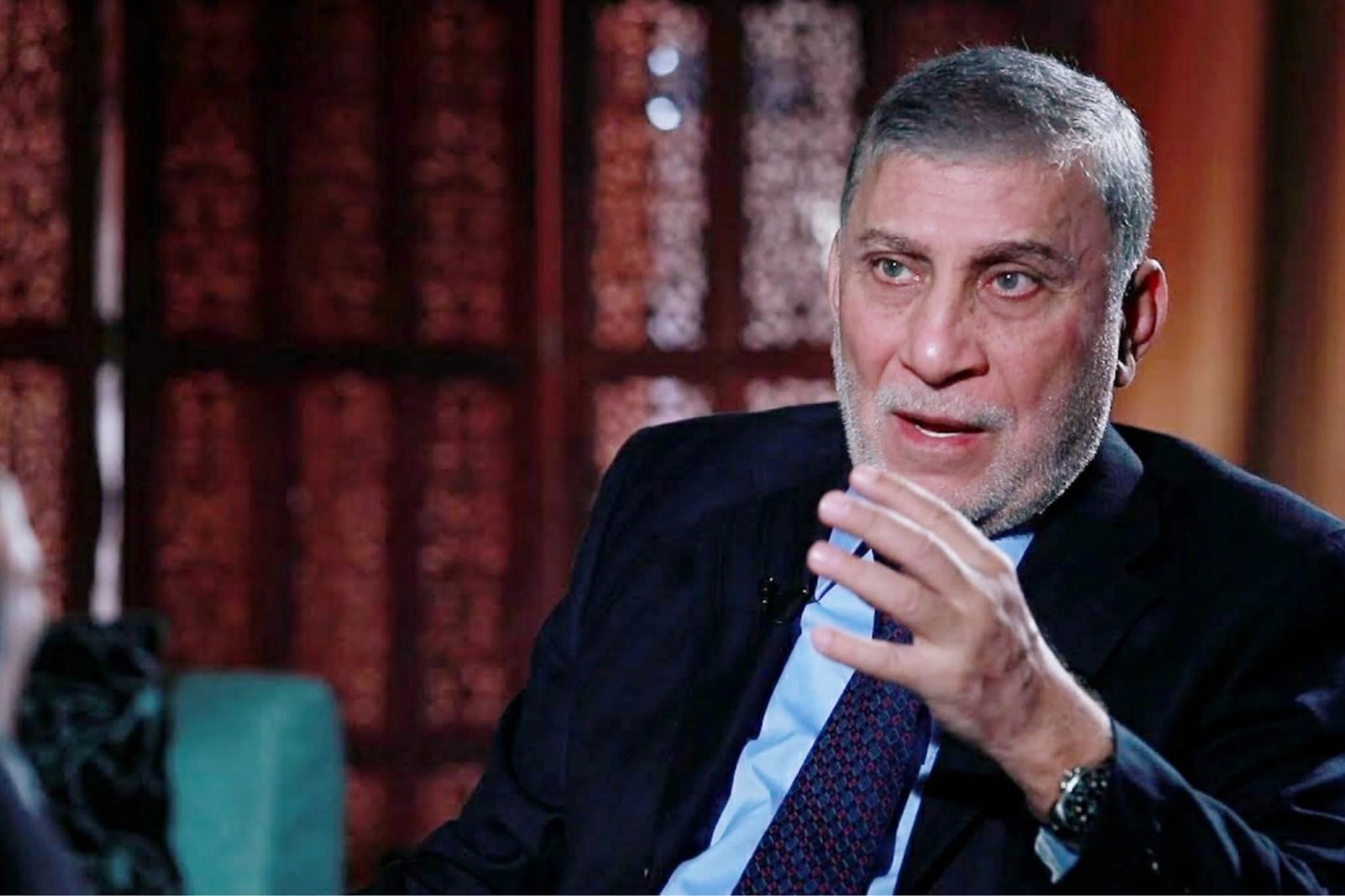

ERBIL, Kurdistan Region - Iraq could gradually return to a more centralized system of government as the political arrangements established after 2003 continue to falter, prominent Shiite politician Izzat al-Shabandar told Rudaw, arguing that centralization could offer greater stability and reduce corruption, provided power is not monopolized by one group.
Speaking to Rudaw’s Rudawi Emro program, Shabandar criticized Iraq’s post-2003 political system, saying the distribution of ministries and state institutions among Shiite, Sunni and Kurdish parties had weakened governance, encouraged corruption and squandered public resources.
“Our experience has shown that centralization poses fewer risks to the country’s unity and its ability to develop, and involves less corruption,” Shabandar said.
“What has the country gained from the absence of centralization since 2003? More fragmentation, division and waste of resources,” he added.
Shabandar argued that Iraq’s experience with decentralization had largely failed, particularly through provincial councils and the political practice of dividing government institutions among parties.
“I am not particularly afraid of reducing this situation and gradually moving towards centralization,” he stated, stressing that such a system must be fair and represent all Iraqis.
He distinguished between equitable centralization and authoritarian rule, arguing that Erbil, Basra and Anbar could maintain strong representation in Baghdad without fragmented centers of authority.
Iraq’s 2005 Constitution establishes the country as a federal state and recognizes the Kurdistan Region as a federal entity. Any fundamental restructuring of federal powers would therefore raise significant constitutional and political questions.
Concerns over Kurdish fragmentation
Addressing deepening divisions between the Kurdistan Democratic Party (KDP) and the Patriotic Union of Kurdistan (PUK), Shabandar said political forces in Baghdad were divided over the possibility of establishing a separate Sulaimani Region, with some potentially encouraging such a move. He expressed support for preserving the Kurdistan Region’s unity.
“I believe Baghdad is divided into two camps. One opposes it, while another may already be preparing the ground for it,” he said, adding that he stood with Erbil in defending the Region’s unity.
Coordination Framework ‘paralyzed'
Shabandar also criticized the Shiite Coordination Framework, the political alliance that brought Prime Minister Ali al-Zaidi to power, describing it as increasingly fragmented and unable to coordinate its decisions.
“The Coordination Framework has even lost coordination with itself,” he said.
Shabandar questioned who was effectively governing Iraq, arguing that competing political interests had undermined decision-making.
He said Zaidi had accepted the premiership after receiving assurances of political, military and security support from the parties that nominated him, but those commitments had not materialized.
Warning over Jurf al-Sakhr
Addressing Zaidi’s confrontation with Kataib Hezbollah over Jurf al-Sakhar, southwest of Baghdad, Shabandar acknowledged that the continued control of Iraqi territory by armed groups outside effective state authority was unacceptable.
However, he warned that a military confrontation could trigger dangerous fighting between Shiite factions.
He disclosed that an agreement within the Coordination Framework envisaged a three-stage plan, concluding in June 2027, to disarm Kata'ib Hezbollah or integrate its members into political activities or the Popular Mobilization Forces (PMF).
Shabandar rejected suggestions that the agreement involved transferring Kata'ib Hezbollah fighters to the Syrian border.
He also criticized American and Iranian interference in Iraqi affairs, arguing that Baghdad must resolve its internal disputes independently rather than allowing the country to become a battleground for competing regional interests.
Turning to attacks on the Khor Mor gas field in the Kurdistan Region, Shabandar described them as “disgraceful” and called on the federal government to fulfil its responsibility to protect the facility.
His remarks highlighted growing concern over Iraq’s political fragmentation, with competing centers of power weakening the state even as some political figures advocate a gradual return to centralized governance.