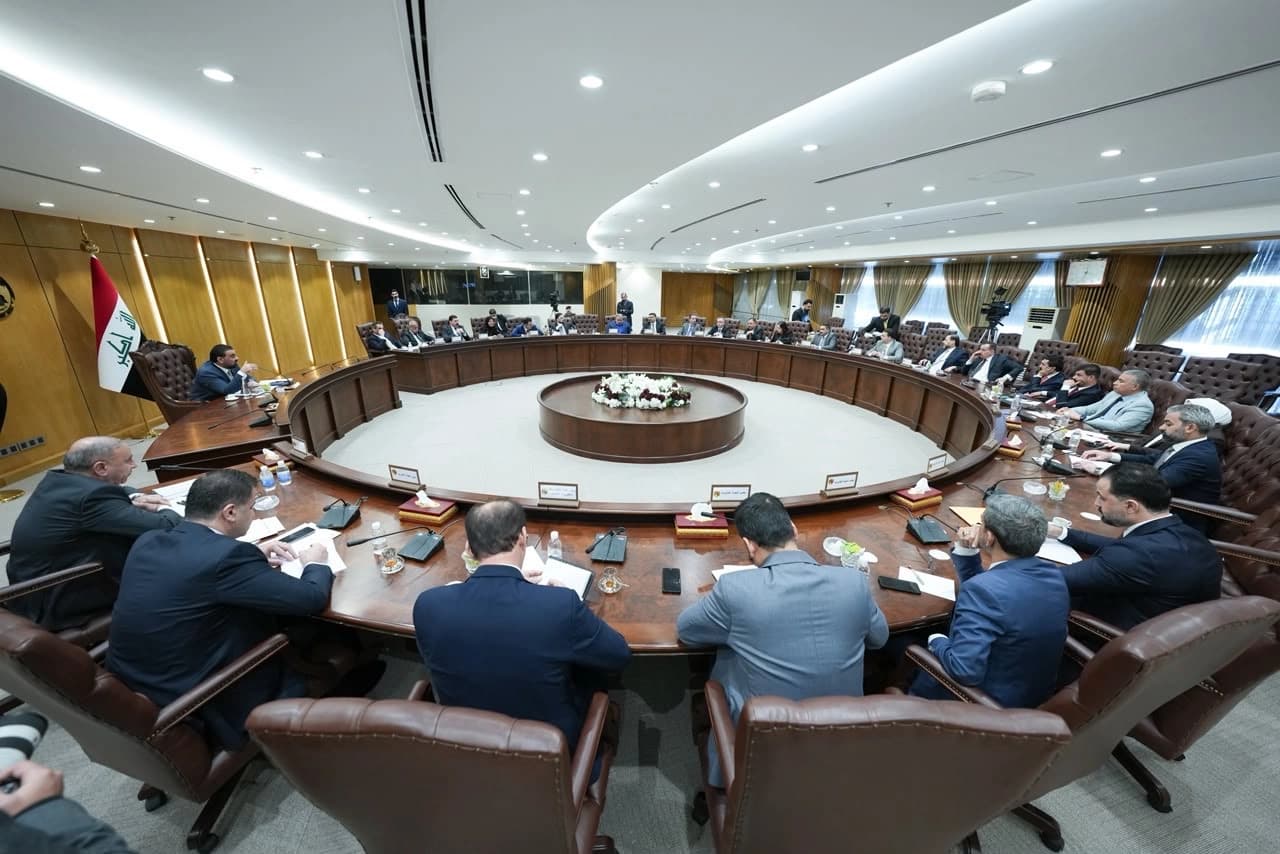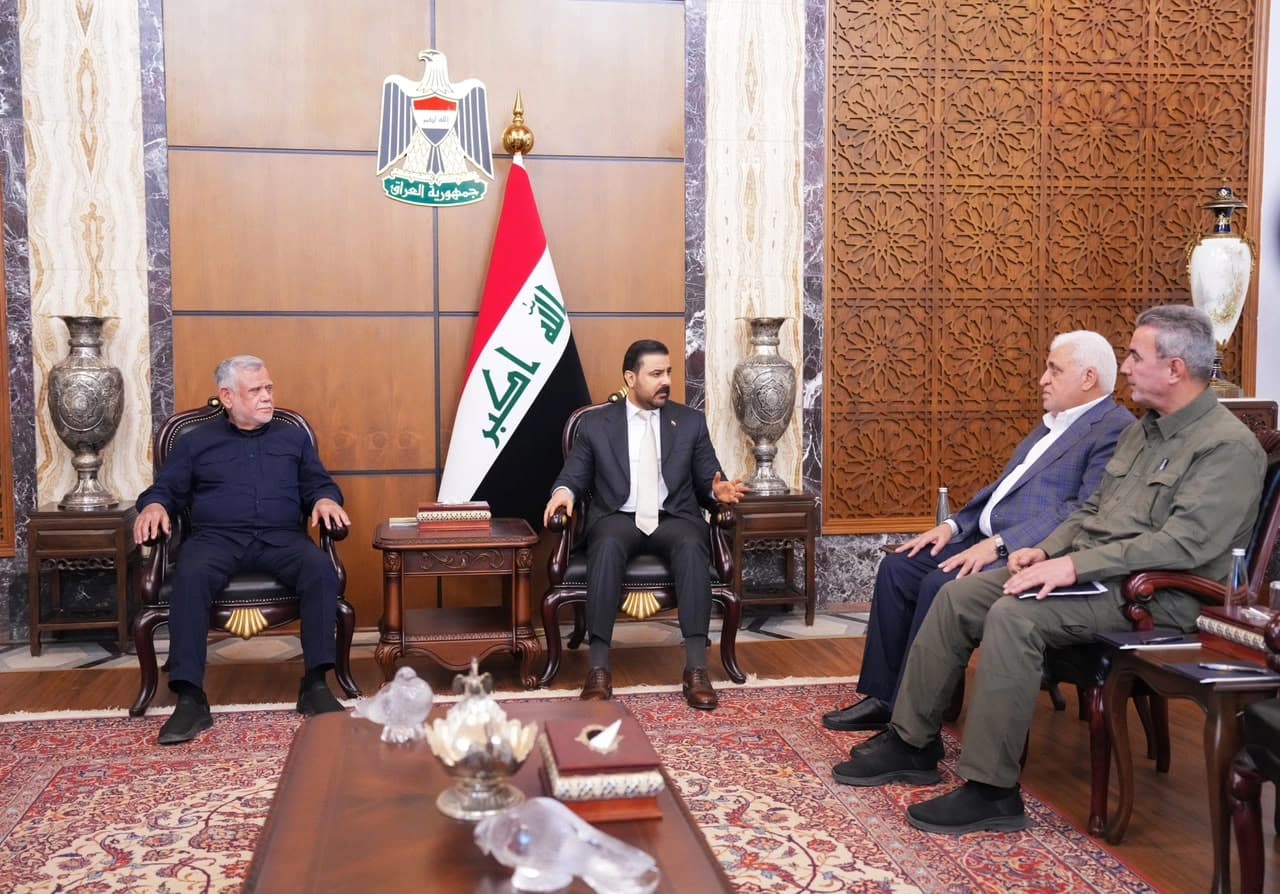

ERBIL, Kurdistan Region - Iraqi Prime Minister Ali al-Zaidi met Thursday with senior Popular Mobilization Forces (PMF) leaders and influential Shiite politician Hadi al-Ameri, amid reported mediation efforts to defuse an escalating confrontation between the government and Iran-aligned Kataib Hezbollah over Baghdad’s campaign to bring weapons under state control.
Zaidi's office said the meeting addressed political and security developments in Iraq and the wider region, stressing the importance of strengthening coordination between security institutions under the authority of the commander-in-chief of the armed forces.
The prime minister also reaffirmed that his government would continue implementing its program in a manner that “reinforces state sovereignty and the rule of law,” according to the statement carried by the state-run Iraqi News Agency (INA).
The meeting brought together Badr Organization leader Hadi al-Ameri, PMF Chairman Falih al-Fayyadh, and PMF Chief of Staff Abdul Aziz al-Mohammadawi, widely known as Abu Fadak, a former senior Kataib Hezbollah figure. All three maintain close ties to Iran, which wields considerable influence over factions within the PMF and other Shiite armed groups.
The latest meeting underscores the pressure facing Baghdad as it seeks to bring armed groups under state authority while avoiding confrontation with factions that retain considerable military and political influence. The government initially set a September 30 deadline for armed factions to hand over their weapons to the state, but extended it to June 30, 2027, following negotiations and at the factions' request.
The talks also come amid a widening rift between Zaidi and Kataib Hezbollah, one of Iraq's most powerful pro-Iran armed factions, which has resisted committing to unconditional disarmament. The dispute has extended beyond weapons to government contracts, alleged illicit economic activities, and competing accusations of financial wrongdoing.
While the government statement did not mention Kataib Hezbollah or mediation, Iraqi media reported that the meeting was intended to contain the confrontation. Channels affiliated with pro-Iran factions also claimed the meeting was geared towards diffusing the ongoing tensions.
The meeting follows reports that leaders of Iraq's ruling Shiite Coordination Framework have also been attempting to mediate between the two sides. National Wisdom Movement leader Ammar al-Hakim and Islamic Supreme Council head Humam Hamoudi have stepped in to prevent the dispute from escalating further.
During a discussion at London's Chatham House this week, Iraqi National Security Advisor Qasim al-Aboudi said five armed factions had signed commitments under the government's disarmament plan, with three already having surrendered their weapons.
Aboudi said the remaining two factions had pledged to hand over their arms in the coming months, although negotiations were continuing, with one demonstrating greater flexibility than the other. He did not identify the factions.
Over the past months, Harakat al-Nujaba of Akram al-Kaabi and Kataib Hezbollah have both stood out as the two factions that are yet to agree to disarmament.
National Security Service chief Basim al-Badri, also speaking at Chatham House, outlined further details of the government's plan, which includes severing armed factions' organizational ties to their political or ideological leadership and placing their military structures under the authority of the commander-in-chief.
Badri warned that factions refusing to comply would have no place within the PMF, while accusing unnamed groups of exploiting the institution as cover for unlawful activities.
The confrontation between Zaidi and Kataib Hezbollah has intensified in recent weeks, with the faction accusing the premier of failing to honor understandings reached during earlier disarmament negotiations.
Several of Kataib Hezbollah's former paramilitary allies, including Asaib Ahl al-Haq and Kataib Imam Ali, have backed efforts to restrict weapons to state control, leaving the group facing increasing political pressure.