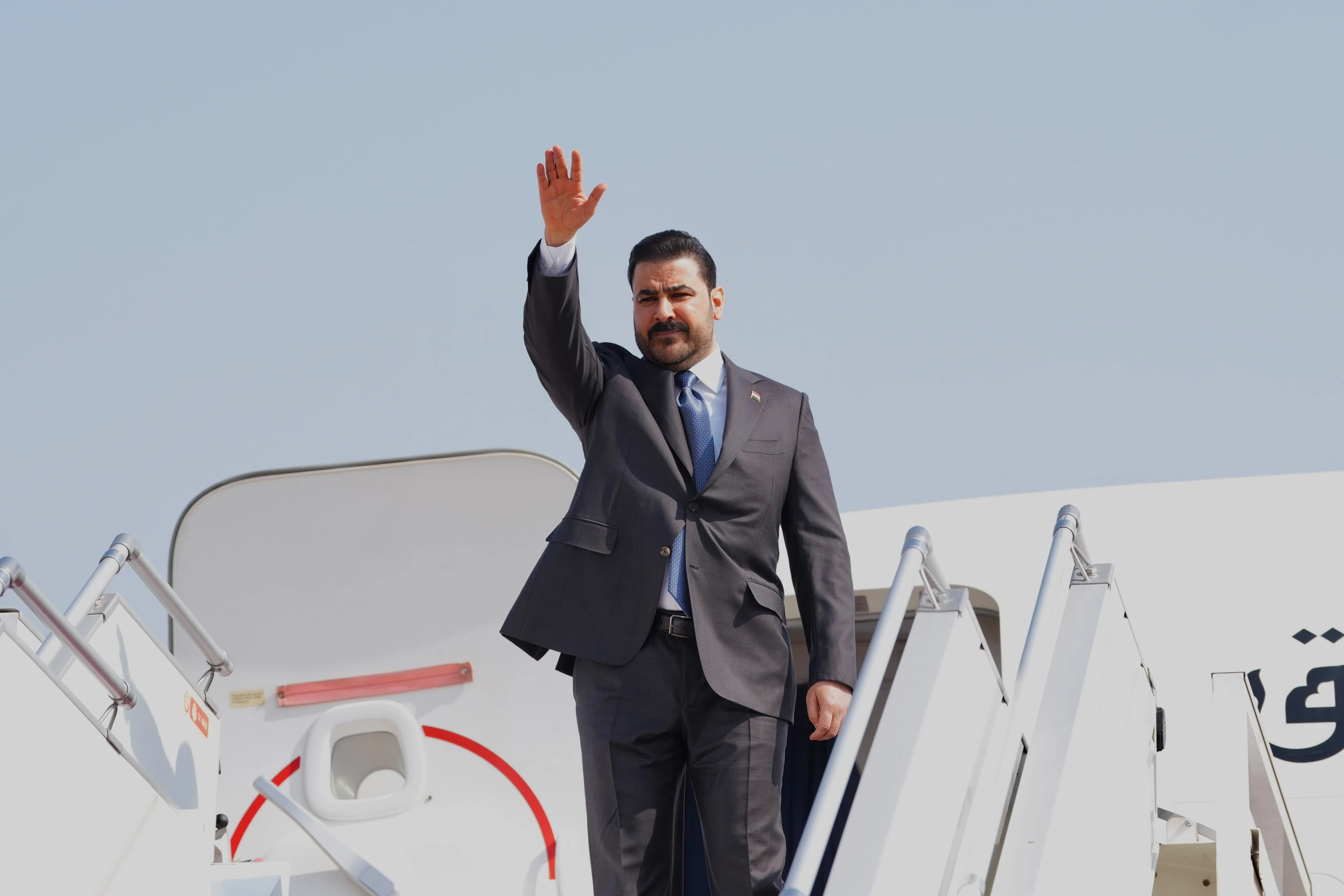

ERBIL, Kurdistan Region - Iraqi Prime Minister Ali al-Zaidi departed for Jordan on Monday on his first official visit to the kingdom since taking office, with regional tensions and economic cooperation on the agenda, as Amman grapples with the aftermath of a deadly church attack.
Zaidi will meet with King Abdullah II to “discuss cooperation between the two countries, developments in the region, and the responsibilities these developments place on regional states," Iraqi government spokesperson Haidar al-Aboudi said in a video ahead of the visit.
Aboudi said the two countries were expected to sign memoranda of understanding aimed at advancing joint economic and development programs.
"The visit at this time represents a shared vision between Baghdad and Amman to expand Arab and regional dialogue in support of solutions that preserve the security of the region and the stability of its peoples," he said.
The visit comes amid renewed fears of hostilities between the United States and Iran, following months of regional conflict that has disrupted maritime trade and oil exports. Washington and Tehran have continued diplomatic contacts, but the possibility of renewed military action remains a concern.
Zaidi previously visited Saudi Arabia on October 14, following delays caused by regional tensions. He also met King Abdullah II on the sidelines of the United Nations General Assembly in New York on September 22, when the two leaders discussed economic cooperation and regional stability.
The visit also comes three days after gunmen attacked a Greek Orthodox church during a funeral in the village of Hamoud in Jordan's Karak governorate on Friday, killing nine people and wounding 40 others.
Jordanian security forces arrested three suspects on Monday following a shootout in Karak, according to the country's Public Security Directorate. All three suspects were wounded during the operation.
Iraq and Jordan have longstanding economic ties, particularly in the energy sector, with Baghdad seeking to expand trade and develop alternative routes for exporting crude oil.
Jordan previously imported between 10,000 and 15,000 barrels of Iraqi crude oil per day under a bilateral agreement. However, deliveries have remained suspended since late December 2025 following the expiration of the agreement and subsequent difficulties over the availability of suitable crude.
Jordan's energy ministry told Rudaw in May that the kingdom imported approximately 2.76 million barrels of Iraqi crude in 2025, averaging 10,505 barrels per day.
Among the major projects under discussion between Baghdad and Amman is the proposed Basra-Aqaba oil pipeline to connect Iraq's southern oilfields to Jordan's Red Sea port of Aqaba and reduce Baghdad's reliance on exports through the Strait of Hormuz.
During a meeting with a Jordanian ministerial delegation in Baghdad in July, Zaidi discussed advancing the pipeline project, alongside cooperation in trade, investment, transportation and electricity.
The project has gained renewed significance since the outbreak of the US-Israeli war against Iran in late February, which severely disrupted shipping through the Strait of Hormuz and sharply reduced Iraq's oil exports.
Iraqi crude exports fell from more than 99 million barrels in February to 18.6 million barrels in March, placing significant pressure on a state budget heavily dependent on oil revenues.
Speaking during a visit to Germany in mid-September, Zaidi said Iraq could not remain "hostage to a single corridor," stressing the need to diversify oil export routes through Turkey, Syria and the Mediterranean.
Exports have since almost recovered, exceeding 3.4 million barrels per day in October, according to Iraq's Oil Ministry, approaching their pre-war level of approximately 3.7 million barrels per day.
Iraq and Jordan also participate in a trilateral cooperation mechanism with Egypt, aimed at expanding economic integration through joint energy, electricity, infrastructure and trade projects.
Egyptian officials said earlier this month that Zaidi was expected to visit Cairo on November 23, with discussions focused on economic cooperation and advancing joint projects involving the three countries.