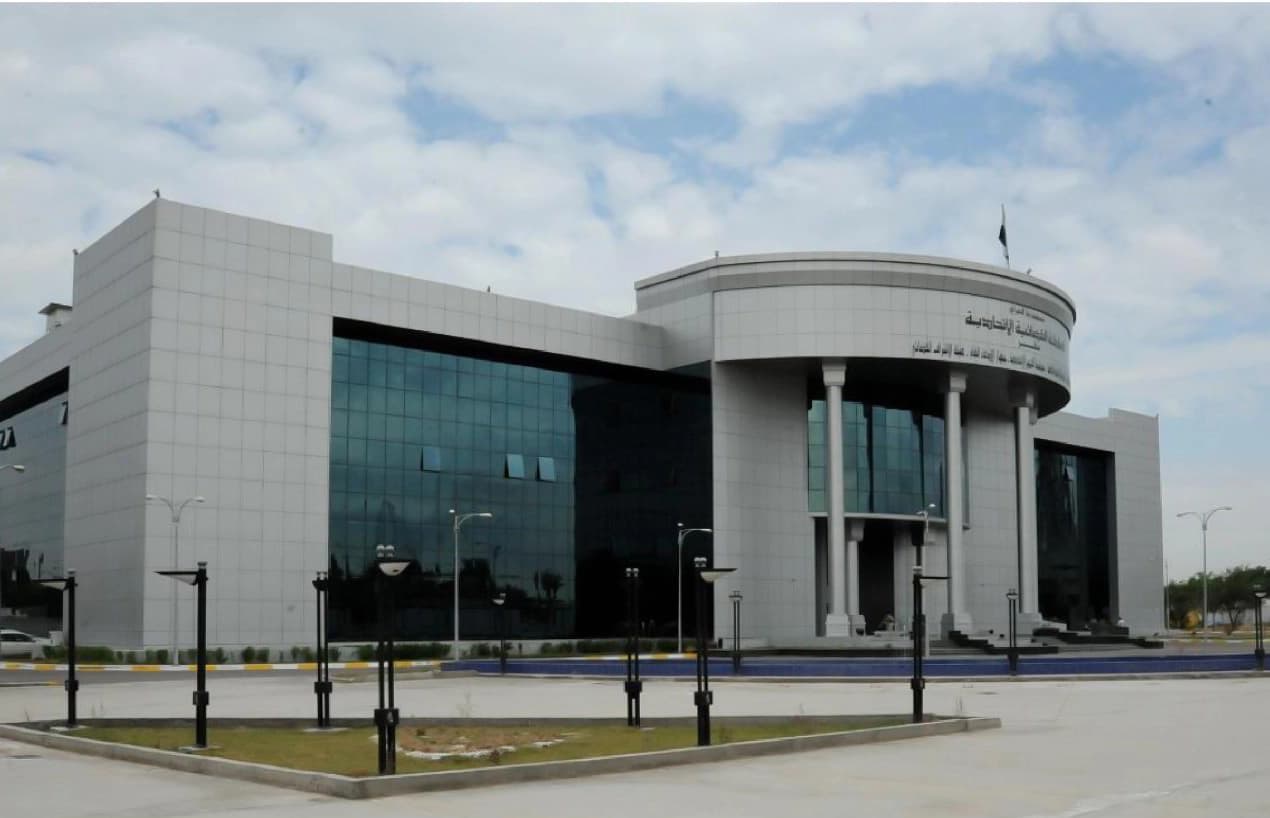

ERBIL, Kurdistan Region - Iraq's Federal Supreme Court on Tuesday nullified a 2003 Kurdistan Region law criminalizing broadly defined acts against the Region’s internal and external security, sovereignty, and public authorities, citing violations of the the Iraqi constitution.
The court issued a ruling to overturn a 2003 Kurdish legislation of Law No. 21 - passed in the Kurdistan parliament before the Iraqi constitution was adopted in 2005 - which suspended provisions of the amended Iraqi Penal Code No. 111 of 1969 in the Kurdistan Region in violation of "the provisions of Articles 110 and 121(2) of the Constitution of the Republic of Iraq of 2005" - which define the division of power between the central federal government and regional powers - according to a statement issued on Tuesday, rendering it unconstitutional.
Article 110 of Iraq's constitution places national security policy among the exclusive powers of federal authorities, while Article 121(2) allows regions to amend the application of federal legislation outside those exclusive powers.
The 2003 law served to replace Article 156 of Iraq's Penal Code, regarding the application of the death penalty for parties acting against Iraq’s independence and territorial integrity, attempting to overthrow the government by force, as well as offenses against public authorities, with a provision criminalizing acts intended to harm the security, stability or sovereignty of the Kurdistan Region's institutions.
Under the legislation, Article 156 was replaced with a provision stating that anyone who deliberately engages in an act intended to harm "the security, stability, and sovereignty of the institutions of the Kurdistan Region of Iraq" and causes such harm shall face life imprisonment or a fixed prison term.
The case was filed by a Kurdistan Region resident, Zozik Rahim Rahman, with the first hearing held in March 2026. The presiding judge, Judge Munther Ibrahim Hussein, issued the ruling on Tuesday as "final and binding on all authorities," according to the statement.
The Iraqi court’s decision follows previous Federal Supreme Court rulings invalidating Kurdistan Region legislation, including its 2007 oil and gas law in 2022 and the law extending the Regional parliament’s term in 2023.
Rights groups have noted the Kurdish Law No.21 broad wording and its use in targeting and silencing political activists, journalists, and dissidents within the Region.
A number of journalists and activists, who focused on human rights, freedom of expression and corruption issues in the Kurdistan Region, were imprisoned in October 2020 on charges of destabilizing the security and stability of the Kurdistan Region.
Amnesty International in August 2023 criticized Article 1 of Law No. 21 of 2003 issued by the Parliament of the Kurdistan Region for containing “vaguely defined and overbroad language allowing for prosecutions over actions that are not recognizable crimes under international law.”
Sherwan Sherwani, one of the jailed journalists, was sentenced for the third time in August 2025 to four years and five months in prison after his previous sentence in July 2023.
“Sentencing Sherwani for a third time on dubious charges and imposing the maximum penalty shows the authorities’ determination to silence his critical voice and keep him behind bars,” said Doja Daoud, the Levant program coordinator for the New York-based Committee to Protect Journalists (CPJ) at the time.
A report by Freedom House, a US-based entity that publishes annual ranking of freedoms worldwide, ranked Iraq - including the Kurdistan Region - as “not free” in its Freedom in the World 2026 report, with a total score of just 31 out of 100.