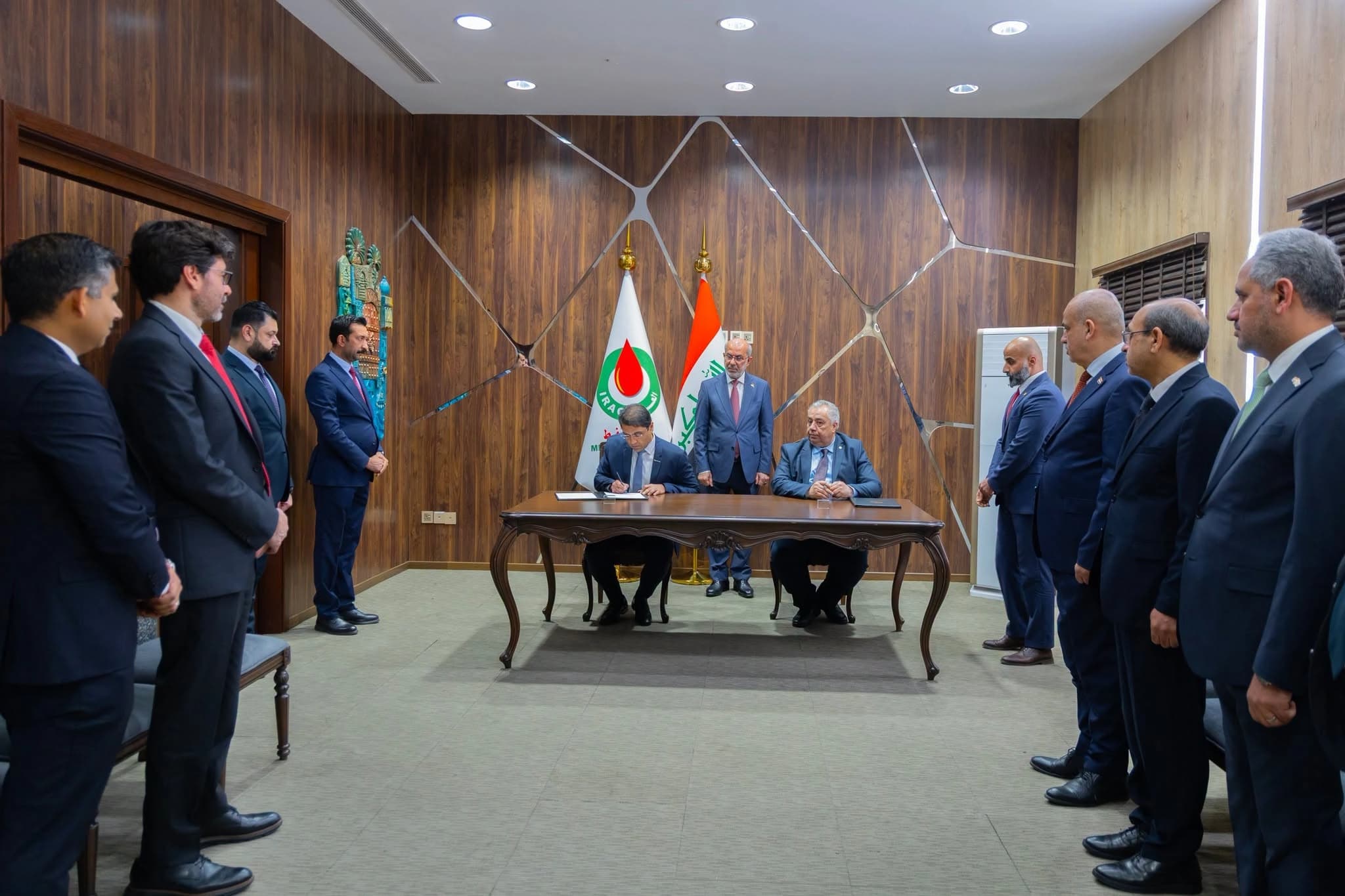
ERBIL, Kurdistan Region - Iraq and Turkey began negotiations in Ankara on Friday on a framework agreement aimed at expanding bilateral cooperation in oil, gas and energy, as Baghdad seeks alternative crude export routes amid disruptions to shipping through the Strait of Hormuz.
“The meeting discussed the proposed roadmap to enhance bilateral cooperation in developing the infrastructure of the oil and gas sectors, the petrochemical industry, and the trade of oil, gas, and energy,” the Iraqi oil ministry said in a statement, adding that officials also explored ways to develop joint work frameworks and coordination to serve mutual interests.
The talks come as Iraq seeks to diversify its energy infrastructure and crude export corridors amid severe disruptions to shipping through the Strait of Hormuz since the United States-Iran war broke out in late February.
Baghdad and Ankara signed a one-year oil transit agreement in August after their previous deal expired in late July. Oil Ministry spokesperson Salim al-Rukabi described it as a "temporary agreement" and said exports were expected to increase gradually to full capacity.
Iraq's oil minister said in early August that Baghdad planned to increase oil exports through Syria and Turkey to more than one million barrels per day (bpd).
Turkish Energy and Natural Resources Minister Alparslan Bayraktar said on X that he met with an Iraqi delegation at the ministry on Friday, stating that “at a time when regional developments have made supply security more critical than ever, we are taking energy relations between Türkiye [Turkey] and Iraq to a new and much stronger level.”
Following the crude oil transportation agreement signed in August between Turkey's Petroleum Pipeline Corporation (BOTAS), Iraq's State Organization for Marketing of Oil (SOMO), and the North Oil Company (NOC), the two sides are drawing up a roadmap for a "new, long-term, and more comprehensive agreement," Bayraktar said.
He added that joint working groups would be activated to finalize projects covering oil and gas infrastructure, exploration, trade, refining, petrochemicals and electricity.
“We consider the extension of the Kirkuk-Ceyhan pipeline to Basra and the increase in its capacity to be important in terms of creating a strong alternative to the Gulf Region and the Strait of Hormuz,” Bayraktar noted.