ERBIL, Kurdistan Region - Iraqi Prime Minister Ali al-Zaidi on Thursday praised armed groups that have agreed to place their weapons under state control and urged remaining paramilitary factions to follow suit, a day after the US-led coalition completed its withdrawal from Iraq.
"We commend the stance of the factions that have declared their commitment to addressing the issue of weapons in accordance with the constitution and the timetable set by the government," Zaidi said during a speech at the Sovereignty Day conference in Baghdad, adding that he expects "the same commitment from the remaining factions, in a manner that serves the interest of our beloved people and strengthens the authority and prestige of the state."
The remarks came after the United States-led international coalition completed its withdrawal on Wednesday under a 2024 security agreement between Baghdad and Washington, leaving unresolved questions over the federal government's efforts to bring armed factions fully under state control.
Initial plans to disarm armed factions alongside the coalition's withdrawal were delayed, prompting authorities and militia leaders to negotiate a revised timeline amid domestic and international pressure.
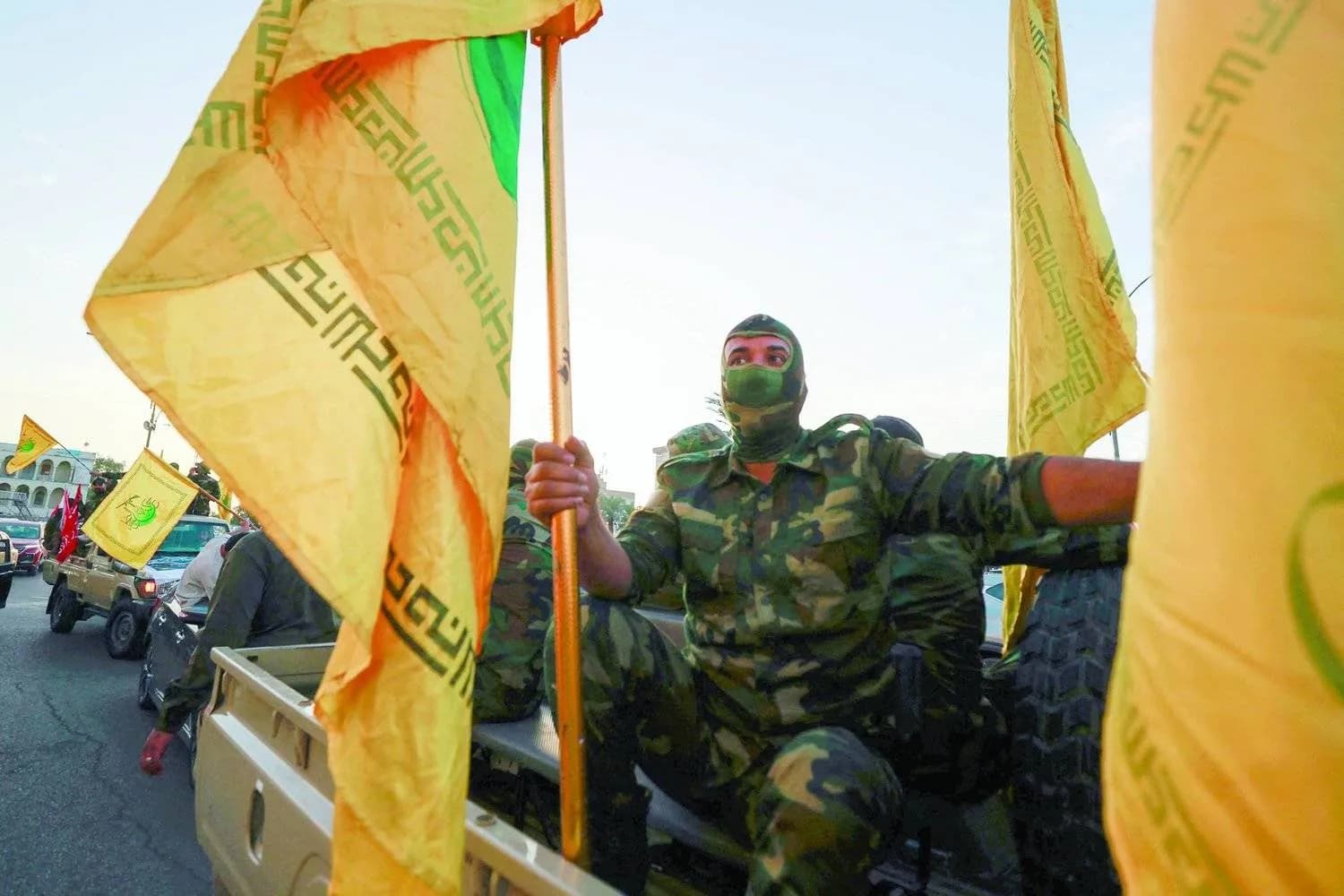
Kata'ib Sayyid al-Shuhada, an Iran-aligned armed faction operating under the umbrella of the so-called Islamic Resistance in Iraq (IRI), announced earlier on Thursday that it had accepted the government's plan.
"We declare our commitment to the agreement concluded between the concerned parties, and to the points outlined in the speech of the Commander-in-Chief of the Iraqi Armed Forces, provided the other party does not violate its obligations under the signed terms," the faction stated.
Another prominent armed group, Harakat Hezbollah al-Nujaba, issued a statement claiming victory over Washington but stopped short of clearly committing to the disarmament framework.
The group portrayed the troop departure as a forced retreat, asserting that the US signed the "so-called 'Troop Withdrawal Agreement' to save face" after suffering military blows in Iraq.
It said the withdrawal fulfilled an oath made to former Iranian Quds Force commander Qasem Soleimani and Iraqi militia leader Abu Mahdi al-Muhandis, who were killed in a US airstrike in Baghdad in 2020.
Nujaba also laid out a series of demands, warning Washington against retaining any armed presence under the guise of "security contractors" or "advisors."
The faction called for relations between Baghdad and Washington to be based on reciprocity, demanding that the US embassy in Baghdad be reduced from "a massive security and military city" to the size of a regular diplomatic mission, or that Iraq be allowed to establish an equivalent facility in the United States.
It also called for an end to US influence over Iraq's economy and domestic politics, an end to foreign flights through Iraqi airspace, and the removal of US personnel from areas near Iraq's borders in Syria, Jordan and Kuwait, seeking to end what it termed "abhorrent guardianship."
Although Iraq's parliament formally integrated the Popular Mobilization Forces (PMF) into the country's security apparatus in 2016, several factions within the umbrella organization have continued to operate with significant autonomy from the conventional chain of command.
Zaidi directly urged armed factions to operate under unified state authority on Wednesday.
"Be at the heart of the state, not outside it. The place for your weapons and your men is within the state and its institutions."
The prime minister said Iraq's sovereignty depended on bringing weapons under state control following the departure of foreign forces.
"This is the equation of sovereignty: one weapon in the hands of the state, an Iraqi land without foreign troops, and a national decision that represents everyone."
The IRI emerged following the outbreak of the Gaza war in October 2023 and overlaps with factions within the PMF, including Asa'ib Ahl al-Haq, Kata'ib Hezbollah, Harakat Hezbollah al-Nujaba and Kata'ib Sayyid al-Shuhada.
The umbrella group has sided with Tehran since late February, when the US and Israel launched a large-scale military campaign against Iran.
In early April, the IRI claimed to have carried out more than 750 attacks against alleged US-linked targets in Iraq and the region since the start of the Iran war.