
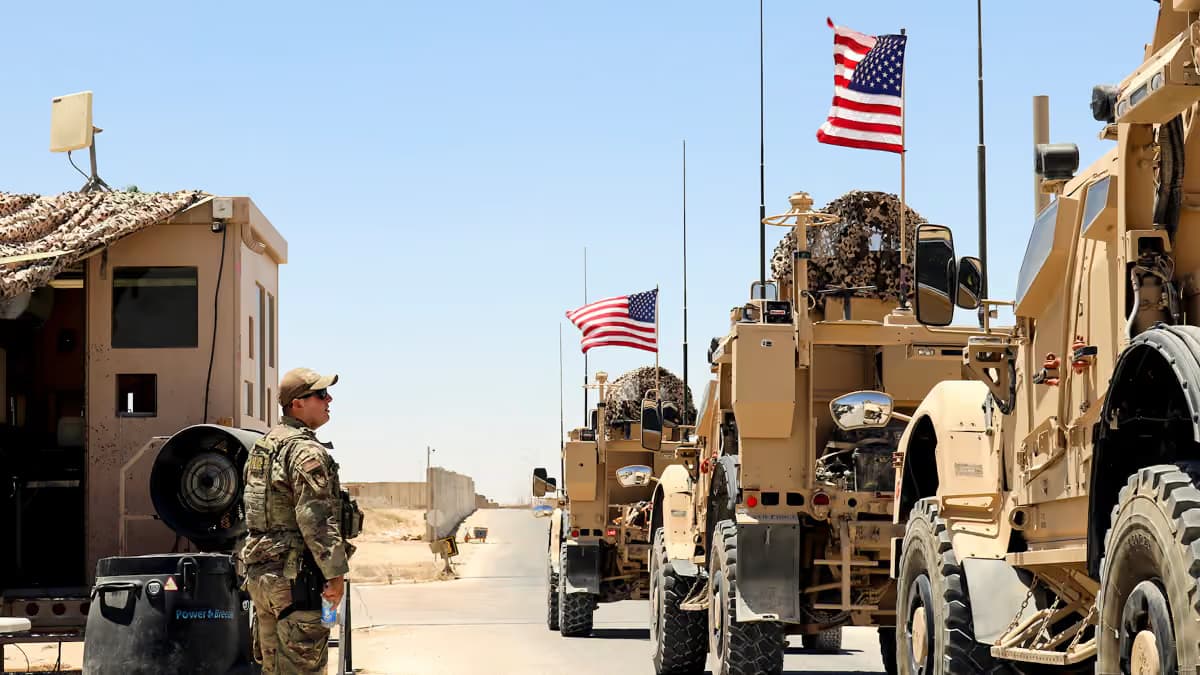

ERBIL, Kurdistan Region - Iraq is preparing to mark the withdrawal of US-led coalition forces on September 30 ending a 12-year military mission in the country since the onset of the Islamic State (ISIS) emergence, a move welcomed by some who view the departure as a restoration of sovereignty amid looming concerns over the possibility of the resurgence of armed groups as Baghdad and Erbil navigate a precarious security juncture.
“The liberation of Iraq and safeguarding its sovereignty is a source of joy for every Iraqi, from north to south,” Baghdad resident Adnan Assi told Rudaw’s Ziyad Ismail, expressing hope that the country can build stability and unity without foreign forces.
In Mosul, Iraq’s second-largest city and the Islamic State’s former de-facto capital, reactions were mixed, albeit mostly in favor of the departure. “Let them withdraw to hell,” worker Mohammed Hussam told Rudaw. “What use are they to us anyway? What benefit do they bring?”
Hayyan Jassim, a shopkeeper, said residents had become accustomed to a degree of order and questioned what a full withdrawal could mean for security. “Didn't we get used to a bit of order and discipline?” he asked. “If a withdrawal happens, it's like we'll completely lose control.”
The contrasting views come as Iraq prepares to formally mark what the government calls the restoration of its sovereignty following the end of the coalition mission from within Iraq, termed Operation Inherent Resolve, launched in 2014.
Sabah al-Numan, spokesperson for Iraq's commander-in-chief of the armed forces, told Rudaw's Malik Mohammed that coalition forces were in the final stage of their withdrawal, including from Erbil.
“After September 30, not a single foreign soldier will remain anywhere in Iraq,” Numan said. A “Large Sovereignty Conference” is scheduled for October 1 under the supervision of Prime Minister Ali al-Zaidi.
For many Iraqis, the withdrawal closes a chapter that began with the US-led invasion in 2003.
Operation Iraqi Freedom began on March 20, 2003, to overthrow Saddam Hussein's Ba’athist government and officially concluded in December 2011. The US Department of Defense recorded 4,432 US military deaths during the operation through August 2010.
But the departure also revives memories of the security vacuum that followed the 2011 withdrawal and preceded the rise of ISIS.
Kurdistan Democratic Party leader Masoud Barzani warned Sunday that there are no guarantees preventing a repeat of the events that led to ISIS' 2014 takeover of Mosul and large parts of northern and western Iraq.
“The Americans left, and Daesh appeared right away. I fear the same scenario will happen,” Barzani said in an interview with al-Sharqiya.
Barzani recalled warning Iraqi officials before the 2011 withdrawal that they were not prepared to assume full responsibility for the country's security. He also said he had warned then-Prime Minister Nouri al-Maliki about militant groups before the fall of Mosul.
ISIS seized Mosul in June 2014, and Human Rights Watch documented killings, kidnappings and the expulsion of religious and ethnic minorities in and around the city, as well as the destruction and seizure of religious and cultural sites.
The US-led coalition began airstrikes against ISIS in Iraq in August 2014, while also providing intelligence, training and military assistance to Iraqi and Kurdish forces. By 2017, Iraqi forces, backed by the coalition, had retaken territory held by the group.
Recent Iraqi operations underline that the threat has not disappeared entirely. On Sunday, Iraqi Counterterrorism Service forces killed two ISIS members and arrested another in Pirde, also known as Altun Kopri, in Kirkuk province.
The Iraqi military has also carried out strikes against ISIS hideouts in Diyala, while Iraqi forces and the Popular Mobilization Forces launched an operation this week to search the Thalab Basin for ISIS positions.
Iraqi Air Force Commander Khalid al-Tamimi said the threat is now “very limited,” pointing to continued Iraqi operations against sleeper cells.
The withdrawal is also being watched closely as Iraq maintains political and military ties with both Washington and Tehran. Iran-backed armed groups operating within Iraq have portrayed the departure as a victory.
Iran-aligned Kata’ib Hezbollah warned Monday that it would shoot down “hostile” aircraft violating Iraqi airspace after the US-led Global Coalition completes its military withdrawal from Iraq this week.
The leader of an Iran-backed group operating in Iraq on Wednesday threatened direct confrontation with any US troops who remain after the September 30th deadline for the withdrawal of international Coalition forces.
"Let him [Trump] know that we are monitoring September 30th with full preparedness, readiness and enthusiasm to fight a decisive battle with the occupying forces if they renege on their commitment for full withdrawal from the land and the air," said Akram al-Kaabi, the general secretary of Harakat Hezbollah al-Nujaba, according to a statement from the group.
Meanwhile, The Kurdistan Region’s Ministry of Peshmerga Affairs (MoPA) on Monday warned that the planned withdrawal comes at a “sensitive time,” and that leaving the Kurdistan Region without a defense system in place is “a cause for concern.”
The ministry said in a statement on Monday, that while the drawdown follows a “mutual understanding between the Iraqi federal government and the US,” the “continuation of instability in the region poses a threat to the entire area,” urging political decisions that prioritize security and stability.
Nevertheless, Kurdistan Region Presidency's Chief of Staff Fawzi Hariri told Rudaw at an event on Tuesday that the Kurdistan Region Government (KRG) “has supported the Iraqi government's decisions to invite [the Global coalition] and ending its mission as well" and that the KRG and MoPA “will be a part of this [new] framework” of relations with other countries.
While Baghdad prepares to mark October 1 as Iraq's Sovereignty Day, with state institutions and governorates instructed to organize events marking the end of the coalition mission, the question that remains is not if Iraq can weather internal or external threats, but rather to what extent Baghdad will succeed in reining in Iran-aligned groups while placating the Kurdistan Region’s concerns amid lingering uncertainties on multiple fronts surrounding Iraq’s security future.
