
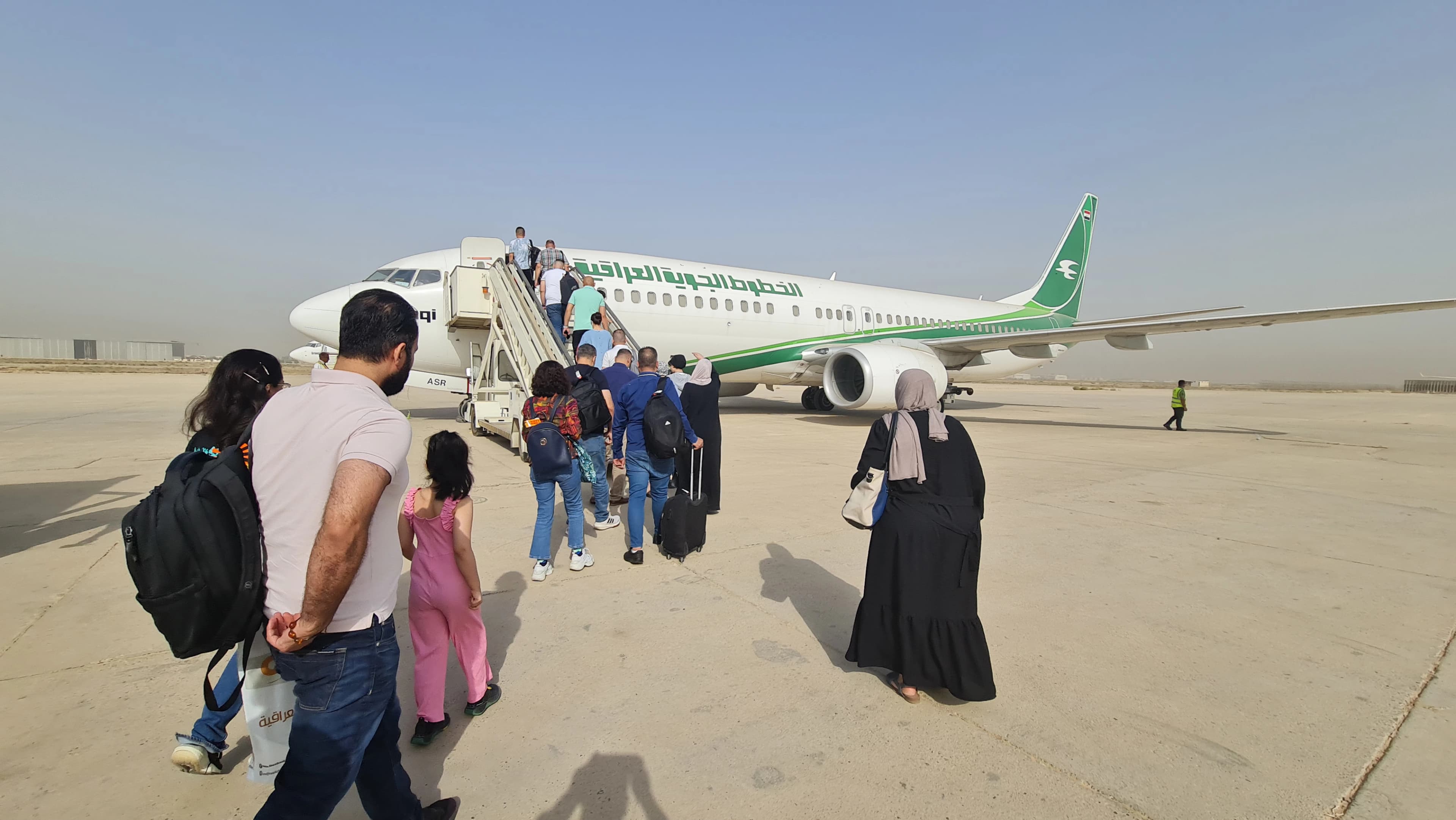

ERBIL, Kurdistan Region - The United States Treasury Department on Tuesday granted Iraqi Airways a highly restrictive license to operate flights between Iraq’s Najaf International Airport and Iran for religious pilgrims effective until October 28, offering a narrow exemption to sweeping sanctions that recently grounded Iranian aviation.
According to an Iranian Transactions and Sanctions Regulations license issued by the US Office of Foreign Assets Control (OFAC), Iraqi Airways and its service providers are authorized to "engage in all transactions ordinarily incident and necessary to operate" passenger services between the two countries.
The Treasury mandated that the authorized flights "may only depart from and return to Najaf International Airport in Iraq," and explicitly restricted the passenger manifest to "Iranian national passengers who are religious pilgrims."
Commercial flights between Iran and Iraq, including the Kurdistan Region, were suspended on Friday as Iraqi airports moved to comply with tightened US sanctions targeting Tehran’s aviation sector.
The suspension triggered demonstrations in several Iraqi cities, including Baghdad, Basra, Maysan, and Najaf - which houses shrines of major religious figures of Shiite Islam and sees the pilgrimage of millions of Shiite devotees from around the world, particularly from Iran - as passengers and others called for flights to resume.
The suspensions followed US measures against Iran's aviation sector. On September 8, the US Treasury sanctioned 36 targets, including 27 Iranian airlines, as part of Operation Economic Outcast, as well as companies and intermediaries supporting the sector.
The US Treasury license states that passengers are limited to carrying only personal baggage and flight safety items and explicitly prohibits the transit of bulk cash, goods re-exported to Iran, cargo intended for Iranian intelligence, military, or law enforcement as well as “any blocked person, including persons affiliated with the Government of Iran; or any persons affiliated with Iranian aligned militia groups.”
Furthermore, Iraqi Airways faces strict reporting requirements, having to submit passenger names, passport numbers, and funds spent by Iraqi Airways in Iran for fuel, maintenance costs, and any other airport-related services to OFAC within 10 days of the license's expiration.
The Treasury also issued a stark warning, noting that OFAC may revoke the license if Iraq fails "to uphold its commitment to restrict Iranian flights from entering or transiting Iraqi airspace" other than authorized flights.
This highly conditional US exemption follows days of confusion and local backlash over the sudden halt of cross-border flights.
“We have been informed by the governorate to resume flights with Iran, but a date has not yet been set,” a source at Najaf International Airport told Rudaw’s Malik Mohammed earlier on Tuesday.
"The resumption of flights is unilateral and will be conducted solely by Iraqi Airways. The Iraqi Council of Ministers has informed the governorate," said the source, noting that Najaf Airport could have continued receiving aircraft, as it does not rely on private-sector companies for ground services. The airport's own staff can provide these services using any currency other than the US dollar.
"We do not know why the Governor of Najaf issued a directive to stop receiving Iranian planes, nor where he received the order from," the source said, adding "Najaf Airport is not under the Ministry of Transport; it is administered by the local government of Najaf.
It was unclear whether the governor's decision was a precaution against US sanctions or directed by federal aviation authorities, the source added.
The Najaf governor, on the other hand, told Islamic Revolutionary Guard Corps IRGC-affiliated Tasnim news agency on Monday that he did not issue the order to suspend Iranian flights to Najaf, noting that a governor legally lacks the authority to issue such an order.
