
ERBIL, Kurdistan Region - Iraq is adopting a Free on Board (FOB) strategy, selling crude directly at its southern ports to sustain maritime exports and transfer transit risks to buyers, the oil ministry spokesperson said Saturday, as export volumes gradually recover amid renewed regional conflict between the United States and Iran.
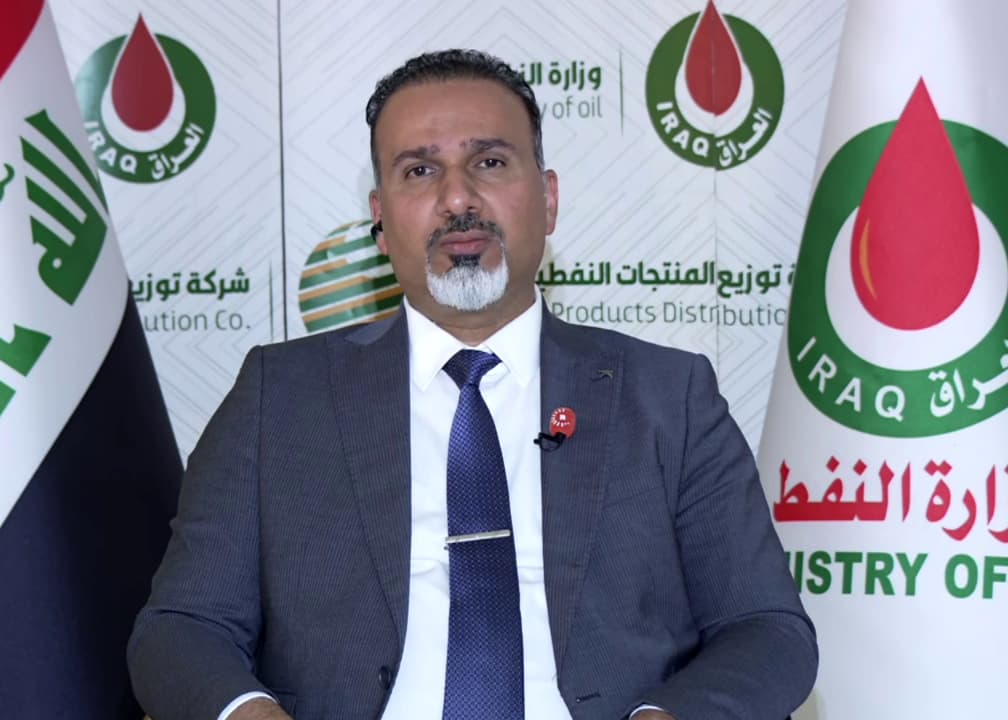
"The State Organization for Marketing of Oil (SOMO), the marketing arm of the Ministry of Oil, adopts the Free On Board sales method," ministry spokesperson Salim al-Rikabi told Rudaw on Saturday, explaining that "quantities or shipments of Iraqi crude oil are offered at the ports, and the purchasing companies are responsible for taking these shipments out of the Strait through safe corridors"
The export arrangements come as Iraq seeks to restore oil production and exports following a sharp decline since the outbreak of the US-Iran war in late February and subsequent shipping disruptions at the Strait of Hormuz.
Before the conflict, Iraq held a crude production capacity of more than 4.5 million barrels per day (bpd), but output dropped sharply when disruptions to maritime traffic through the strategic waterway forced the country to curb production, with shipping remaining well below pre-war levels.
Rikabi stated that maritime crude exports have steadily recovered from earlier lows, noting: "As an average, [exports are] gradually increasing, shifting from 200,000 barrels per day to 2.2 million barrels per day. At this rate, the total for August reached 70 million barrels."
He added that total figures fluctuate because crude deliveries from the Kurdistan Region vary between 50,000 and 150,000 bpd, currently standing at around 180,000 bpd, consisting of "150,000 barrels of crude oil from the Region and 30,000 barrels of Kirkuk oil."
Addressing northern export channels through Turkey’s Ceyhan port, Rikabi confirmed that the tripartite framework between Baghdad, Erbil, and foreign oil companies operating in the Region has been extended.
"The tripartite agreement that was signed had a duration of one year, which ended in July, and it was renewed for another year, parallel to the Iraqi-Turkish agreement that was temporarily extended for a year," he said.
Before the disruptions, Iraq exported around 100 million barrels of crude per month. Exports fell to 18.6 million barrels in March, generating about $1.96 billion in revenue, compared with more than 99 million barrels and $6.8 billion in February.
To address the challenges, Iraq has drawn up plans to raise its crude production capacity to around 10 million bpd by 2030, Iraqi Prime Minister Ali al-Zaidi said Tuesday, directing the oil ministry to boost output from fields in the Kurdistan Region and expand exploration.
Rikabi also highlighted the involvement of international energy firms in expanding upstream operations, noting that "BP [British Petroleum] and the American company ConocoPhillips have started conducting studies and setting up their camps" in the Kirkuk fields as joint management committees begin implementation.
He noted that the ministry's expansion plans include additional contracts with American companies, saying "there are fields specifically contracted with American companies, such as the Sindbad and Balad fields with Chevron, the Nasiriyah field also with Chevron, and fields with Halliburton like the Bin Umar field and others, as well as the Kirkuk fields."
Iraq is also using transit routes through Syria, where SOMO sells fuel oil ex-warehouse in the south for onward export through Tartous at a rate of roughly 30,000 cubic meters per day.
The spokesperson said Baghdad has "an immediate plan and a future plan" for Syrian routes, with the short-term focus on transporting crude by tanker trucks in small volumes, while "the future plan involves laying the new pipeline, the Basra-Haditha pipeline, and the Haditha-Baniyas pipeline," with the latter planned for a maximum capacity of one million bpd.
Rikabi firmly denied reports that Iraq is considering withdrawing from the Organization of the Petroleum Exporting Countries (OPEC) as it pursues production growth, stating that "Iraq is one of the founding countries of OPEC, and what was raised about Iraq leaving OPEC is untrue."
He reiterated that Baghdad has requested a restructuring of member quotas to grant Iraq "the right to raise its production and export ceiling, considering the wars Iraq has been through and based on the available production quantities and reserves Iraq possesses."
Regarding gasoline shortages in the country, Rikabi said daily consumption rose to 38 million liters during recent periods of peak congestion at filling stations, compared with local production of 30 million liters, with the 8-million-liter shortfall covered through imports.
His remarks come as Iraq faces a daily gasoline shortfall, with high summer demand outpacing domestic production and regional conflict disrupting imports.
Rikabi stated that the launch of the Fluid Catalytic Cracking project in Basra within "the next two, three, or four months" will add roughly five million liters of premium gasoline per day, while current natural gas production stands at 1,750 million standard cubic feet per day, of which 1,200 million is utilized as dry gas alongside 6,000 tons per day of Liquefied Petroleum Gas.
.jpg&w=3840&q=75)