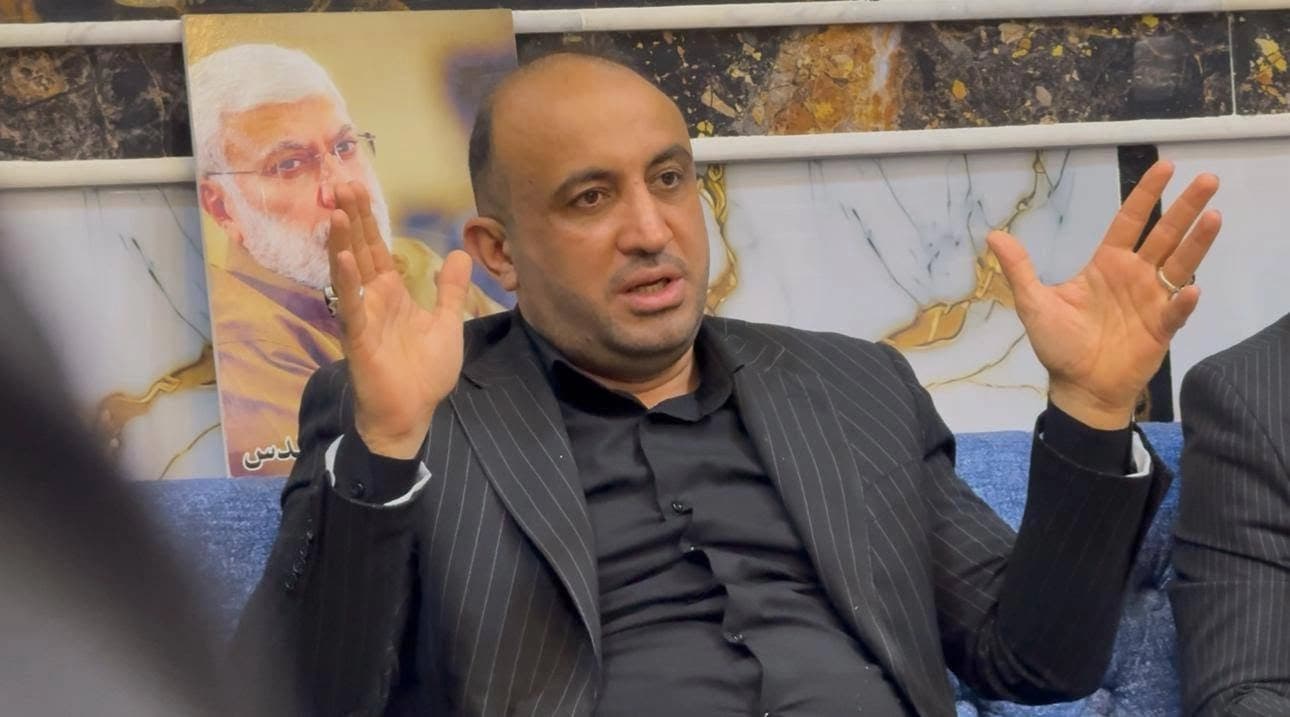

ERBIL, Kurdistan Region - A high-level Saudi military and security delegation held talks in Baghdad on Thursday with the director of the office of Iraq's armed forces commander-in-chief, Abdul-Amir al-Shammari, and head of the Iraqi National Intelligence Service (INIS), Hamid al-Shatri, along with senior Iraqi security officials, Baghdad’s Security Media Cell (SMC) said in a statement, noting that talks centered on border control and intelligence cooperation between the two countries.
“The office of the commander-in-chief of the armed forces [Prime Minister Ali al-Zaidi] received on Thursday a high-level security and military delegation from the Kingdom of Saudi Arabia,” the SMC said, noting that the two sides held “an expanded meeting” attended by Shammari, Shatri, and “deputy directors and heads of [Iraqi] security and intelligence agencies.”
The Cell - the media arm of Iraq's Joint Operations Command (JOC) - described the meeting as “a follow-up to previous talks and discussions held in Riyadh, and as a continuation of ongoing security coordination between Iraq and Saudi Arabia,” noting that discussions focusing on “strengthening joint border control measures and intensifying intelligence sharing, with the aim of elevating bilateral cooperation.”
“Those in attendance reaffirmed their mutual commitment to consolidating and developing security cooperation mechanisms in ways that positively reflect on the security and stability of both brotherly countries,” the SMC said.
Shammari and Shatri, along with a number of senior Iraqi security officials, had visited Saudi Arabia in mid-August to discuss several dossiers with the Saudi side, "including the file of drones, as well as ways to enhance security coordination and cooperation between the two countries," the state-run Iraqi News Agency (INA) reported at the time.
The visit came shortly after the United States and Saudi Arabia struck positions belonging to the Popular Mobilization Forces (PMF) in the Iraqi capital and five other provinces, killing over a dozen members of the umbrella organization and wounding dozens more.
US Central Command (CENTCOM) then stated that the "precision strikes in Iraq" targeted "Iran-aligned terrorists that the Islamic Revolutionary Guard Corps (IRGC) directed to attack US forces and Saudi energy infrastructure."
The Saudi defense ministry, meanwhile, framed the strikes as a response to "reprehensible drone attacks carried out against the Kingdom by Iran-backed militias in Iraq," emphasizing "the Kingdom's determination to deter the perpetrators and its right to respond."
In late July, the Saudi-funded al-Arabiya channel reported that Iraqi Prime Minister Zaidi had “postponed” a scheduled July 30 visit to Riyadh following joint US-Saudi airstrikes on PMF positions. However, Iraqi government Spokesperson Haider al-Aboudi later said that Saudi Arabia had “renewed its invitation to the [Iraqi] premier to visit Riyadh," without detailing if or when Zaidi would make the visit.
As of late, Iraq on Sunday deployed a newly established military command near its border with Saudi Arabia to prevent Iraqi territory from being used to launch attacks on neighboring countries, the defense ministry spokesperson told Rudaw.
RELATED: Iraq deploys new command to prevent attacks on Saudi Arabia
.jpg&w=3840&q=75)