ERBIL, Kurdistan Region - Iraqi security forces have the capacity to protect the country from internal and external threats after the scheduled withdrawal of the US-led coalition in late September, spokesperson for the commander-in-chief told Rudaw on Monday.
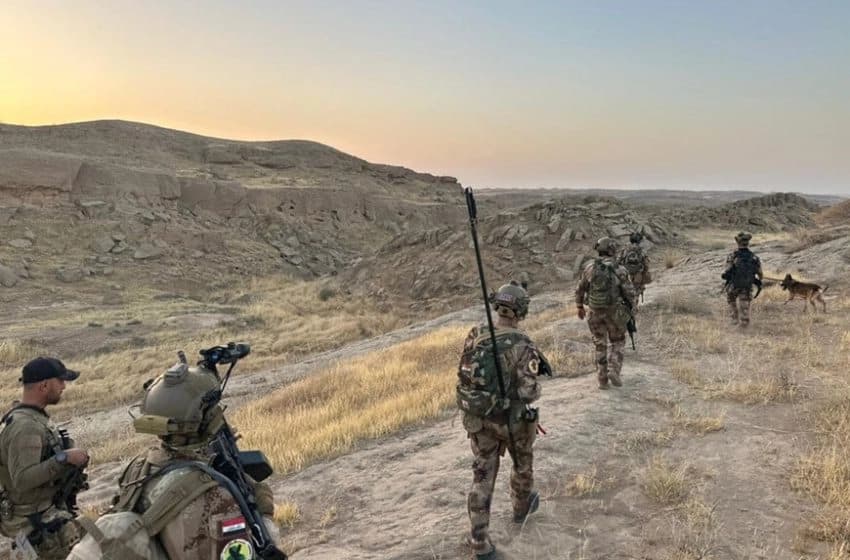
“We are convinced of our security forces' performance and have full confidence in their readiness,” Sabah al-Numan told Rudaw’s Sangar Abdulrahman, adding that Iraqi security forces “are capable of maintaining national security, fully prepared to exercise sovereignty over all Iraqi territory, and the borders are completely secured.”
“Only a small number of troops remain in Erbil, strictly within the timelines agreed upon with Iraqi leadership,” he noted, and that “Consequently, after September 30, there will be no justification for carrying arms.”
Baghdad and Washington have agreed on September 30 as the deadline for the withdrawal of US forces and the US-led coalition from Iraq. The date coincides with the deadline set in June by Iraqi Prime Minister Ali al-Zaidi to disarm armed factions, some of which have tied their compliance to the full exit of US troops.
“Some factions previously cited the coalition's presence, framing them as occupying forces,” Numan said, reiterating that “After September 30 all foreign and coalition forces will be gone.”
The senior security official pointed to opening “a new chapter defined by full Iraqi sovereignty and centralized commander under the prime minister.”
At least three Iran-backed factions have so far refused to disarm, including Kata’ib Hezbollah, Harakat al-Nujaba, and Kata’ib Sayyid al-Shuhada.
The factions are organized under the umbrella group of the “Islamic Resistance in Iraq (IRI)” and overlap with the state-sponsored Popular Mobilization Forces (PMF).
Numan explained that “dialogue” has been open “for some time” with these groups, ruling out the possibility of using force to secure their compliance.
“We are all Iraqis, and through everyone's wisdom, we will foil any external plots betting on internal conflict,” he said.
The Iraqi premier’s spokesperson also underscored negotiations ongoing diplomatic engagement with Saudi Arabia after its joint attack with the US on PMF positions across Iraq in late July.
Riyadh said the strikes were a response to attacks “by terrorist militias affiliated with Iran” in Iraq. Baghdad denied the claim, and consequently postponed a scheduled visit by Zaidi to the kingdom.
"We have demanded proof and evidence regarding such attacks,” Numan noted, adding that Baghdad’s relations with neighboring Saudi Arabia “remain very good.”
He also said that an invitation for Zaidi to visit Riyadh “remains open to be scheduled later."