
ERBIL, Kurdistan Region - More than 500 pollution sources are discharging industrial, medical and untreated wastewater into Iraq’s Tigris River, an Iraqi environmental group said Sunday, warning of potential public health and environmental consequences across five provinces.
“More than 500 pollution sources discharge their waste directly or indirectly into the river,” Omar Abdul Latif, a member of the Iraq Green Observatory, told Rudaw's Nahro Mohammed on Sunday, based on the published report of the Observatory on Sunday.
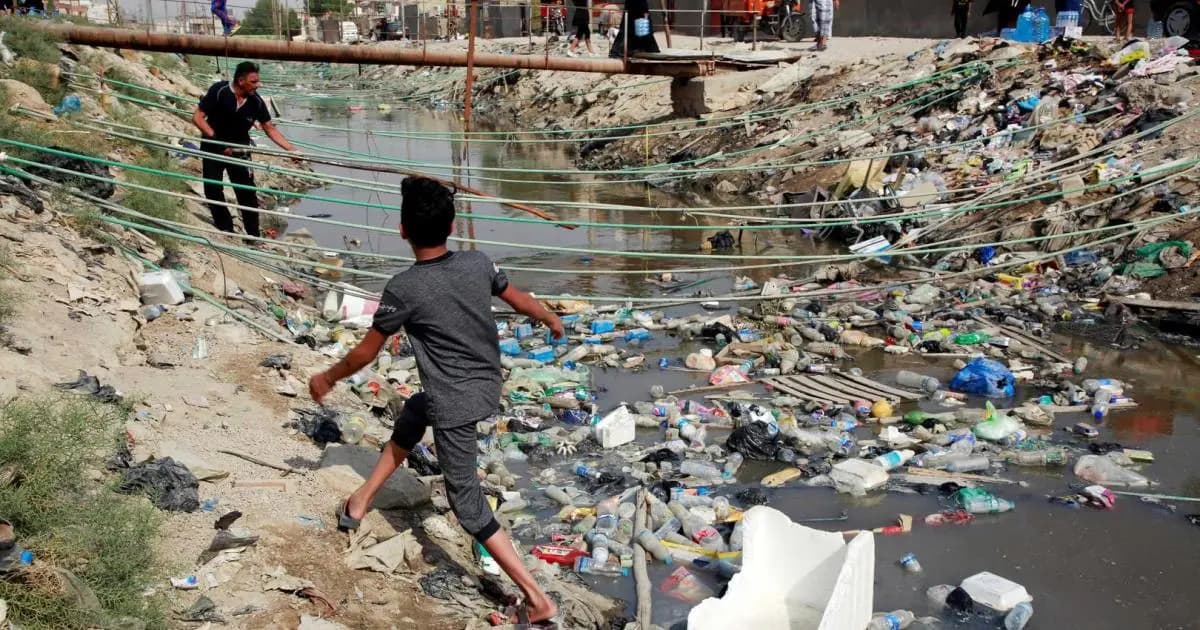
He added, “In the capital Baghdad alone, there are 23 dangerous pollution points, which are pipes carrying heavy sewage water and hospital medical waste into the Tigris without treatment."
The findings highlight the broader pressure on the Tigris, Iraq’s key waterway which supplies several irrigation canals and serves millions of people. Pollution exacerbates existing challenges caused by water shortages, declining water quality and the effects of climate change.
The group identified Basra, Baghdad, Wasit, Maysan and Dhi Qar as the provinces most affected by pollution in the Tigris. Latif said Baghdad has the highest number of pollution sources, partly due to its population of about 9 to 10 million people.
The Diyala River is the largest source carrying pollutants into the Tigris, according to the Iraq Green Observatory.
Abdul Latif warned that if this problem is not addressed, “it will have very serious consequences for the health of everyone.”
Hamid Khazraji, director of media at the Baghdad Water Directorate, told Rudaw, “Baghdad’s drinking water is clean and there is no problem with it. It is 100 percent suitable for drinking," adding that “We treat and filter it chemically.”
Khazraji attributed part of the Tigris pollution to households near the river in Baghdad and Diyala which dump various waste into the river.
The concerns follow previous reports of untreated sewage from residential areas and hospitals being discharged directly into the Tigris in Baghdad. Environmental groups and residents have repeatedly called for more effective solutions and for sewage infrastructure and wastewater treatment facilities to be improved.
In June, Rudaw reported that sewage pipes along parts of the Baghdad riverbank were discharging untreated wastewater into the Tigris, with residents reporting foul odors and visible waste. Iraq’s Environment Ministry said at the time that it had identified the sources of pollution and was pressing relevant authorities to take corrective measures.
Iraq is also facing growing environmental pressures linked to extreme heat, water scarcity and pollution. The Iraq Green Observatory warned in July that continued environmental degradation could contribute to large-scale climate-induced migration from cities including Baghdad, Basra and Maysan over the next 50 years if effective measures are not taken.
The Tigris draws significance as Iraq faces worsening water challenges, making both the quantity and quality of available water increasingly relevant for sectors such as public health, agriculture and the country’s wider environmental condition.