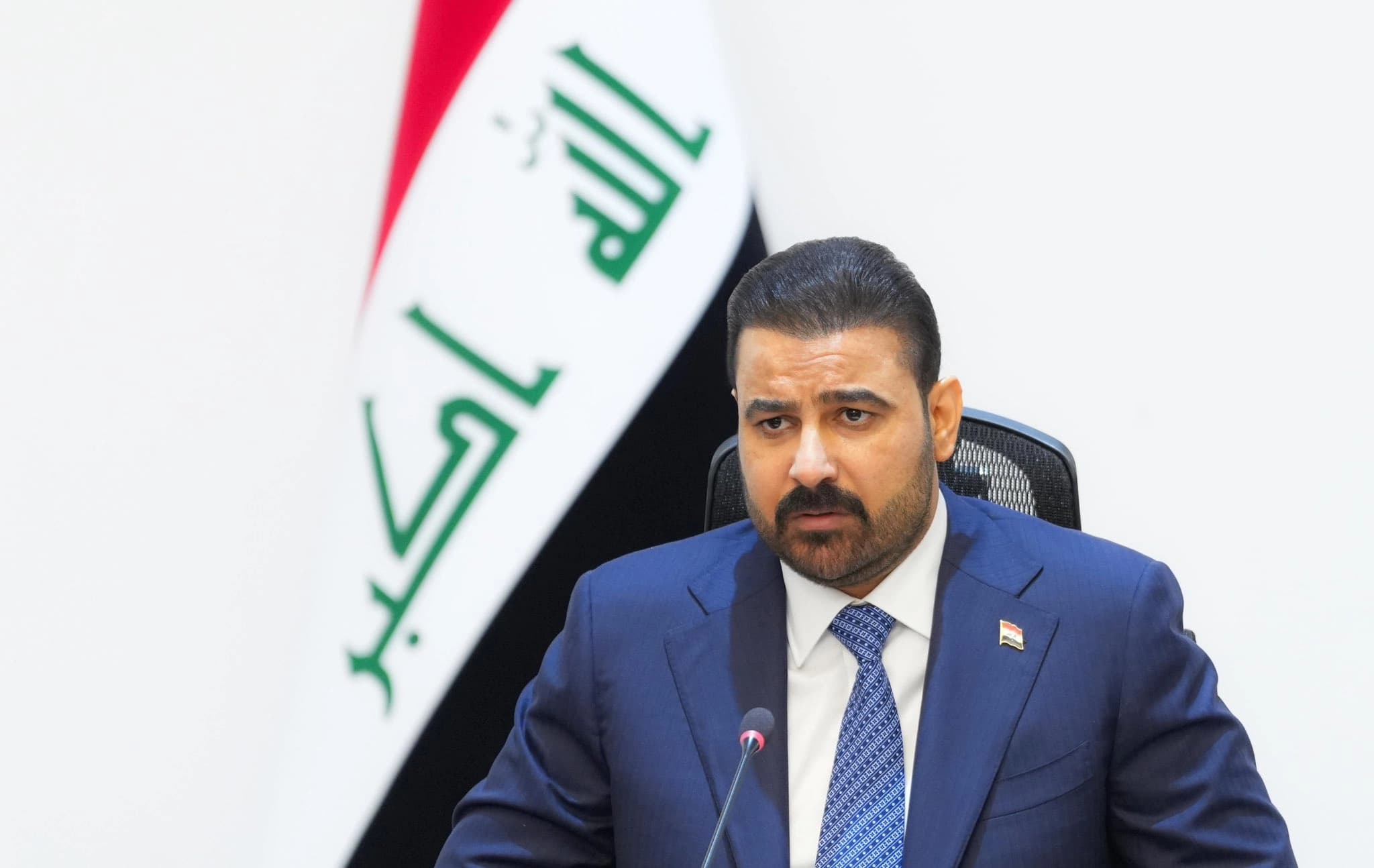

ERBIL, Kurdistan Region - Iraqi Prime Minister Ali al-Zaidi on Friday marked his first hundred days in office with nine ministerial portfolios still vacant in his cabinet. He has nonetheless launched two flagship campaigns - one to combat corruption and another to bring armed groups and their weapons under state control.
Yet, the road ahead remains uncertain. Iran-aligned factions have recently set new conditions for disarmament, casting doubt on whether the premier can meet his end-of-September deadline - the same date set for the withdrawal of forces affiliated with the US-led Global Coalition to Defeat the Islamic State (ISIS). Adding to the pressure is mounting financial strain driven by continued disruption to Baghdad's oil exports through the Strait of Hormuz.
Uphill battle
In his inaugural address before the Iraqi parliament in mid-May, Zaidi vowed security reform, including "confining weapons under state control," with aims of enforcing the rule of law, strengthening state security, intelligence, and military capabilities, and ensuring that the decision of war and peace remains in the hands of the state - measures that would prevent paramilitary groups from launching attacks inside or outside Iraq.
The Iraqi premier later, in early June, ordered the formation of a committee to oversee the disengagement of political parties and armed factions from the Popular Mobilization Forces (PMF).
The PMF was established in 2014 following the emergence of the Islamic State (ISIS) in Iraq, which saw large swathes of the country's north and west fall under the group's control. Created in response to a religious edict issued by Iraq's highest Shiite authority, Grand Ayatollah Ali al-Sistani, the PMF was initially an umbrella organization of roughly 70 predominantly Shiite armed groups with some 250,000 members.
Though a state-funded institution, the PMF comprises factions aligned with the Tehran-led ‘Axis of Resistance,’ which have played a role in regional conflicts, including most recently the war with Iran. The core overlap includes Asa'ib Ahl al-Haq, Kata'ib Hezbollah, Harakat Hezbollah al-Nujaba, and Kata'ib Sayyid al-Shuhada.
Asa'ib Ahl al-Haq and the Imam Ali Brigades are among the most prominent groups to have signaled compliance with Zaidi's initiative.
Hussein al-Shihani, a member of the al-Sadiqoun movement - the political arm of Asa'ib Ahl al-Haq - told Rudaw’s Hastyar Qadir that the Zaidi administration “has taken positive steps in its first hundred days, including combating corruption, strengthening state institutions, and rebuilding trust with neighboring countries.”
"We must be frank - the dossiers the incumbent government is addressing require the cooperation of all forces," Shihani said, adding that his bloc has made its position clear from the outset, "We will not give the government a blank check, but at the same time we will not oppose it simply for the sake of opposition. We will monitor its performance."
Meanwhile, Hussam al-Rubaie, spokesman for the Khadamat (Services) Alliance - the political wing of the Imam Ali Brigades - told Rudaw that “the framework of consolidating weapons under state authority has not yet been defined properly.”
"While the initiative has received the backing of national and Shiite political blocs and is supported by the constitution," Rubaie noted that “unresolved legal issues” remain the main hindrance slowing its progress - specifically since “the laws governing arms and the PMF make no reference to strategic weapons that emerged after their enactment, such as missiles and drones,” he said.
Moreover, while some factions have expressed willingness to comply with Zaidi's disarmament push, others have cited the continued presence of foreign forces - namely those of the US-led Global Coalition - as justification for refusing to comply.
On Tuesday, one of the most capable Iran-aligned armed groups in Iraq, Kata’ib Hezbollah, set new conditions for handing over its weapons to the Iraqi state, including the withdrawal of Turkish forces from northern Iraq and the dissolution of the Kurdistan Region's Peshmerga forces.
In mid-July remarks to Rudaw, Zaidi's spokesman Sabah al-Numan affirmed a unified end-of-September deadline for both the withdrawal of US-led Coalition forces and the consolidation of armed groups and their weapons under state control. However, in light of the new prerequisites set by Iran-aligned factions, it remains to be seen whether the second part of that deadline will be upheld.
Arrests and austerity
In late June, Zaidi launched Operation Dawn, a large-scale anti-corruption campaign coordinated with Iraq's Federal Commission of Integrity. Through mid-August, security forces and judicial bodies have conducted dozens of targeted raids across Baghdad and multiple provinces, arresting over 200 individuals from across state institutions.
The operation was triggered by a detailed testimony from former deputy oil minister Adnan al-Jumaili following his arrest in late May, and quickly swept up senior executive figures, including former deputy oil minister Ali Maarij al-Bahadly and former state electricity company director Ali Hamid al-Zaidi, alongside senior officials across the ministries of electricity, trade, customs and agriculture.
The legislative branch saw significant action, with parliamentary immunities revoked to detain sitting and former lawmakers. Those implicated include Muthanna al-Samarrai, head of the Sunni Azm Alliance, lawmakers Alia Nassif, Bahaa al-Nouri, Ziyad al-Janabi and Mohammed al-Karbouli, alongside former members Mohammed al-Sayhoud and Abdulrahman al-Luwaizi.
Raids also targeted former cabinet advisers and individuals tied to former prime minister Mohammed Shia' al-Sudani (2022 - 2026), as well as senior defense ministry officers and military engineers implicated in procurement fraud, and regional figures such as former Wasit governor Mohammed al-Mayahi.
In terms of asset recovery, authorities have seized tens of millions of US dollars and hundreds of billions of Iraqi dinars in cash - including a single recovery of $20.34 million linked to former oil officials - alongside over 400 kilograms of gold bullion and jewelry, more than 200 properties, dozens of luxury vehicles, watches, and caches of arms and ammunition.
In this regard, the head of the al-Sadiqoun bloc, Adi al-Tamimi, said his group supports Zaidi "unconditionally."
Despite this, Mohammed al-Rubaie, head of the Baghdad-based Nahrain Foundation for Supporting Integrity and Democracy, told Rudaw that “what the current government has embarked upon is a fight against corruption, but not its eradication,” noting that the Zaidi government is “waging the campaign alone, without support from the legislative branch.”
“The premier took charge of a government in a country that ranks 136th out of 182 nations on Transparency International's Corruption Perceptions Index,” Rubaie said, describing the anti-corruption drive as “a gamble,” given that “moves to arrest senior party officials have generated mounting pressure on the cabinet.”
Importantly, the crackdown on corruption has unfolded against the backdrop of months of sustained regional tensions between Iran and the US that have kept Iraq squarely in the crosshairs.
The US and Israel in late February launched a large-scale aerial campaign against Iran, striking thousands of targets over six weeks of fighting. Tehran responded with waves of drone and missile strikes across the Middle East, targeting alleged US assets - particularly in Gulf Arab states - as well as Israel.
The conflict has also dealt a severe blow to shipping through the Strait of Hormuz, the route for roughly 90 percent of Iraq's oil exports. Official figures from Baghdad show Iraqi crude production fell from around 4.14 million barrels per day (bpd) before the crisis to 1.49 million bpd at its peak. Before the disruptions, Iraq exported approximately 106 million barrels of crude per month, with a large share transiting the strait.
Mazhar Mohammed Salih, a prominent financial adviser to the Iraqi government, told Rudaw in early March that the export disruptions were costing Iraq between $200 million and $255 million per day, adding that even if oil prices reached $150 per barrel, monthly revenue could still plummet from $7 billion to just $1 billion.
Over his first hundred days, Zaidi has managed a government burdened by domestic and foreign debt totaling 180 trillion dinars (roughly $137 billion). Data from the Central Bank of Iraq shows that internal debt alone stands at approximately 103.18 trillion dinars (roughly $79 billion), with the remainder comprising foreign debt, legacy obligations, and broader state liabilities totaling over $54 billion.
The drop in oil and non-oil revenues to roughly half their pre-war levels has pushed the government to pursue austerity while resorting to borrowing to plug the deficit.
Zirak Zebari, a lawmaker in the Iraqi parliament, told Rudaw that the measures adopted by the Zaidi government over the past hundred days to address the financial crisis “have been temporary and have failed to resolve the fiscal deficit.”
“Iraq faced a deficit exceeding 21 trillion dinars in the first six months of this year due to declining revenues,” he said, warning that “the financial outlook for the coming period will not be easy,” particularly since a war-end agreement between Tehran and Washington still appears out of reach.
“Given that establishing alternative export routes to bypass Hormuz takes time, and even if shipping through the strait were normalized, resuming oil exports at pre-war volumes would require additional time,” Zebari explained.