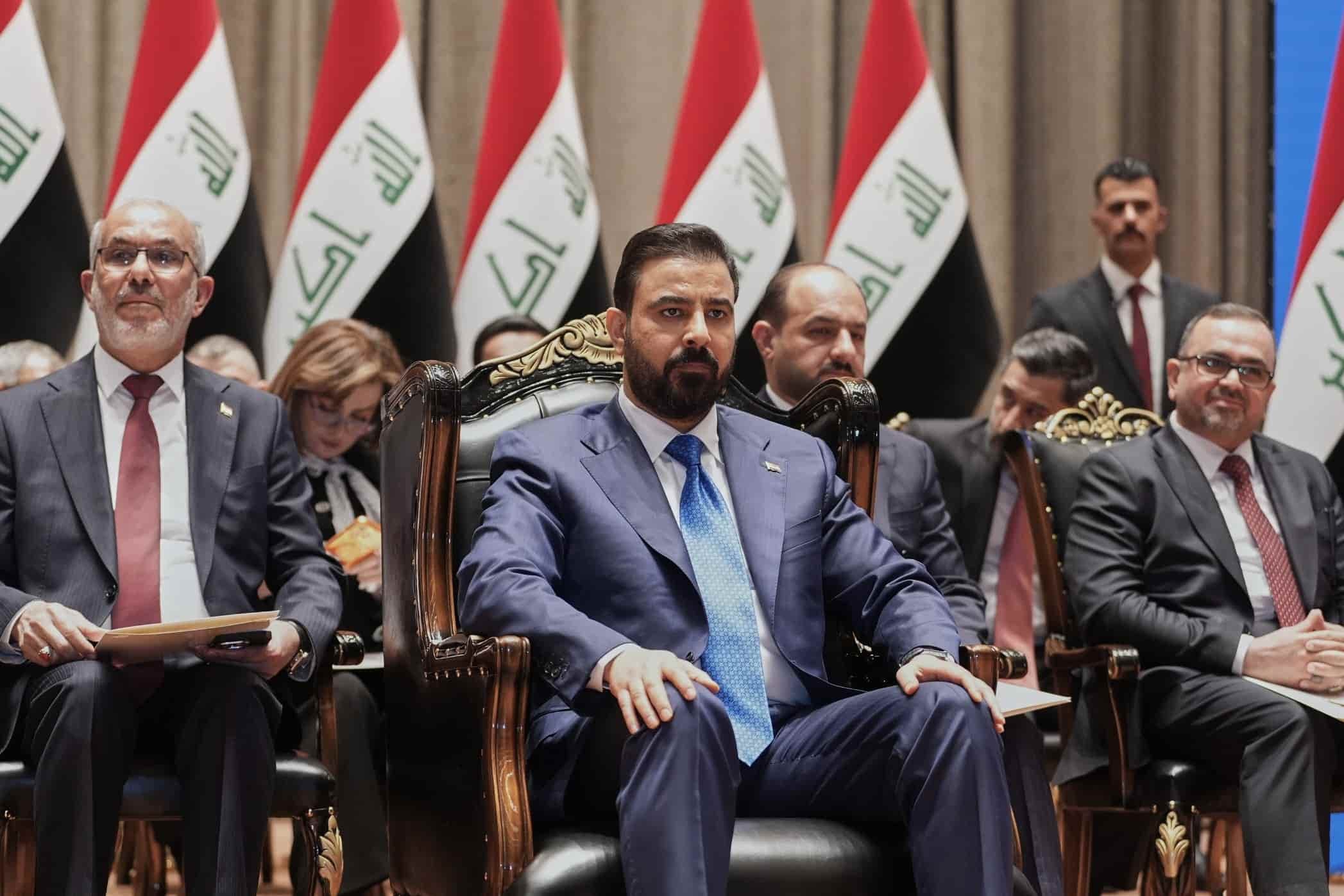

ERBIL, Kurdistan Region - Nearly three months after the Iraqi parliament approved 14 ministers in Prime Minister Ali al-Zaidi's proposed cabinet line-up, Rudaw has learned that efforts to finalize the remaining portfolios are underway and expected to gain momentum next week, with a resolution possible by September.
The backdrop
In mid-May, Iraq's 329-member parliament approved 14 of the 23 cabinet nominees put forward by Zaidi, who were sworn in alongside him after nearly 270 lawmakers attended the confidence vote.
The approved lineup included Fuad Hussein retaining his post as foreign minister, Basim Mohammed Khudair taking over as oil minister, and Faleh al-Sari appointed as finance minister. The remaining confirmed positions cover the environment - with Srwa Abd al-Wahid as the sole female minister in the initial lineup - as well as the portfolios for electricity, agriculture, industry, justice, education, water resources, communications, trade, health, and transport.
In contrast, five of the proposed cabinet nominees failed to secure sufficient parliamentary support and were rejected during the session. These rejected posts included the nominees for interior, planning, higher education, reconstruction and housing, and culture.
The four remaining portfolios were withheld from the vote entirely due to unresolved political rivalries. These pending positions include the defense ministry, along with labor, youth, and migration, which remain subject to ongoing negotiations among parliamentary factions.
The sticking points
A primary sticking point is the migration ministry, which has sparked sharp debate over Christian community representation.
Harem Kamal Agha, member of the Patriotic Union of Kurdistan (PUK) bloc in the Iraqi parliament, confirmed to Rudaw that the Rayan al-Kildani-led Babylon Movement "is demanding the migration ministerial portfolio and has secured the support of some political parties."
The Babylon Movement is a nominally Christian party and the political arm of the Babylon Brigade, a pro-Iran armed group that operates under the Popular Mobilization Forces (PMF).
Iraq's ruling Shiite Coordination Framework, in which the al-Sadiqoun Movement is a key component, "is inclined to support assigning the ministry to the Babylon bloc," Shayhani said, pointing to the Kurdistan Democratic Party's (KDP) opposition to the push.
Conversely, the KDP believes the migration portfolio should be granted to the Christian Suyana bloc, which comprises the Assyrian Democratic Movement, Abnaa al-Nahrain (Sons of Mesopotamia), and the Bet-Nahrain Democratic Party (BNDP), and has three members in the Iraqi parliament, as opposed to the Babylon Movement's two lawmakers.
Danar Abdulghafar, a KDP lawmaker and spokesperson for the party's bloc in the federal parliament, told Rudaw the KDP's stance "has nothing to do with politicking. Rather, it is based on the electoral entitlement of the Christian community. The KDP believes that this ministry should not become the reason for delaying the formation of the entire cabinet. Instead, the issue can be resolved either through political understanding or by a decision of parliament."
Another ministerial portfolio that has emerged as a point of contention is the interior ministry.
Shayhani told Rudaw that "the nomination of an interior minister should not be treated as a partisan issue. Instead, an agreement should be reached within the Coordination Framework on the matter,” especially as the post has traditionally been filled by a Shiite.
He added that Prime Minister Ali al-Zaidi has given the State of Law Coalition - another key component of the Coordination Framework, led by former Prime Minister Nouri al-Maliki (2006-2014) - "the opportunity to nominate candidates, from whom he [Zaidi] will select one."
"Some factions within the Coordination Framework have also put forward specific names from which the prime minister can choose, and they would support whichever candidate he selects," Shayhani added, noting that "this would help resolve the disagreements over the ministry, and a competent individual would be appointed to lead this important portfolio."
Moreover, some procedural hurdles remain before a final vote can take place including an ongoing legal review regarding the rejected nominees. Abdulghaffar said that “there is a legal challenge before the Federal Supreme Court, Iraq's highest judicial authority, concerning the nominees who failed to gain confidence in the first session.”
“Prime Minister Ali al-Zaidi initially wanted to replace those nominees, but he is now waiting for the court's decision, and it is possible that parliament will vote again on the same names,” Abdulghaffar explained.
What’s next
State of Law politician and senior member Salah Boushi told Rudaw he “predicts the cabinet will be settled in September,” advising that "it would be better if all the ministries were voted on as a single package in order to prevent political pressure."
Pointing to the broader mandate ahead, including reform, sovereignty, anti-corruption, and arms control, Boushi added, "We must cooperate and support one another."
For his part, Safwan al-Gargari, secretary-general of the Iraqi parliament, said that efforts are currently ongoing to finalize the remaining cabinet seats, adding that “sometime next week, a parliamentary session will be scheduled to complete the government cabinet.”
Malik Mohammad contributed to this report from Erbil, Kurdistan Region.