
ERBIL, Kurdistan Region - Iranian-backed armed factions in Iraq condemned on Wednesday the Saudi-US joint strikes on Iraqi Popular Mobilization Forces (PMF) bases across the country, which led to the death of nearly two dozens of members.
“We condemn in the strongest terms the sinful and unjustified aggression that targeted the sovereignty of Iraq and its armed forces,” said Hadi al-Amiri, leader of the Badr organization, one of the Iraq-based pro-Iran armed groups, in a statement, noting that “we demand that the Iraqi government take a firm and decisive stance regarding this infringement on Iraq's sovereignty and the targeting of its heroic forces.”
Amiri expressed surprise at the "blatant aggression" from a neighbor Iraq had sought to cooperate with. He alleged that "terrorist groups were using its territory as a launching pad," claiming Riyadh facilitated the entry of "thousands of suicide bombers" and "car bombs and supporting the formation of terrorist gangs" to destabilize Iraq.
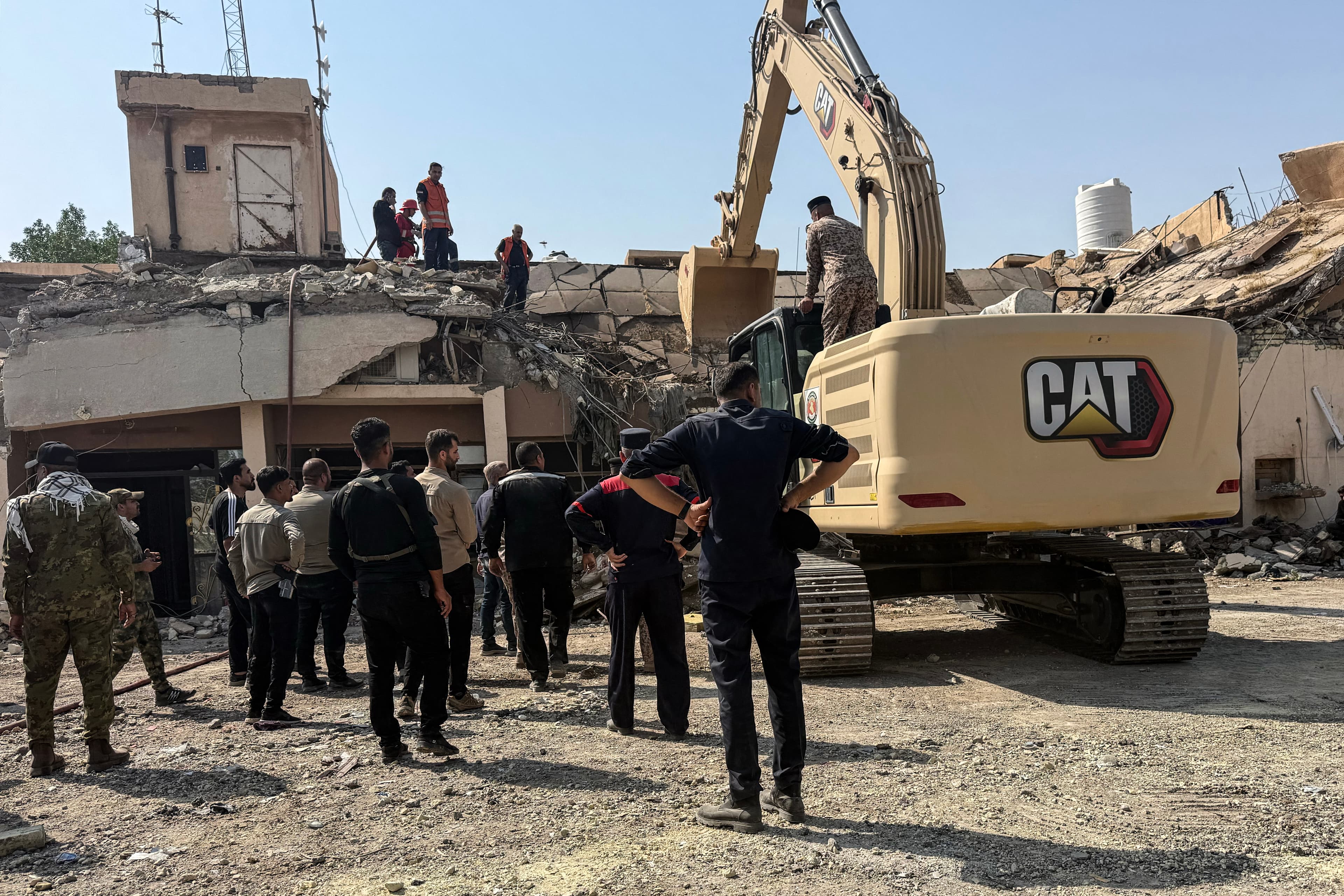
The remarks follow joint US-Saudi airstrikes on PMF headquarters across Iraq in the early hours of Wednesday, which the PMF announced an initial total of 20 deaths and 32 injuries across Baghdad, Kirkuk, Nineveh, Karbala, Diyala, Wasit, and Basra provinces, marking the first widescale attack on PMF since the US and Iran entered a negotiation period following the war, which started in late February.
The PMF was established in 2014 during the Islamic State group's (ISIS) blitz across Iraq, which saw the group seize large parts of the country's north and west. It was later integrated into the state security apparatus, but its factions have largely acted independently of the government, despite being officially under the command of the prime minister in his capacity as commander-in-chief of all armed forces.
“We regret that Saudi Arabia is repeating today this hostile approach against Iraq and its people in a clearer manner,” Amiri stated, noting that “the Saudi regime has returned to these actions without any justification or clear evidence. The goal of this is clear, which is to diminish the role of Iraq, which calls for stability and ending wars in the region.”
Amiri said the "hostile behavior dictates a comprehensive reassessment of all relations and agreements concluded with the United States," specifically the security agreement, to protect Iraq's national interests and sovereignty.
Similarly, the spokesperson Saraya Awlia al-Dam, one of the Iranian-backed armed factions, called on the Iraqi government to “reconsider all agreements and contracts recently concluded with the United States of America, and to cancel the scheduled visit to the Hijaz [Saudi Arabia].”
Spokesperson Abu Mahdi al-Jafari also called on the expulsion of the Saudi diplomatic mission in Iraq, and the complete abandonment of economic ties with Riyadh.
He further stated that if the Iraqi government “fails to perform its duty, the zealous Iraqi people must demand that the government's weapons be restricted to the hands of the Resistance.”
Meanwhile, the Harakat al-Nujaba faction condemned the attacks and demanded the expulsion of US forces from Iraq and the severing of “all forms of cooperation with the criminal Saudi regime.”
The faction further asked the Iraqi government to “immediately break its silence and not merely settle for statements of condemnation and denunciation,” adding that “We demand the procurement of advanced air defense systems, the immediate and effective protection of the country's sovereignty and airspace.”
The US Central Command (CENTCOM), which oversees US forces in the Middle East, said in a statement on Wednesday the US and Saudi fighter jets “struck multiple terrorist logistics and weapons sites across eastern Iraq” in what it described as “a strong response to over 30 IRGC-directed aerial drone attacks in the last 72 hours.”
“From February through April 2026, there were more than 600 attempted attacks on U.S. citizens and facilities by Iran-aligned terrorist militias in Iraq,” the statement added.
Meanwhile, the Saudi defense ministry linked the strikes to “the right to self-defense guaranteed by international law.”
“The Kingdom also affirms that it does not seek escalation, but if subjected to any attacks, it will not hesitate to take all necessary measures to preserve the Kingdom's sovereignty and protect its citizens and capabilities,” read a statement from the ministry following the airstrikes.
The PMF said the strikes “resulted in varying material damage to several headquarters, vehicles and military equipment.”
Following the attacks, Iraqi Prime Minister Ali al-Zaidi presided over an emergency meeting of the national security council.
The umbrella group of the Iran-backed “Islamic Resistance in Iraq” - which overlaps with the PMF - has sided with Tehran in late February, when the US and Israel launched a large-scale military campaign against Iran. As fluctuating tensions between Washington and Tehran resume, the group continues to attack US interests in the region.
The attacks on the Iraqi armed group come as the Iraqi premier has promised to disarm the armed groups and restrict weapons under state control by September 30, coinciding with the scheduled withdrawal of the US forces in the country.
While most of the armed groups - operating under the PMF - have responded to Zaidi’s call, several powerful Iran-aligned armed groups in Iraq, including Kata'ib Hezbollah, Kata'ib Sayyid al-Shuhada, and Harakat al-Nujaba, have refused to disarm.