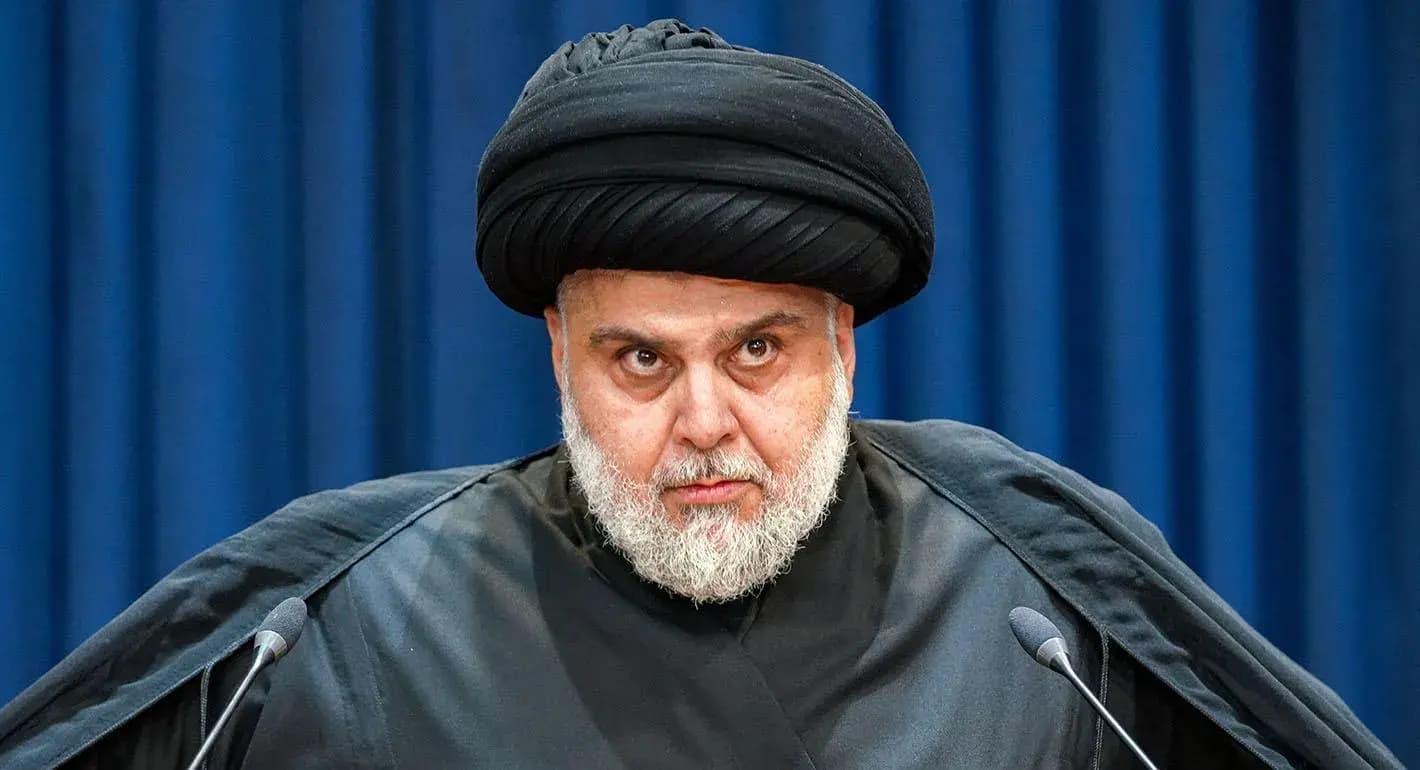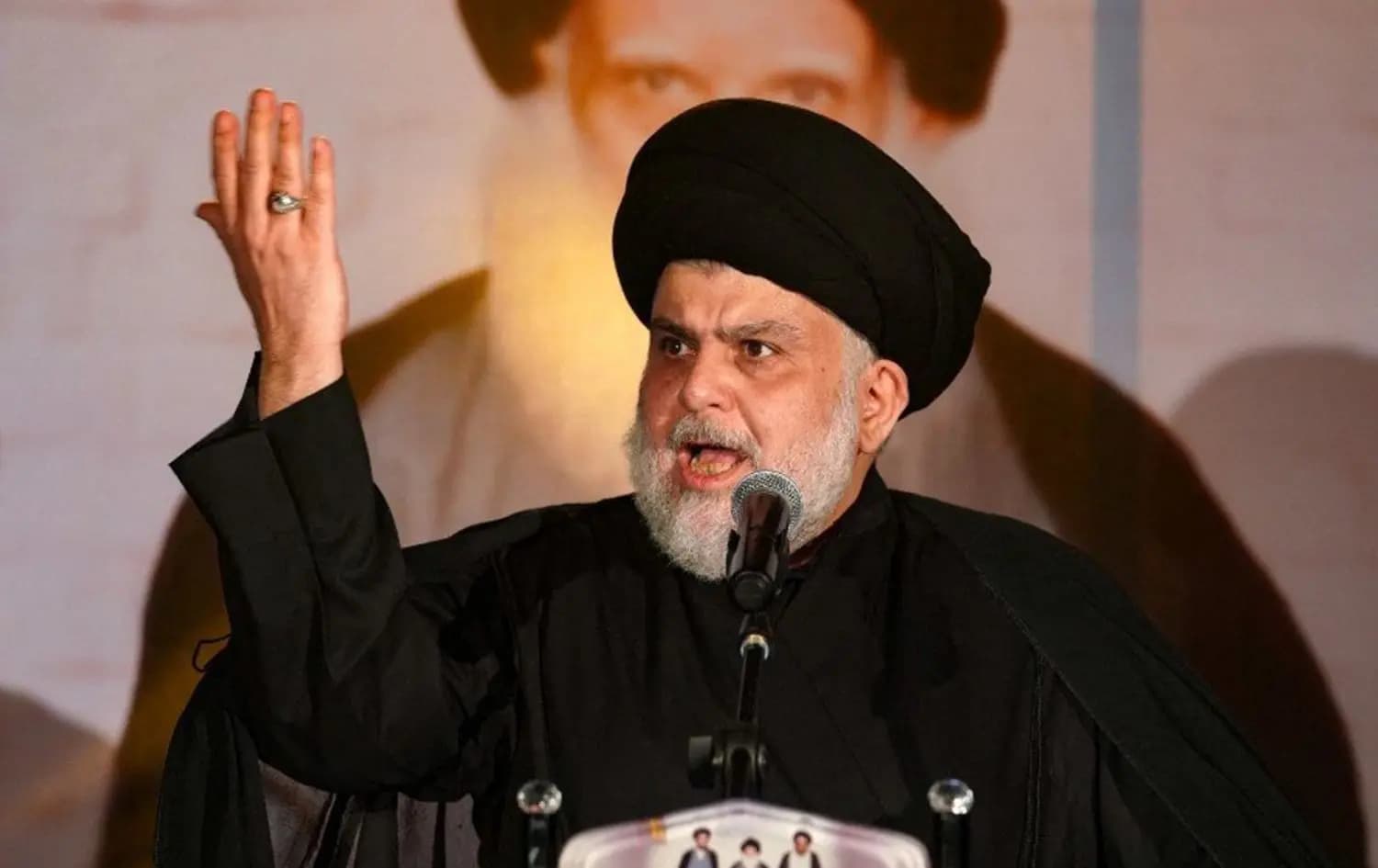

ERBIL, Kurdistan Region - Iraqi Shiite leader Muqtada al-Sadr on Wednesday condemned attacks on Iraqi territory “by all states and entities,” warning that actions by “rogue militias” risk dragging Iraq into a “useless war.”
“As this sacred land has not been a launchpad for shelling the Islamic Republic, our brothers in the Islamic Revolutionary Guard Corps [IRGC] must not shell our independent, sacred land,” Sadr said in a statement shared on his X account, emphasizing the country’s neutrality.
“While I condemn the targeting of sacred Iraqi territories by all states and entities, and condemn the actions of brazen militias to drag Iraq into a useless war,” Sadr noted, calling on the Iraqi government “to maintain security, enforce sovereignty, and work seriously for the safety of the Iraqi people and their holy sites, without being drawn into loathsome sectarian myths.”
His statement comes after the US and Saudi Arabia launched coordinated strikes against Popular Mobilization Forces (PMF) bases in what they described as retaliation against "Iran-aligned terrorist militias" for attacks on US regional bases and Saudi oil facilities.
“Everyone must adopt a spirit of brotherhood and peace and avoid being drawn into the plots of the Zionist-American enemy to drag brothers into fighting and strife,” the prominent Shiite leader said.
The PMF has reported at least 20 fatalities and 32 injuries across seven provinces following the Washington-Riyadh attacks.
Comprising various armed groups, including some aligned with Iran operating under “the Islamic Resistance of Iraq (IRI),” the umbrella group has sided with Iran in its war with the US and Israel that broke out in late February and continued until mid-April.
After the strikes, the US Central Command said there were 600 “attempted attacks on U.S. citizens and facilities by Iran-aligned terrorist militias in Iraq” during the war.
While the Iraqi government has maintained a neutral position in the conflict, attacks by the IRI on US assets in the region have forced Baghdad to accommodate a dual foreign policy stance after the US launched around 700 retaliatory strikes on PMF bases in Iraq in March and April.
Iraqi Prime Minister Ali al-Zaidi in June vowed to disarm Shia militia groups and reorganize all factions operating within Iraq under the state’s security apparatus. His stance comes amid immense pressure from Washington to disarm the groups ahead of the US-led coalition’s scheduled departure by September 30.
Sadr was the first leader to respond to his call, ordering his Saraya al-Salam group to lay down arms and merge with Iraqi security and armed forces.
Of note, Sadr’s armed group within the PMF is not classified as a pro-Iran group. The Grand Ayatollah Ali Sistani had also merged his four loyal factions within the PMF with the Iraqi armed forces in 2020.
While a number of the armed groups - operating under the PMF - have responded to Zaidi’s call, several powerful Iran-aligned armed groups in Iraq, including Kata'ib Hezbollah, Kata'ib Sayyid al-Shuhada, and Harakat Hezbollah al-Nujaba, have refused to disarm.
“I also call for caution regarding terrorist sleeper cells internally and externally, which will use sectarianism as a pretext to destabilize security in holy Iraq,” Sadr said.
The PMF was recognized in 2016 as an official Iraqi armed force after its founding in 2014 following a fatwa, a religious order, from Sistani to curb the looming threat of the Islamic State at the time.
However, as the IRI has continued to operate deeper within Iran’s orbit, Washington and Gulf countries have framed its presence as a threat to their security.
Updated at 12:48 pm