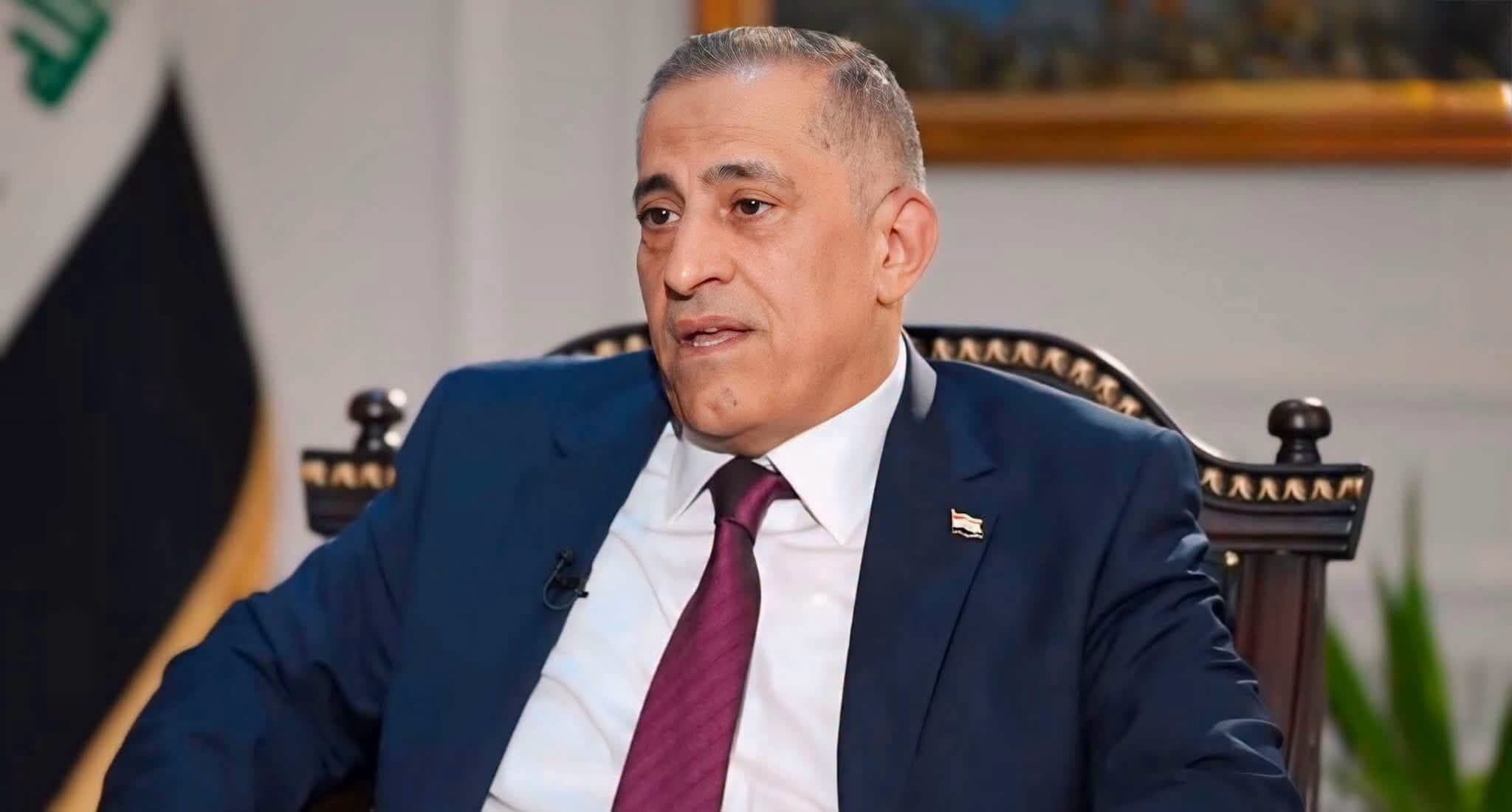

ERBIL, Kurdistan Region - Iraq has found no evidence that drones used in recent attacks against Gulf countries were launched from Iraqi territory, the country’s National Security Advisor Qasim al-Aboudi said Monday during an extensive interview in which he addressed a number of issues including the presence of Iranian Kurdish opposition groups in Kurdistan Region.
In an interview with Iraqi Dijlah TV, Aboudi said investigations had not established that Iraqi territory was used to launch attacks.
“The answer is clear from the investigations: it has not been proven that these drones came from Iraqi territory so far,” Aboudi said, adding that while “they claimed there are those who infiltrate; I neither deny nor confirm this because I don't have evidence.”
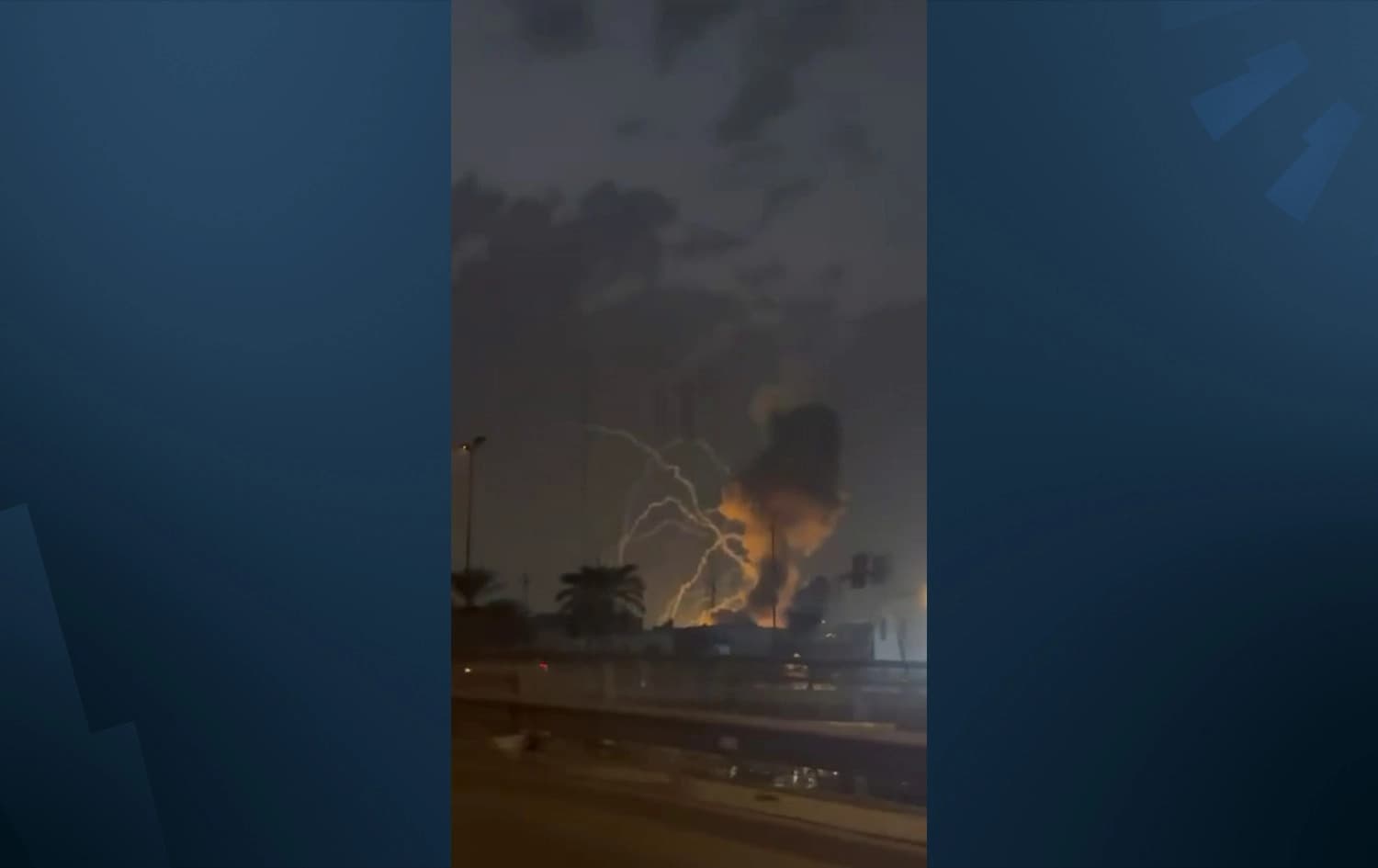
Aboudi's remarks come amid ongoing drone attacks from what Gulf states claim originated from Iraq. Since the outbreak of the US-Iran war, the Gulf states called on Baghdad to prevent attacks launched from Iraqi territory by pro-Iran armed groups.
On Monday, Iraqi Prime Minister Ali al-Zaidi directed relevant security agencies to investigate Saudi Arabia claims regarding recent drone attacks by what it described as Iran-backed "terrorist militias" from Iraqi territory.
Aboudi’s conclusion contradicts statements issued by some of the militia groups affiliated with the Islamic Revolutionary Guard Corps (IRGC) in which they clearly stated during the war they targeted the Gulf countries.
However, Aboudi said that during a visit to Kuwait after renewed fighting between Iran and the US, “The Kuwaitis told us they did not witness any signs of shelling or attacks coming from Iraqi territory during that period.”
“Unfortunately, Iraq’s military capabilities are weak,” said Aboudi, “it lacks early warning systems, radars, and - to a large extent - surveillance capabilities.”
Aboudi said that it is often not possible to know “where some of the strikes we have witnessed actually originated,” but that “Some of the documentation provided to us by our Arab brothers in the Gulf are so precise that I find it highly unlikely the attacks came from Iraq or from Iraqis.”
Iran's position on state control over weapons
Aboudi said Iran had agreed to support Prime Minister Zaidi’s efforts to place all weapons under state control, describing the issue as one of the main outcomes of Zaidi’s visit to Tehran on Thursday.
“The Prime Minister personally spoke about this in private sessions with officials,” Aboudi said.
“The Iranians eventually agreed with the Prime Minister and pledged to assist the government regarding arms control. They were finally convinced that with the withdrawal of US forces, there would be no justification for weapons outside the state.”
He said Tehran ultimately accepted the principle that armed groups outside government control should hand over their weapons.
The national security advisor said the issue was also discussed with US officials during Prime Minister Zaidi's visit to Washington after a number of armed factions justified keeping their weapons, citing the ‘foreign’ presence of US forces in the country.
“There was a circumstance dictated by the war against ISIS [Islamic State],” he said, referring to the rise of armed groups after 2014.
“After the war against ISIS ended, it was necessary for a change to occur in the status of armed groups and for them to be integrated, especially after the creation of the Hashd [PMF], which was framed within a legal structure and placed under the command of the Commander-in-Chief of the Armed Forces.”
He added that some factions had already started the process of disarmament.
“Some factions have actually begun handing over these weapons; procedures are being taken. About three factions have engaged in this, and there are positive signals from the rest.”
Iran's attacks on the camps of Kurdish opposition groups unacceptable
Aboudi affirmed that while Baghdad had committed to the 2023 security agreement with Tehran, the latter’s military action against Iraqi territory was unacceptable, in reference to recent attacks on Iranian Kurdish opposition groups based near the Iran-Iraq border.
Aboudi classified four main groups, including the Kurdistan Democratic Party of Iran (KDPI), Komala Party of Iranian Kurdistan, and other Kurdish opposition movements, as bearing different functions and scope of activity.
“These four parties differ in their activities. Some actually limit their activity to media and political work… Some of them, to be honest, are branches of the Turkish PKK [Kurdistan Worker's Party] but are Iranian [PJAK]. These might have armed activity.”
He also mentioned Baghdad’s decision to move opposition groups into designated camps in the Kurdistan Region.
“We confined these groups into camps; we built four camps in Erbil and four in Sulaimani. We gathered them and their families in these camps, but unfortunately, these camps were also shelled by the Iranian side,” he said.
When Dijla TV's presenter suggested Iran’s attacks on the camps demonstrated non-compliance with the agreement in place, Aboudi responded that the issue needed to be discussed with Tehran.
Iran has accused the Kurdish opposition groups of using Iraqi territory to conduct activities against Iran’s IRGC in the border areas of the country, while Kurdish authorities have denied that attacks against Iran originate from the Kurdistan Region.
Aboudi said Baghdad had received an Iranian list of 37 wanted individuals allegedly linked to the groups.
“The Iranians complained and provided some evidence and a list of 37 wanted persons with arrest warrants from the Iranians, stating they are in these areas. On our part, we are cooperating with the Regional Government; we provided this list, and they promised to verify it.”
He added that the Kurdistan Regional Government (KRG) had also agreed to limit political activity by the groups as a confidence-building measure which he called a “constitutional and moral obligation for Iraq.”
“According to the Constitution, we must not allow any group to threaten our neighbors,” said, while maintaining that any military action against Iraq’s territory "is rejected from any country whatsoever. ”
He affirmed Zaidi’s message in which “The Prime Minister spoke clearly to the Americans, the Iranians, and the Turks in the same language: he will not accept interference in Iraqi affairs.”
US withdrawal
Aboudi said the withdrawal of US forces from Iraq by the end of September would include “their remaining stronghold in Iraqi Kurdistan, from Harir or elsewhere” as “part of the security agreement signed by Iraq regarding the withdrawal of US forces from Iraq.”
However, he said that Baghdad had requested the presence of NATO advisers in their continued role in training Iraqi forces.
“We asked them to resume their activity as part of the Prime Minister’s effort to rehabilitate and train the armed forces.”
Iraqis fighting in Russia-Ukraine war
Aboudi said Iraqi authorities were investigating the recruitment of Iraqi citizens to fight in the Russia-Ukraine war as mercenaries, citing the presence of recruitment networks operating inside Iraq, including through offices and online platforms.
“The Advisory provided information, and the intelligence services arrested several of them and closed these offices.”
Aboudi estimated that between “3,000 and 5,000” Iraqis may have joined the war, adding that “a small number” from the Kurdistan Region “went to Russia.”
He added that Iraqis had also joined the Ukrainian side.
“There are Iraqis fighting in Ukraine on the side of the Ukrainian army as well. There is a recruitment file there too.”
Aboudi said the issue reflected wider economic problems.
“What drives a person - a young man in the prime of his life - to go and fight in those harsh conditions? It’s financial need and unemployment. These are things that must be treated.”