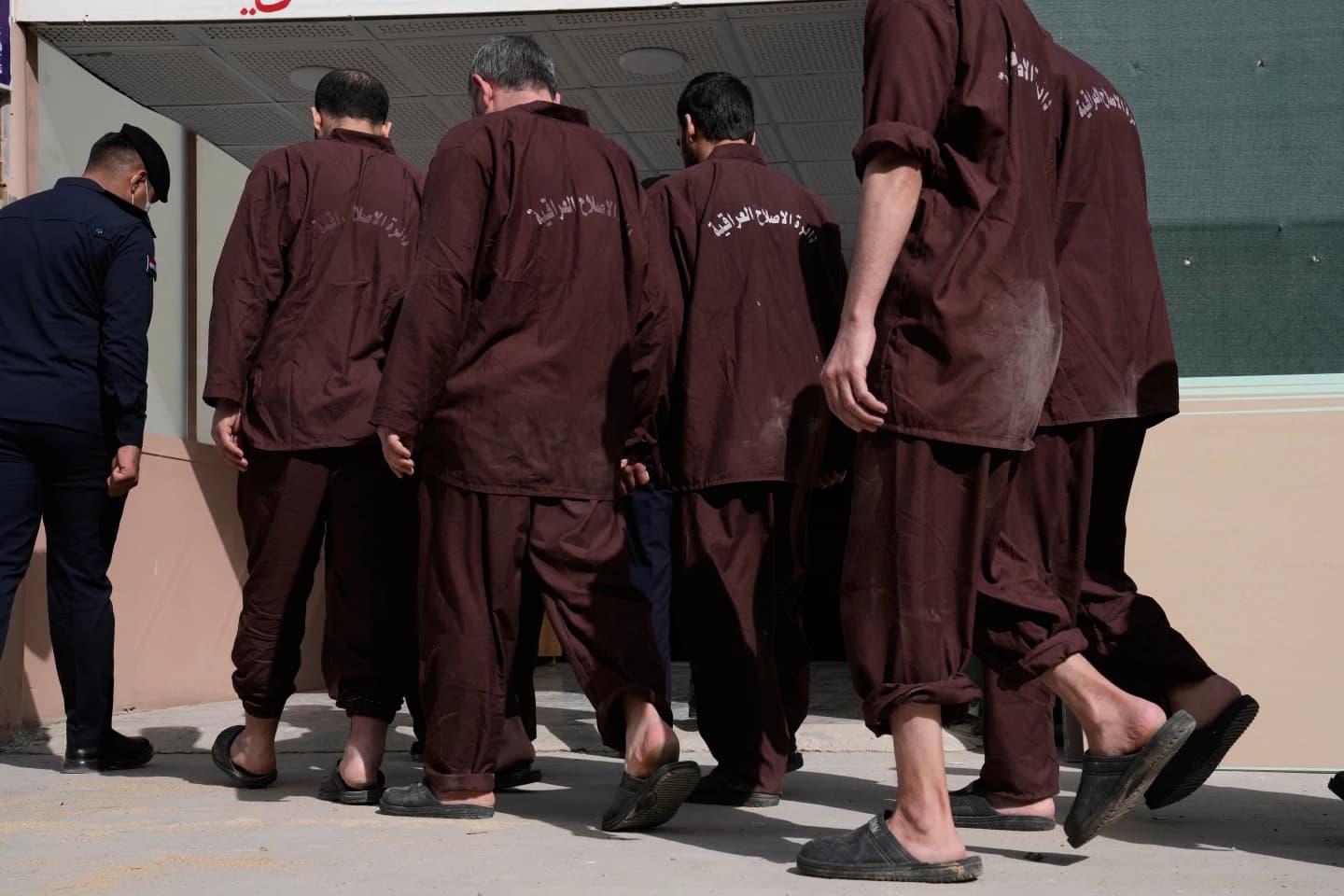

ERBIL, Kurdistan Region - More than 60,000 inmates are held in prisons administered by Iraq's justice ministry, a ministry official told Rudaw on Thursday, adding that some 42,000 have been released - including just under 13,000 by the ministry - since an amendment to the country's General Amnesty Law took effect in mid-February.
“There are currently around 61,000 prisoners in the prisons administered by the Iraqi justice ministry,” ministry spokesperson Murad al-Saadi said, adding that “more than 12,700 other prisoners have been released so far under the General Amnesty Law.”
The Iraqi parliament passed the amendment to the General Amnesty Law in January as part of a broader legislative package that also included changes to the Personal Status Law and a property restitution law. The law, which serves as a means to reduce prison crowding, covers crimes like corruption, pardons cases involving theft and drug use, as well as individuals convicted of terrorism-related offenses, but deems those convicted of a killing in connection with terrorism-related charges ineligible.
The law had long been a key demand of Sunni Arab political parties, who argue that post-2003 anti-terrorism laws disproportionately target their community.
Following the 2014 seizure of large parts of Iraq by the Islamic State (ISIS), thousands were arrested for alleged links to the group, particularly in predominantly Sunni Arab provinces such as Anbar, Nineveh, and Salahaddin. The amendment notably revised the definition of “affiliation with terrorist organizations” to address the grievances of those communities.
Saadi's figures notably differ from those reported by Iraq's Supreme Judicial Council, which says “42,000 detainees have been released” under the Amnesty Law since it took effect earlier this year.
The discrepancy stems from the fact that the Council's statistics “comprise all detainees, including those released by the interior ministry and individuals previously held in pretrial detention,” Saadi said, while “the justice ministry's figures are limited to those under its own supervision and administration.”
Saadi's remarks come a day after he told Rudaw the ministry is also working to address prison overcrowding as part of a comprehensive rehabilitation plan, and has so far cut the rate in half.
RELATED: Iraq cuts prison overcrowding by half with new rehabilitation plan