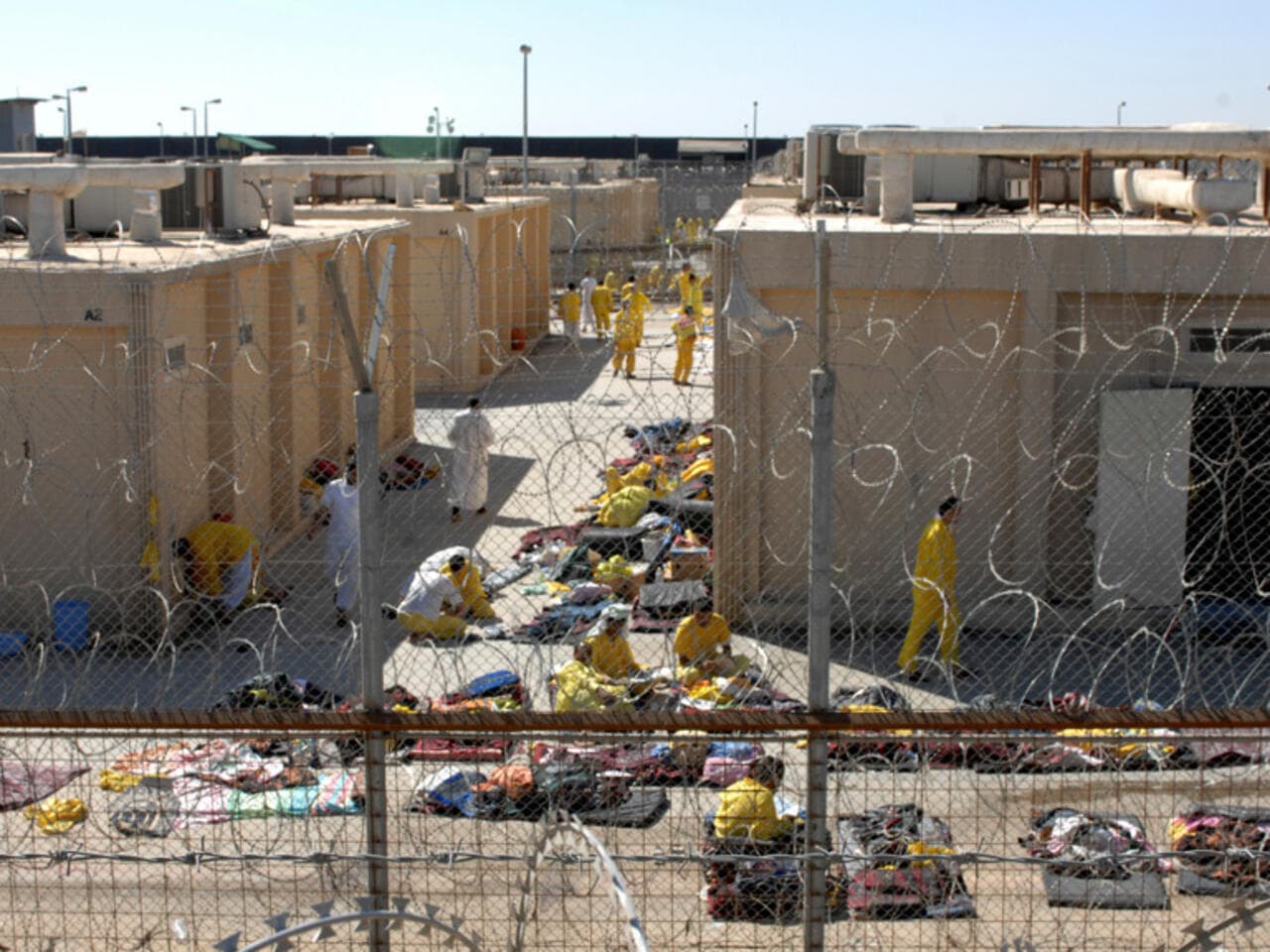

ERBIL, Kurdistan Region - Prison overcrowding in Iraqi jails has been cut in half, falling to 150 percent capacity, a justice ministry official told Rudaw on Tuesday, attributing the decline to a comprehensive prison rehabilitation plan.
“Justice Minister Khalid Shwani conducted comprehensive field visits to prisons across the country, during which he identified several fundamental challenges,” Murad al-Saadi, the Justice Ministry's media director, told Rudaw’s Mushtaq Ramadan.
“The most significant issue was the sharp rise in overcrowding, which reached 300 percent in some institutions, severely hindering rehabilitation and healthcare programs,” he said.
Iraq's prison population has surged over the past decade, particularly in the wake of the 2014 war against the Islamic State (ISIS), when thousands were arrested on terrorism-related charges under the country's strict anti-terrorism laws.
An amendment to Iraq’s General Amnesty Law took effect in mid-February, redefining affiliation-related terrorism charges in an effort to address judicial grievances.
However, despite the amendment, the country still operates 30 prisons housing around 60,000 inmates, leaving overcrowding a persistent national challenge.
To address the ongoing crisis, Saadi said the ministry developed a three-phase plan. During the immediate phase, five out-of-service prisons were successfully rehabilitated, including the Baghdad Central Prison and the Amarah Central Prison in the southern Maysan province.
Moreover, three additional prison facilities were inaugurated, including Baladiyat Prison in central Baghdad, Chamchamal Prison in the eastern part of the Kurdistan Region, and the central prison in southern Iraq’s Najaf province.
“These steps have contributed to reducing overcrowding rates from 300 percent to between 100 and 150 percent in several prisons, and efforts are ongoing to bring the rates below 100 percent,” Saadi added.
Moreover, the justice ministry official said a new project is underway to establish an integrated correctional city in Iraq’s southern Diwaniyah province.
“The facility will bring all correctional institutions together in one location to provide an ideal environment for rehabilitation,” he said.
Regarding inmate rehabilitation, Saadi said the ministry has launched educational programs from literacy courses to university-level studies and is expanding vocational workshops, while introducing a classification system based on crime type to improve prison administration.
.webp&w=3840&q=75)