
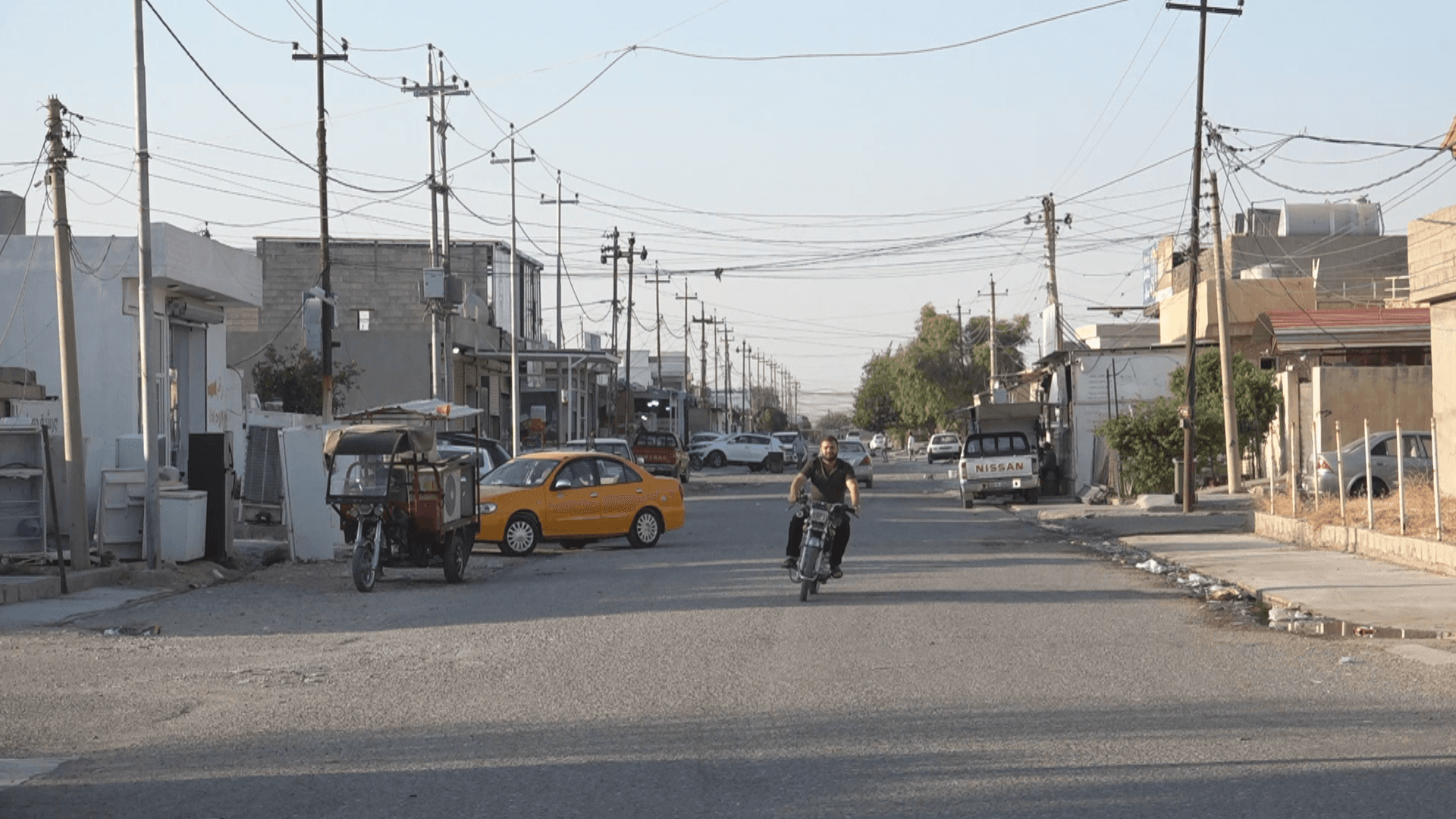

ERBIL, Kurdistan Region - Residents of Kurdish villages in northern Kirkuk have resorted to forming advisory councils to confront a wave of land and house purchases by Arabs from other provinces.
Only in the village of Hasari Gawra has a council been formed that prevents the selling of land to outsiders, with real estate offices barred from conducting transactions without the council's permission.
Currently, in Hasari Gawra, a large number of Arab families from other provinces have settled. Adad Salem, originally from Nineveh province, has been living in the village with his brothers for five years. He rents a house and is also trying to buy land, telling Rudaw’s Hardi Mohammed: "Work opportunities here are good and the situation is calm, so we want to be here."
This wave of settlement, however, has worried the Kurdish village's original inhabitants. The first meeting of the advisory council in Hasari Gawra was held with the participation of eight representatives of the village's families in recent days. Their goal is to control a situation that has led to the arrival of a large number of outsider families and the purchase of land and orchards by Arabs from central and southern Iraqi provinces.
"We have appointed someone from every family to help prevent this problem. The problem is that people are selling their land; an Arab man came and bought seven orchards — I can prove with evidence which parties and individuals support this. Why can't I, a native of Hasar, buy an orchard in my own village?” Muhammad Haji Ali, the mukhtar of Hasari Gawra and a member of the council, told Rudaw.
According to real estate offices, out of every 10 land and house purchase transactions in these Kurdish areas, more than three buyers are Arabs from other provinces.
Rewend Ali, the owner of a real estate office, said: "We coordinate fully with the village council; with their approval, land and houses are sold, especially in the villages of Hasar and Goldera."
The expansion of these councils, which began in Hasari Gawra, is expected to also include other villages. Now, outside the villages, new neighborhoods and settlements are being built in the form of farmhouses most of which are intended for the settlement of people who are not originally from the area — a practice seen by locals as an attempt to change the region's demographics, or Arabization carried out under the guise of land buying and selling.
Arabization of Kirkuk dates back to the Baathist era, when Baghdad, following the First Iraqi-Kurdish War (Aylul or September Revolution), used the promise of Kurdish autonomy to buy time for a campaign that stripped Kurdish farmers of their land and resettled Arab families from the south — a policy that peaked under Saddam Hussein and displaced hundreds of Kurdish villages. After 2003, Iraq pursued a policy of de-Arabization under Article 140 of the constitution, aiming to reverse those demographic changes and return land to its original owners.
vi
That process stalled after October 2017, when federal Iraqi forces retook Kirkuk from Kurdish control.
