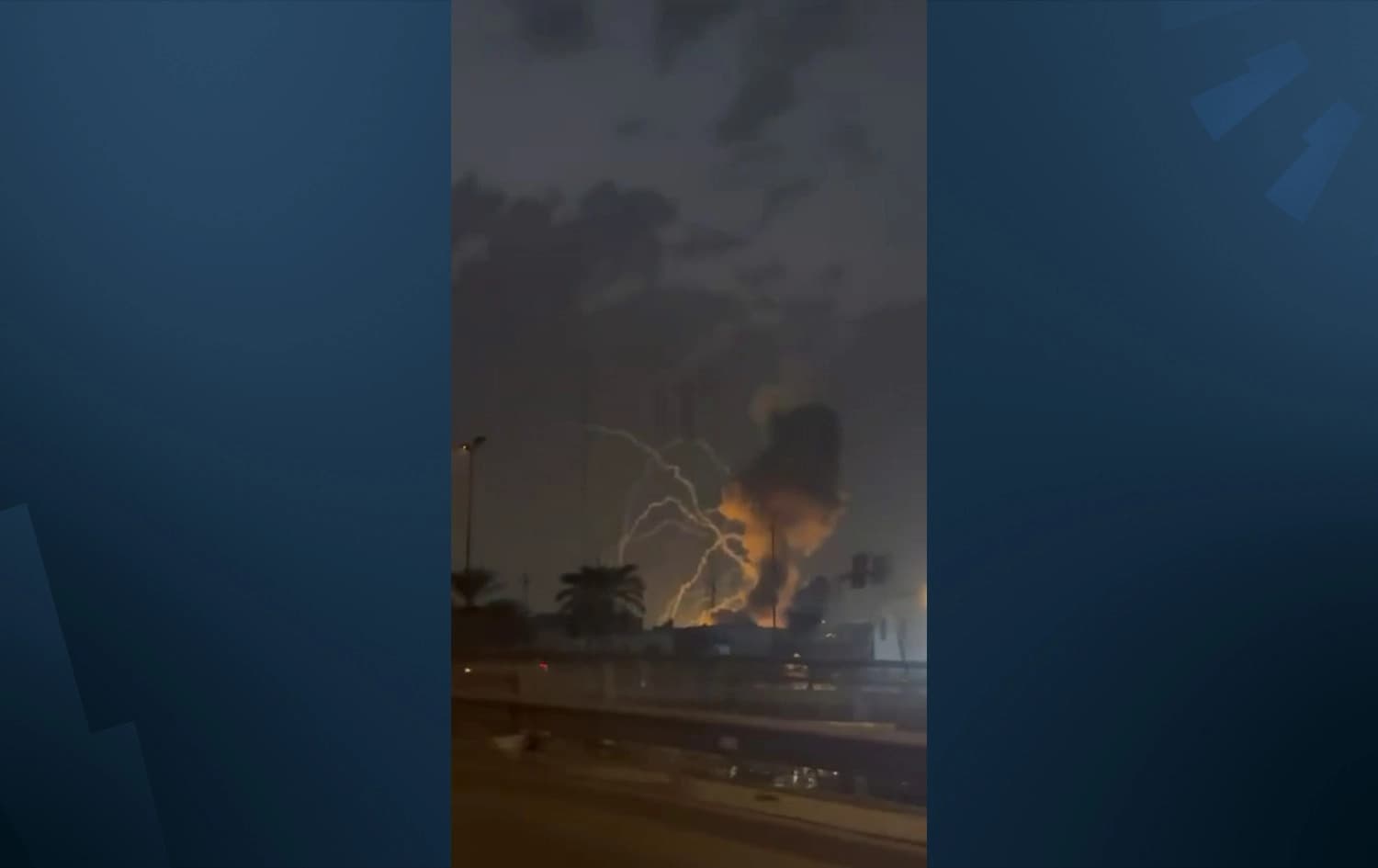
ERBIL, Kurdistan Region - Iraqi Foreign Minister Fuad Hussein traveled to Kuwait on Wednesday, hours after the sheikhdom was rocked by Iranian attacks on what Tehran claims are "significant positions" for Washington, and days after Baghdad's chief diplomat affirmed Iraq's readiness to host talks between Iran and Gulf Arab states.
Hussein headed "a high-level official delegation comprising National Security Advisor Qasim al-Aboudi, Governor of Basra province [bordering Kuwait] Asaad al-Eidani, Undersecretary of the Ministry of Foreign Affairs for Bilateral Relations Mohammed Hussein Bahr Al-Uloom, and a number of ambassadors" to Kuwait, the Iraqi foreign ministry said in a statement.
The Iraqi foreign minister "is scheduled to hold talks with senior officials from Kuwait" and "to discuss ways to further develop bilateral relations across various fields," the statement added.
Importantly, Hussein is also set to "review the latest regional and international developments and exchange views on issues of mutual interest, in a manner that contributes to strengthening security and stability in the region," the ministry said.
The visit by Iraq's chief diplomat comes only hours after Iran's Islamic Revolutionary Guard Corps (IRGC) on Wednesday stated that its "naval and aerospace forces" launched a "joint missile and drone operation, crushing 85 important positions and US military facilities," including at the Ali Al Salem Air Base in Kuwait.
The Kuwaiti foreign ministry on the same day condemned the Iranian attacks as a "flagrant violation of its sovereignty and a direct threat to its security and stability and to the safety of its citizens and residents on its territory."
It added that these "blatant attacks" undermine the "regional and international efforts" aimed at de-escalation, while affirming "Kuwait's inherent and legitimate right to take all necessary measures to safeguard its sovereignty and protect its security and stability."
Earlier in June, the IRGC had launched two distinct waves of aerial strikes targeting what it said were US military assets and critical infrastructure in Kuwait. The first and more destructive assault occurred in early June, when a multi-missile and drone strike severely damaged a terminal at Kuwait International Airport, killing an Indian civilian and wounding 63 others, while also targeting Ali Al Salem Air Base.
The second wave followed in late June, specifically targeting US military installations, including Ali Al Salem as well, though the inbound threats were successfully intercepted by Kuwaiti air defenses without causing casualties.
The latter attacks followed military operations US airstrikes on targets in southern Iran following Iranian attacks on commercial shipping vessels in the Strait of Hormuz.
Importantly, the Iraqi foreign minister's visit to Kuwait comes shortly after he expressed Iraq's keenness to reactivate dialogue between the Gulf Cooperation Council member states - Bahrain, Kuwait, Oman, Qatar, Saudi Arabia and the United Arab Emirates - and Iran.
During a press conference he held in Baghdad with his Iranian counterpart Abbas Araghchi, Hussein further affirmed Iraq's readiness to host representatives of these countries for talks aimed at enhancing regional security and stability and protecting the interests of the peoples of the region.

_0.jpg.webp&w=3840&q=75)