
ERBIL, Kurdistan Region - Iraqi Prime Minister and Commander-in-Chief of the Armed Forces Ali al-Zaidi said on Saturday his government will not tolerate corruption regardless of affiliations, as authorities expand a nationwide crackdown involving security forces and oversight bodies.
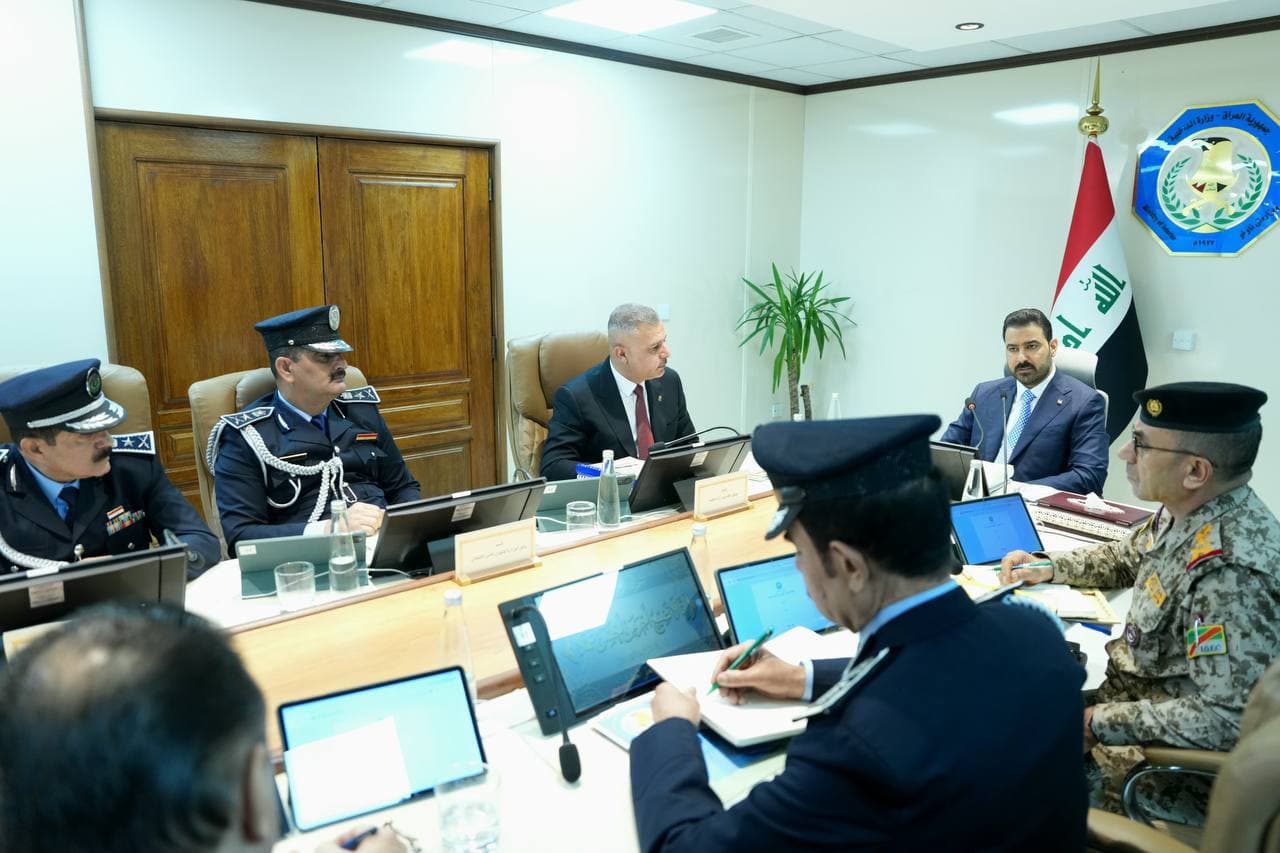
"There will be no compromise or turning a blind eye to any corrupt person, regardless of their affiliations," read a statement from the Prime Minister's office after he visited the Ministry of Interior, during which he described the ministry as central to the government’s anti-corruption effort, stressing that accountability will apply to all without exception.
The remarks come as Iraqi authorities continue to make headway with Operation Dawn, a large-scale anti-corruption campaign launched Sunday under the direction of Prime Minister Zaidi in coordination with Iraq's Federal Commission of Integrity.
The operation has so far netted dozens of Iraqi politicians and lawmakers, former officials, and senior government employees, along with tens of millions of dollars in stolen assets and seized state properties illegally transferred into private ownership.
Zaidi said the campaign reflects public pressure rather than only administrative policy, noting that “combating corruption has today become a popular demand.” He called on the Integrity Commission, the Federal Board of Supreme Audit, and security agencies to pursue cases “meticulously and without discrimination.”
He also said the government is continuing “with unwavering steadfastness and resolve” in pursuing corruption and recovering state rights. He also described the campaign as a national effort, saying it will not retreat “regardless of the challenges or the magnitude of the pressures.”
In a post on X, Zaidi highlighted broad political and social support for the initiative, thanking institutions including the Iraqi Council of Representatives, the Supreme Judicial Council, religious authorities, the Kurdistan Democratic Party (KDP), and the Patriotic Union of Kurdistan (PUK).
“This broad national solidarity confirms that the fight against corruption is not merely a government battle,” he said, “but the battle of an entire nation” to defend public funds and strengthen state institutions.
The operation has resulted in the arrests of over 21 senior government employees, according to government spokesperson Haidar al-Aboudi. Cases extend to former officials, and lawmakers, including notable figures such as former Salahadin governor Raed al-Jubouri, three former members of parliament from the Salahadin province, and Adnan al-Jumaili, the former deputy oil minister for refining affairs, accused of embezzlement of 200 billion dinars ($152 million).
Iraq ranked 136th out of 182 countries in Transparency International's 2025 Corruption Perceptions Index (CPI), scoring 28 out of 100, reflecting a high level of public-sector corruption by global standards.
Human Rights Watch released a World Report 2026 on Iraq that highlights cases of endemic corruption and impunity undermining the rule of law and public services. Its reference to the latest annual UN Human Rights Council’s evaluation on Iraq’s use of human rights cites concerns of “unfair trials, restrictions on free expression and assembly, and impunity for serious abuses by state-affiliated armed groups and security forces.”
The report underscores key recommendations such as reforming or repealing discriminatory laws and passing domestic violence protections, noting that Iraq was “in the process of drafting a law against torture and other cruel, inhuman or degrading treatment.”